Knowing how to cut a tomato correctly makes a big difference in both presentation and texture. Clean slices hold together on a sandwich; a proper dice stays tidy in a salsa instead of turning into a watery mess. The exact technique depends on the recipe you’re preparing, and a sharp knife makes every cut easier and neater.
- The Most Important Thing: Your Knife
- How to Remove the Stem
- How to Slice a Tomato
- How to Dice a Tomato
- Tips
- What Kind of Tomato Are You Cutting?
- Storage
- Common Questions
- How to Cut a Tomato (Slices and Dice) Recipe
- More Cooking Tips
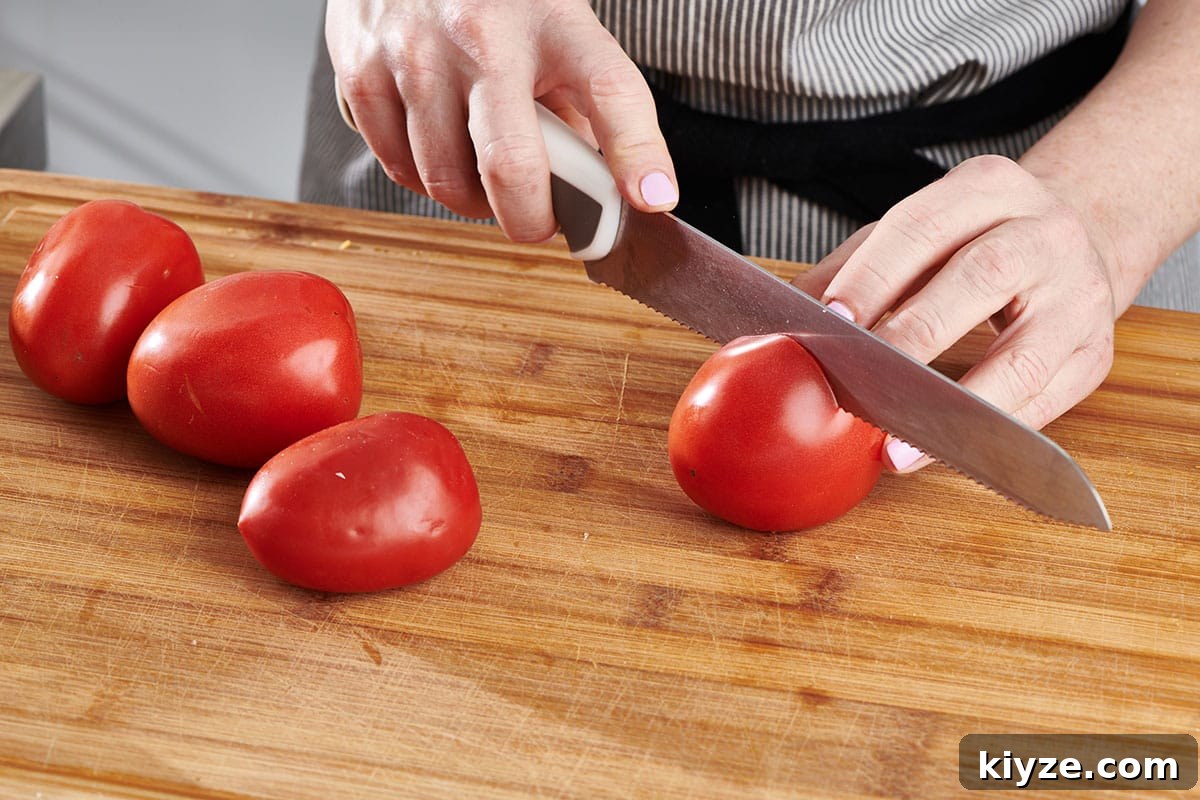
The Most Important Thing: Your Knife

A sharp knife is essential for cutting tomatoes. A dull blade presses and crushes the skin and flesh instead of slicing cleanly. A serrated blade, like a bread knife, is excellent for ripe tomatoes because its teeth grip the skin and saw through without squashing. A well-sharpened chef’s knife also works fine. Whatever you use, make sure it slices through the skin in one smooth motion without excessive pressure.
How to Remove the Stem
There’s no need to core the stem before you begin. Start slicing the tomato, and when you reach the stem end, angle two small cuts into a V to pop the stem out. It’s quick, wastes very little tomato, and lets you continue slicing without interruption.
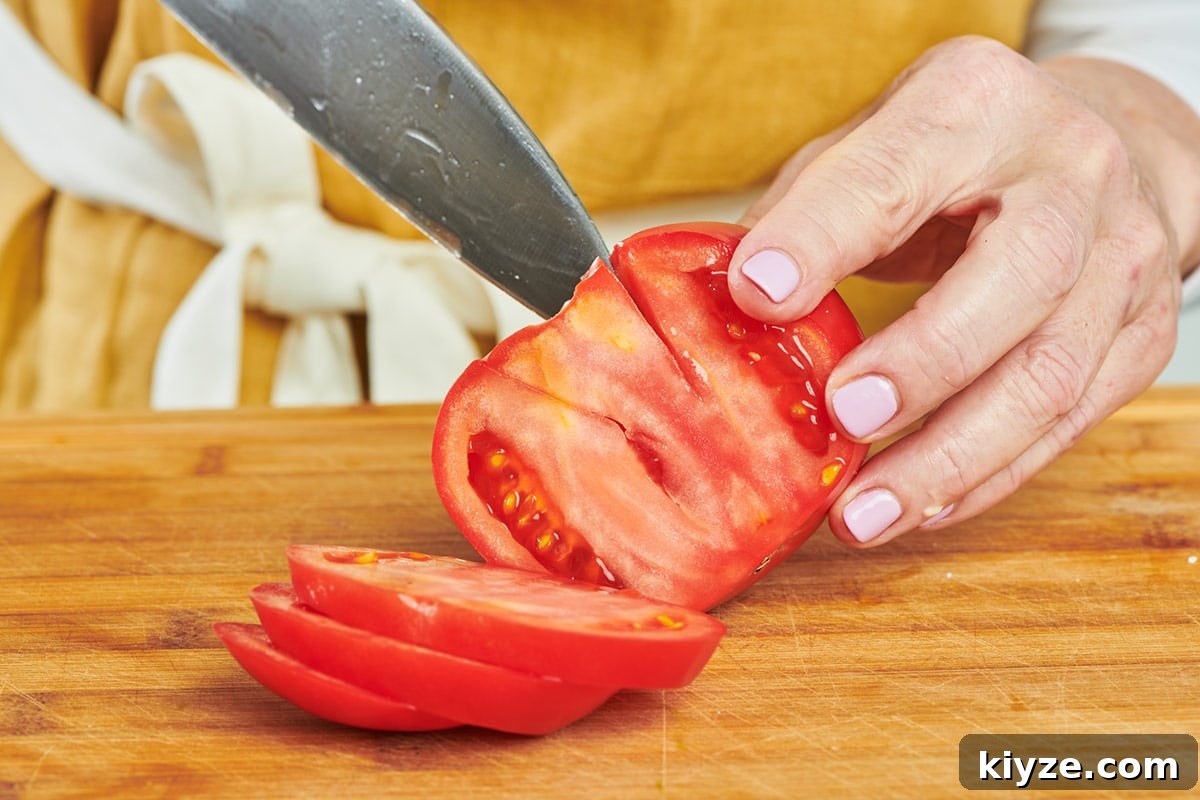
How to Slice a Tomato
Slices are ideal for sandwiches, burgers, BLTs, and Caprese salads.
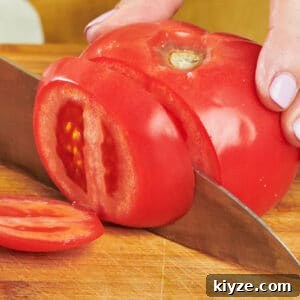
- Place the tomato on its side on the cutting board. Hold it steady with a claw grip (fingers curled under, knuckles forward). Slice straight down through the tomato, perpendicular to the board, working from one end to the other to your desired thickness.
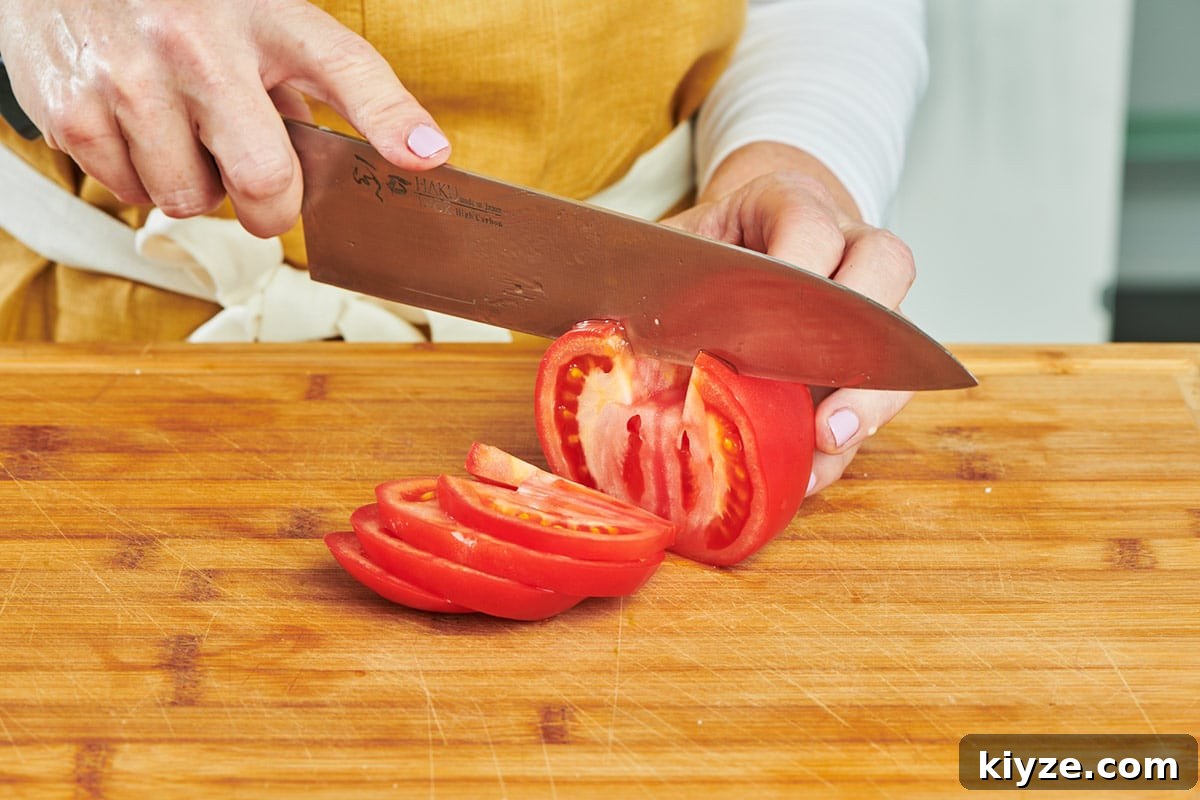
Quick Tip
Aim for slices about 1/4 to 1/2 inch thick—thinner for sandwiches, thicker for a tomato platter or Caprese.
How to Dice a Tomato
Dicing is best for salsas, bruschetta, salads, and any dish where small, uniform pieces are desired.
- Start by slicing the tomato as described above. Stack or line up the slices and cut them into even strips about 1/4 to 1/2 inch wide, depending on how fine you want the dice.
- Hold the strips together with a claw grip and cut straight across to create cubes. Move steadily and let the sharp knife do the work rather than pressing down hard.
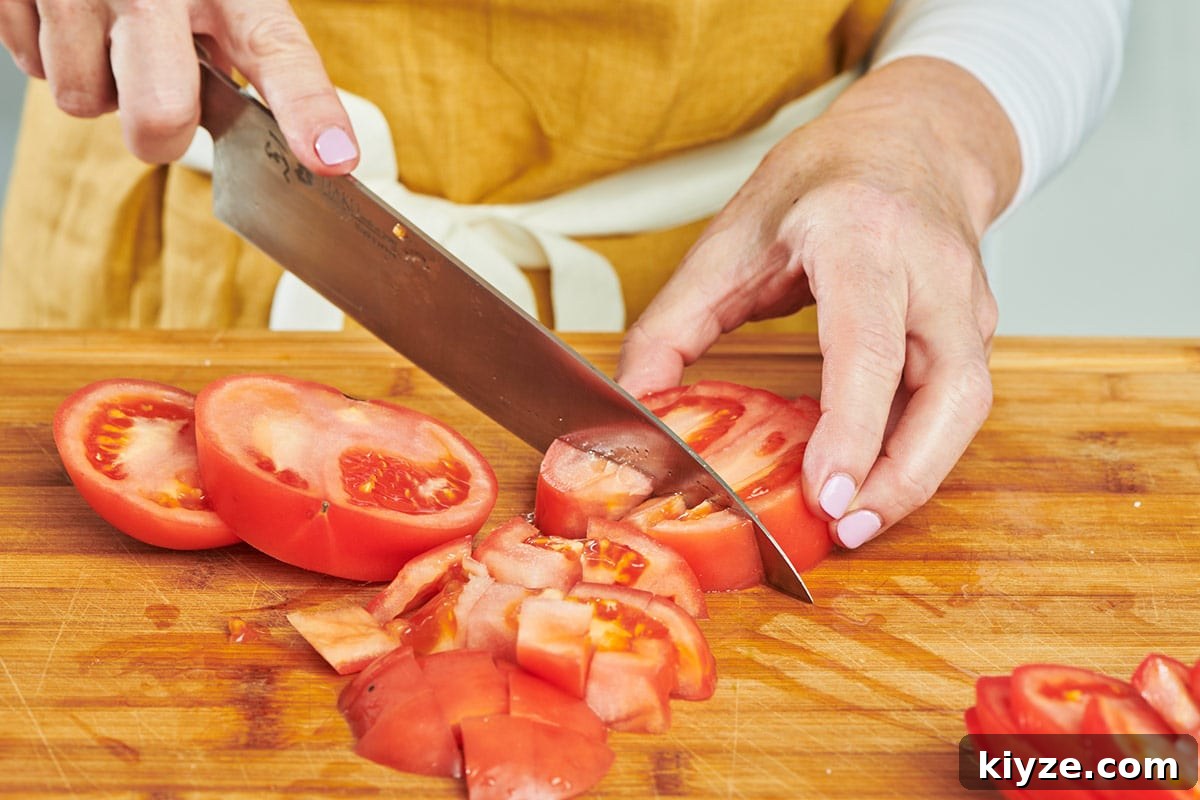
If you want a seedless dice for a drier salsa or bruschetta, pop the seeds out after slicing and before dicing. You can push the seed cavities into a small pile on the board or slide the knife under the cavity to remove it.
Tips
- Room-temperature tomatoes are easier to cut than cold ones—the flesh is firmer and more cooperative. Keep whole tomatoes on the counter until you’re ready to use them.
- Pat tomatoes dry before cutting; a wet surface makes them slippery and harder to control.
- For very ripe, soft tomatoes, a serrated knife is often the easiest option because it grips the skin where a straight blade might slide.
- Don’t discard the seeds and juice on the cutting board—they’re full of flavor and can be added to sauces, soups, or dressings.
- Remove seeds if you need a very fine, dry dice; leave them in for a more rustic chop where extra moisture is acceptable.
What Kind of Tomato Are You Cutting?
The basic technique is the same, but tomato variety affects how it handles on the board.
- Beefsteak and large round tomatoes are easiest to slice cleanly because their size gives you room to work.
- Plum and Roma tomatoes are firm and relatively dry inside, which makes them ideal for dicing.
- Heirloom tomatoes are beautiful but often soft and juicy—handle gently and consider a serrated knife.
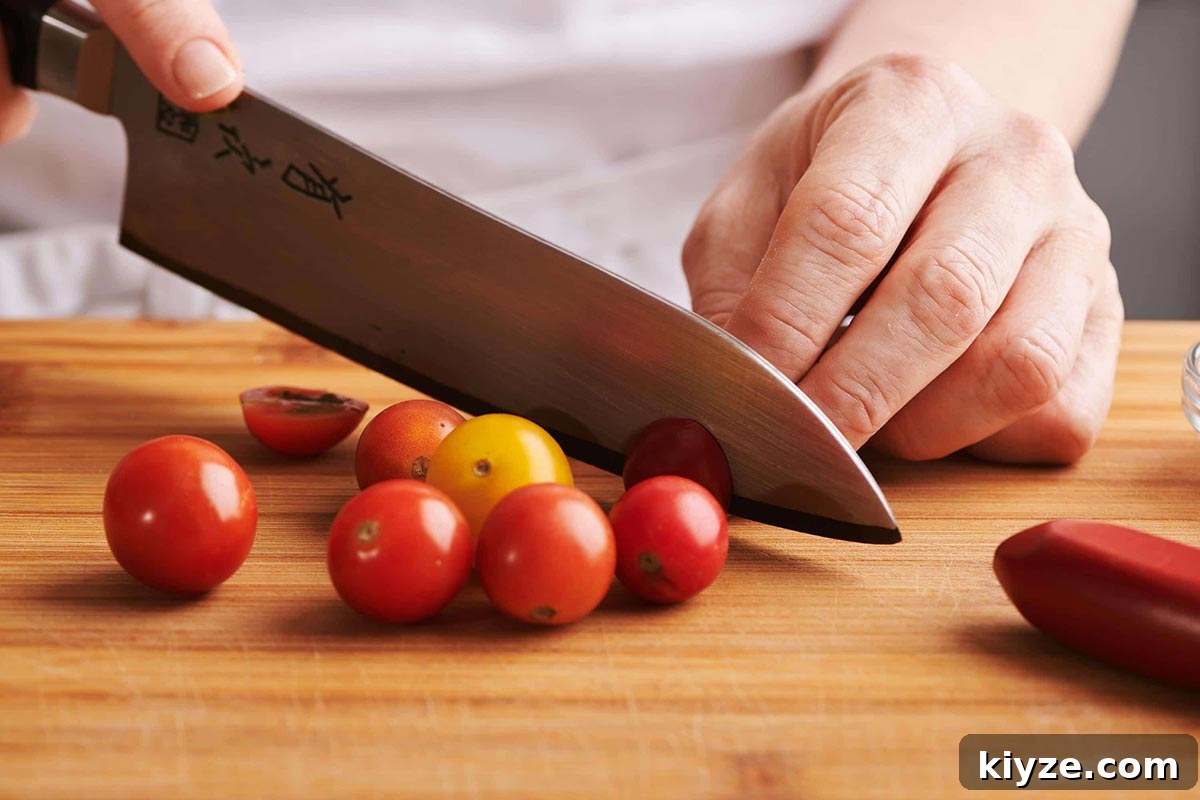
- Cherry and grape tomatoes are best halved or quartered. To halve many at once, trap them between two flat lids and run a knife through the middle.
Storage
Once cut, store tomatoes in the refrigerator in an airtight container and use within 2 to 3 days. Lining the container with a paper towel helps absorb excess moisture and keeps pieces from getting soggy. Whole, uncut tomatoes are best kept at room temperature away from direct sunlight—refrigeration dulls their flavor and changes the texture.
Common Questions
Only if you want a very dry, clean dice—for salsas or bruschetta, removing seeds prevents excess moisture. For most uses, leaving the seeds in is fine.
Most often that’s a dull knife. The blade presses rather than slices. Use a serrated knife or sharpen your chef’s knife before cutting.
Whole tomatoes: keep at room temperature. Cut tomatoes: refrigerate and use within a few days.
A sharp serrated knife is the most forgiving for ripe tomatoes; a sharp chef’s knife works well too.
Yes—slice or dice up to a day or two ahead and refrigerate. Salt them just before serving to avoid excess liquid, and bring uncooked tomatoes back to room temperature before serving if needed.
Pin this now to find it later
Pin It
How to Cut a Tomato (Slices and Dice)
Equipment
-
Serrated knife (or chef’s knife)
Ingredients
- 4 tomatoes (or as many as needed; any variety)
Instructions
How to Slice a Tomato:
-
Place the tomato on its side on the cutting board and hold it steady with a claw grip—fingers curled under, knuckles forward.
-
Slice straight down through the tomato, working from one end to the other, to your desired thickness.
-
When you reach the stem, make two angled cuts in a V to remove it cleanly, then continue slicing.
How to Dice a Tomato:
-
Slice the tomato as above, then cut the slices into even strips about 1/4 to 1/2 inch wide.
-
Hold the strips together and cut straight across to form cubes. For a seedless dice, remove seeds after slicing and before dicing.
Notes
- Unless they’re becoming mushy, whole tomatoes are best stored at room temperature.
- Cut tomatoes will keep 2–3 days in an airtight container in the fridge.
- Aim for 1/4 to 1/2 inch slices depending on use—thinner for sandwiches, thicker for a platter or Caprese.
Like this recipe? Rate and comment below!
More Cooking Tips
- The Easiest Way to Chop an Onion
- How to Mince Garlic
- Everything You Need to Know About Cooking Pasta
- Preparing Avocados the Right Way
- What Is Marsala Wine and How to Use It in Cooking?