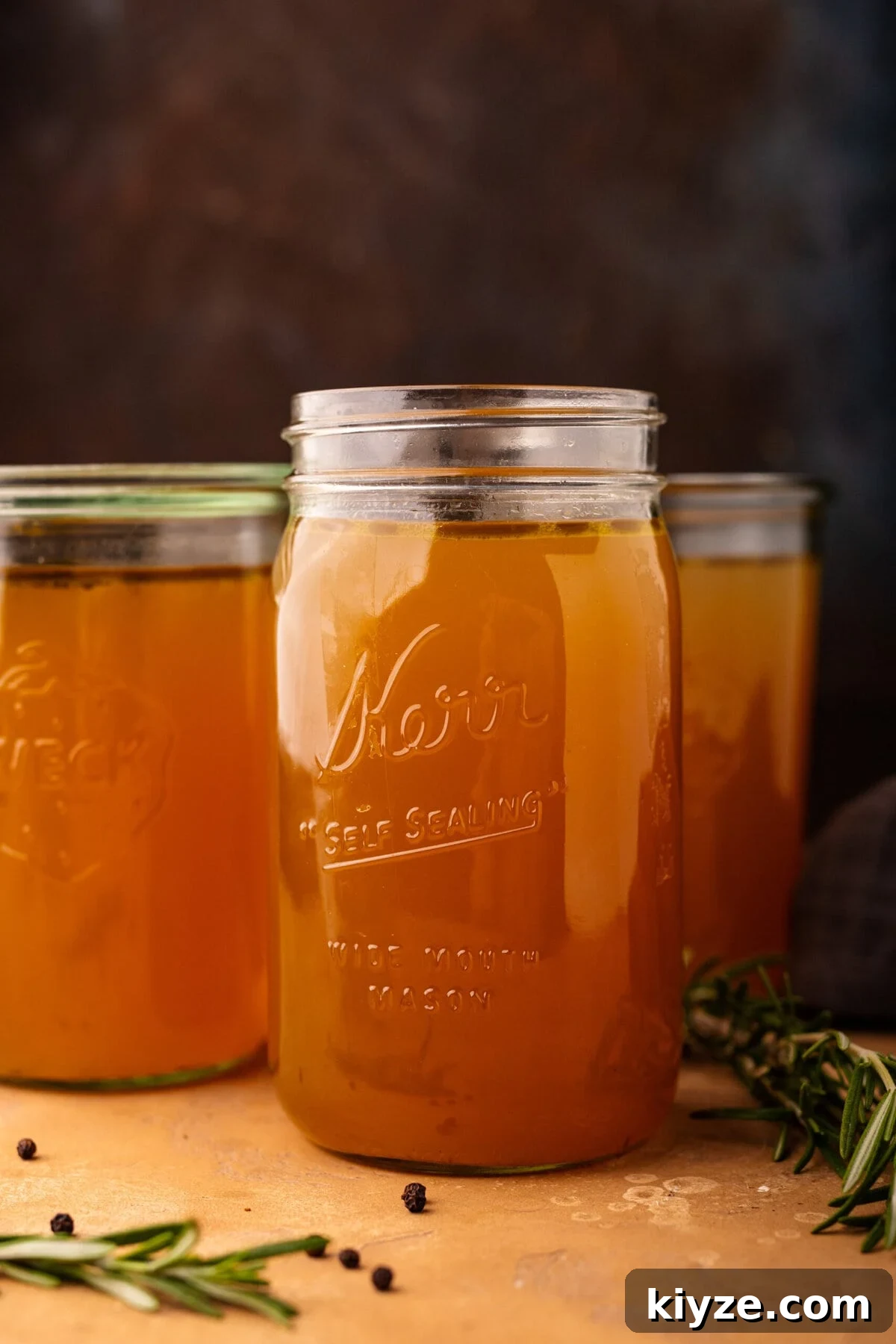
Don’t discard chicken or turkey bones — use them to make a rich, flavorful homemade chicken stock. It’s simple to prepare, tastes far better than store-bought broth, and freezes well so you always have flavorful liquid on hand for soups, sauces, and braises.
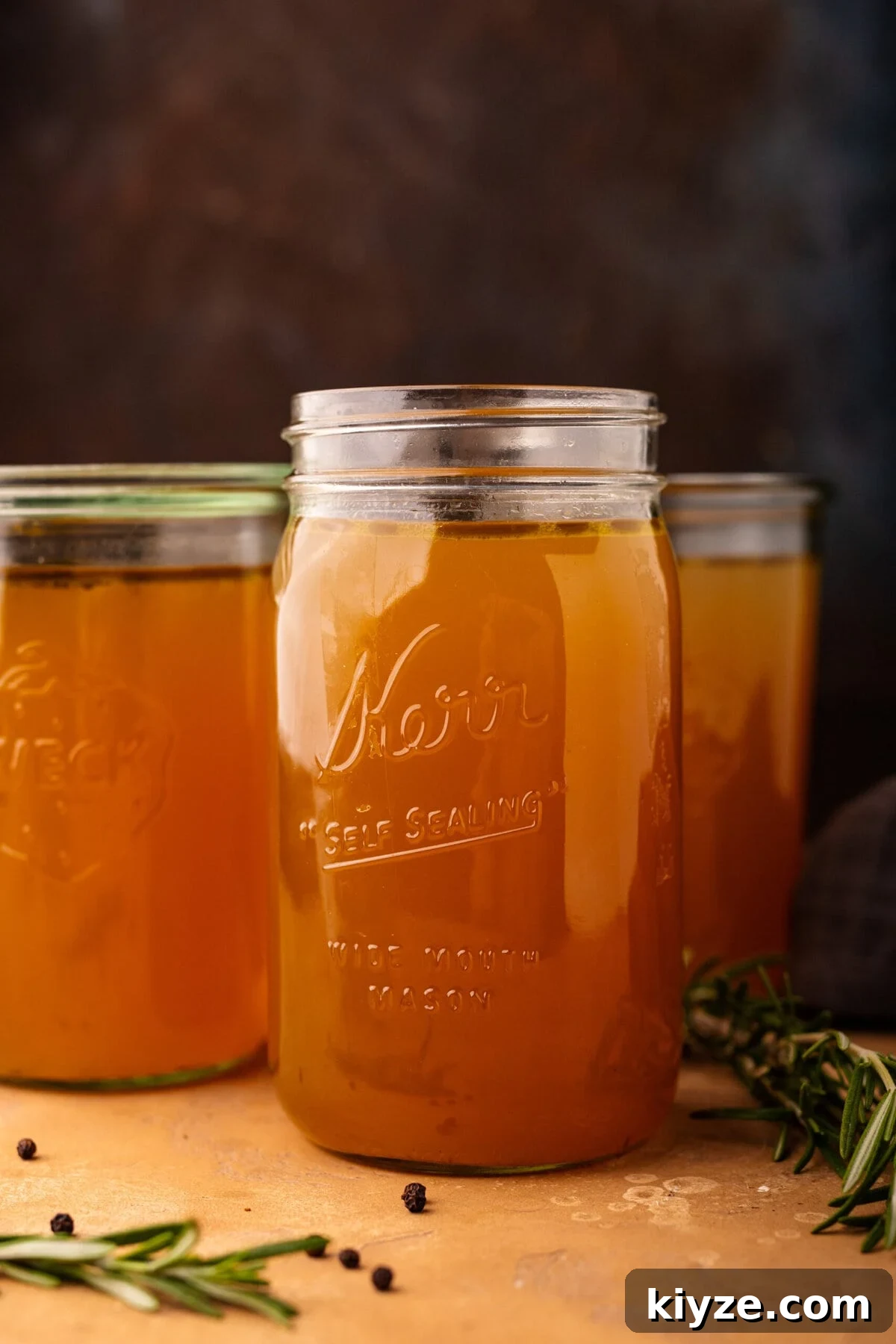
Homemade stock is one of those kitchen basics that elevates recipes instantly, and it’s easier to make than you might think. This version uses a leftover roast chicken carcass to produce a deeply flavored stock that’s clean, economical, and endlessly versatile.
Growing up, my family never threw away the bones from roast chicken or turkey. Instead we simmered them to make stock, which then enriched soups, stews, sauces, and gravies. That tradition is what inspired this straightforward method.
Recipe Highlights
Uses scraps you’d otherwise toss. Chicken and turkey bones, vegetable peels, and other scraps become the foundation for a nutrient-rich, flavorful stock.
Superior to store-bought. Homemade stock has a deeper, more layered flavor and contains no unwanted additives. It’s also very budget-friendly.
Low effort. Add the ingredients to a pot, simmer gently for several hours, then strain. No babysitting required.
Chicken Stock Ingredients
The ingredients are simple and flexible. Use what you have on hand and adapt herbs or add-ins to your taste.
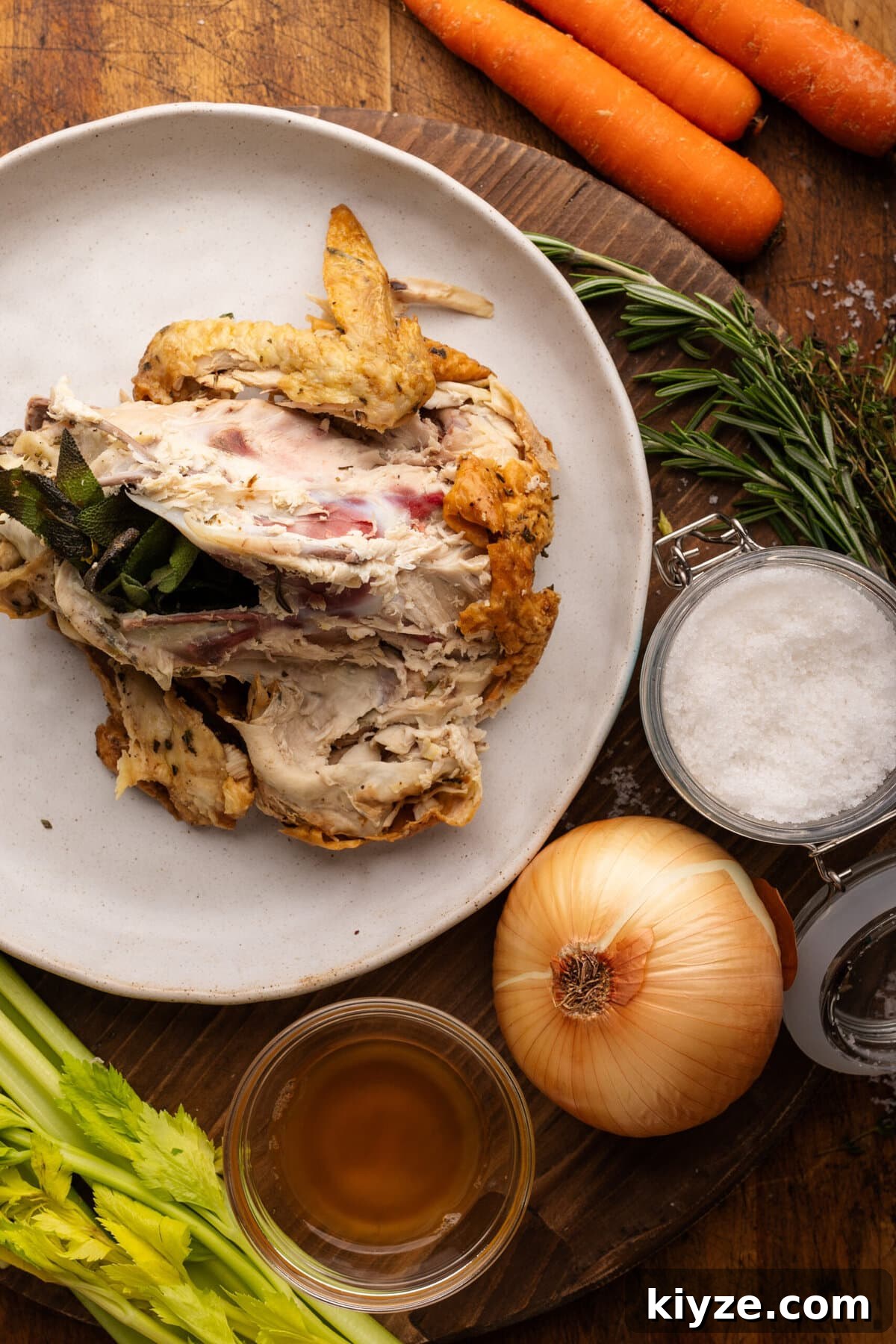
Bones – cooked chicken or turkey bones (a roast chicken carcass works great).
Vegetables – yellow onion, celery, and carrots make a classic aromatic base that builds complex flavor.
Herbs – thyme and rosemary are used here; fresh parsley also works very well.
Seasonings – whole peppercorns and coarse salt provide balanced seasoning for use in other recipes.
Apple cider vinegar – a splash helps extract collagen from the bones, creating a more gelatinous and nutritious stock without changing the flavor.
How to Make Homemade Stock
-
1
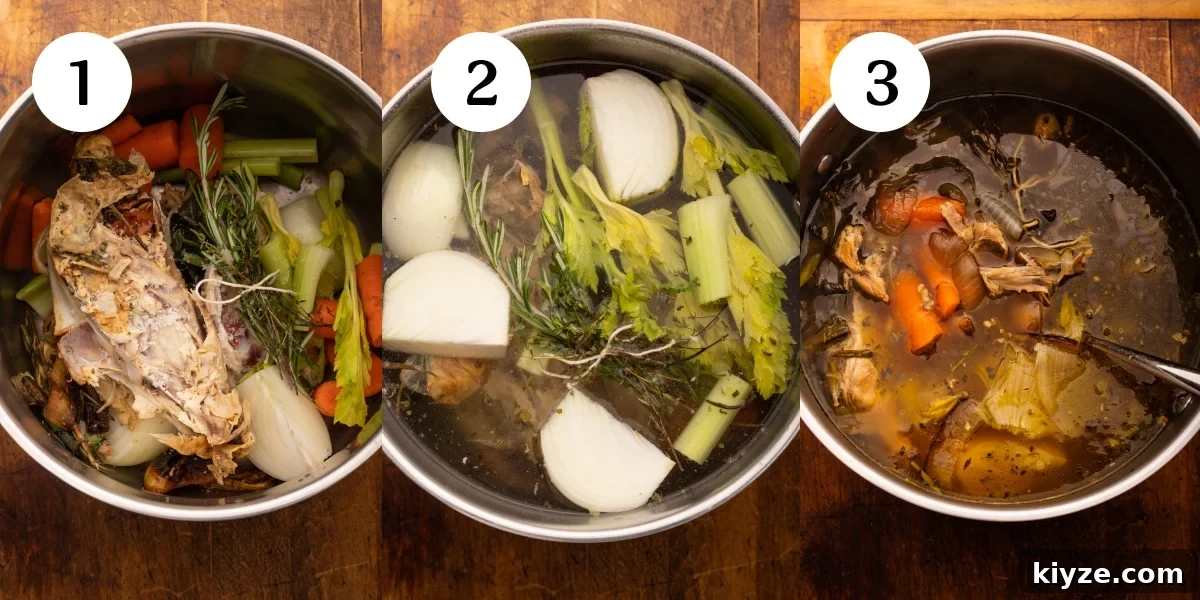
Add the bones and vegetables to a pot. In a deep pot, combine the carcass, chopped onion, celery, carrots, tied herbs, apple cider vinegar, salt, and peppercorns.
-
2
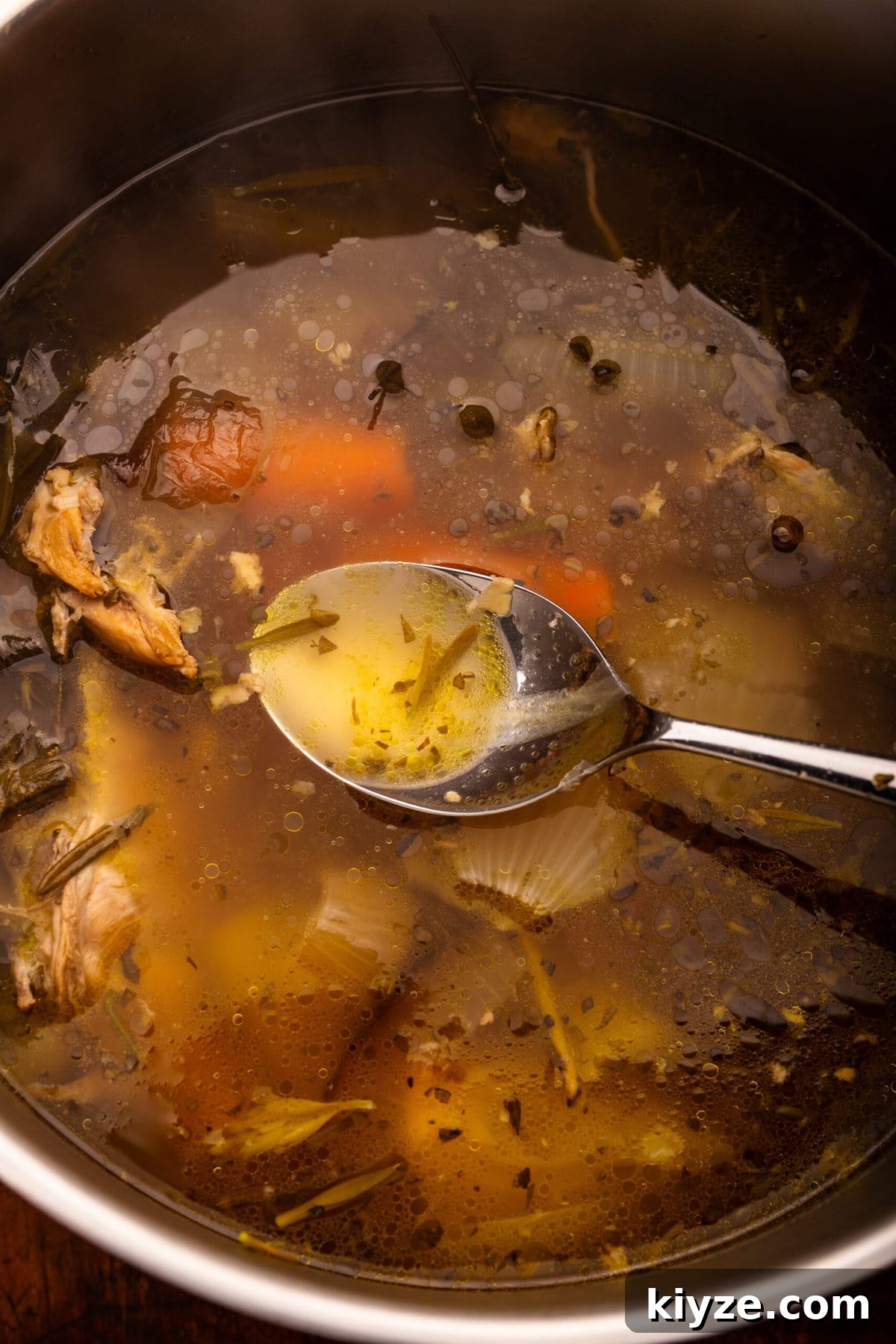
Add water and simmer. Pour in about 12–14 cups of filtered water or enough to cover the bones and vegetables. Cover and simmer gently on low for about 4 hours (longer for deeper flavor).
-
3
Cool and strain. Remove from heat and let the pot cool slightly, then strain the liquid into containers. Allow the stock to come to room temperature before refrigerating or freezing.
Tips for homemade chicken stock
Maintain a gentle simmer. Vigorous boiling breaks down clarity and can make a cloudy stock. A low, steady simmer yields clearer, more complex flavor.
Keep the pot covered. Covering traps moisture and prevents excessive reduction during long cooking.
Use more bones for more flavor. Adding a second carcass or extra bones deepens the chicken flavor and increases collagen.
Add vegetable scraps. Save vegetable trimmings—celery leaves, carrot ends, onion peels—to add flavor and reduce waste.
Recipe Variations
Use turkey bones. Swap turkey carcass for chicken after holidays for a richer, seasonal stock.
Herb choices. Fresh rosemary, parsley, thyme, sage, or bay leaves all work well; fresh herbs are easiest to remove after cooking.
Add mushrooms. Fresh or dried mushrooms add umami and deepen the broth’s savory character.
Frequently Asked Questions
What’s the difference between stock and broth? Stock is typically made from bones and cooked longer to extract collagen; broth is often made from meat and cooks faster for a lighter flavor.
Why is my stock gelatinous? A gelatinous texture after refrigeration indicates extracted collagen from the bones — a good sign of a well-made stock.
Can I freeze homemade stock? Yes. Cool completely, then transfer to freezer bags (remove excess air and lay flat) or airtight containers. Freeze up to 2–3 months. Thaw in cold water before using.
Other Cooking Methods
Slow cooker: Add ingredients and cook on LOW for 8 hours or HIGH for 4 hours.
Pressure cooker: Add ingredients and cook under pressure for about 1 1/2 hours for a quicker result with concentrated flavor.
What to use chicken stock in
Use this homemade stock anywhere a recipe calls for chicken broth or stock. It enhances soups, sauces, braises, rice, and any dish that benefits from deeper savory flavor.
Try it in:
- Soups – adds depth to chicken-and-rice soups, pasta e ceci, bean soups, and more.
- Sauces and gravies – forms the base for smooth, flavorful pan sauces and holiday gravies.
- Chicken dishes – use as a cooking liquid instead of wine for skillet chicken, roasted thighs, or pot pie fillings.
- Rice – cook rice with stock instead of water to infuse each grain with savory flavor.
Homemade Chicken Stock
Ingredients
- 1 roast chicken bone frame/carcass
- 1 large yellow onion
- 2 large carrots
- 2 celery stalks with the leaves
- 1 Tablespoon apple cider vinegar
- 1 bunch of fresh thyme sprigs (or rosemary) and parsley
- 2 teaspoons peppercorns
- 1 teaspoon salt
- 14 cups filtered water (enough to cover bones and vegetables)
Instructions
-
Add the ingredients to a pot: In a deep soup pot, add the carcass, apple cider vinegar, chopped vegetables, herbs, peppercorns, and salt. Pour in filtered water to cover.
-
Simmer: Cover and simmer on low for about 4 hours, skimming any foam if desired for a clearer stock.
-
Strain: Let the stock cool slightly, then strain into a clean pot or bowl, discarding bones and vegetables.
-
Cool before storing: Allow the strained stock to cool to room temperature, then refrigerate for up to 7–10 days or freeze for 2–3 months.