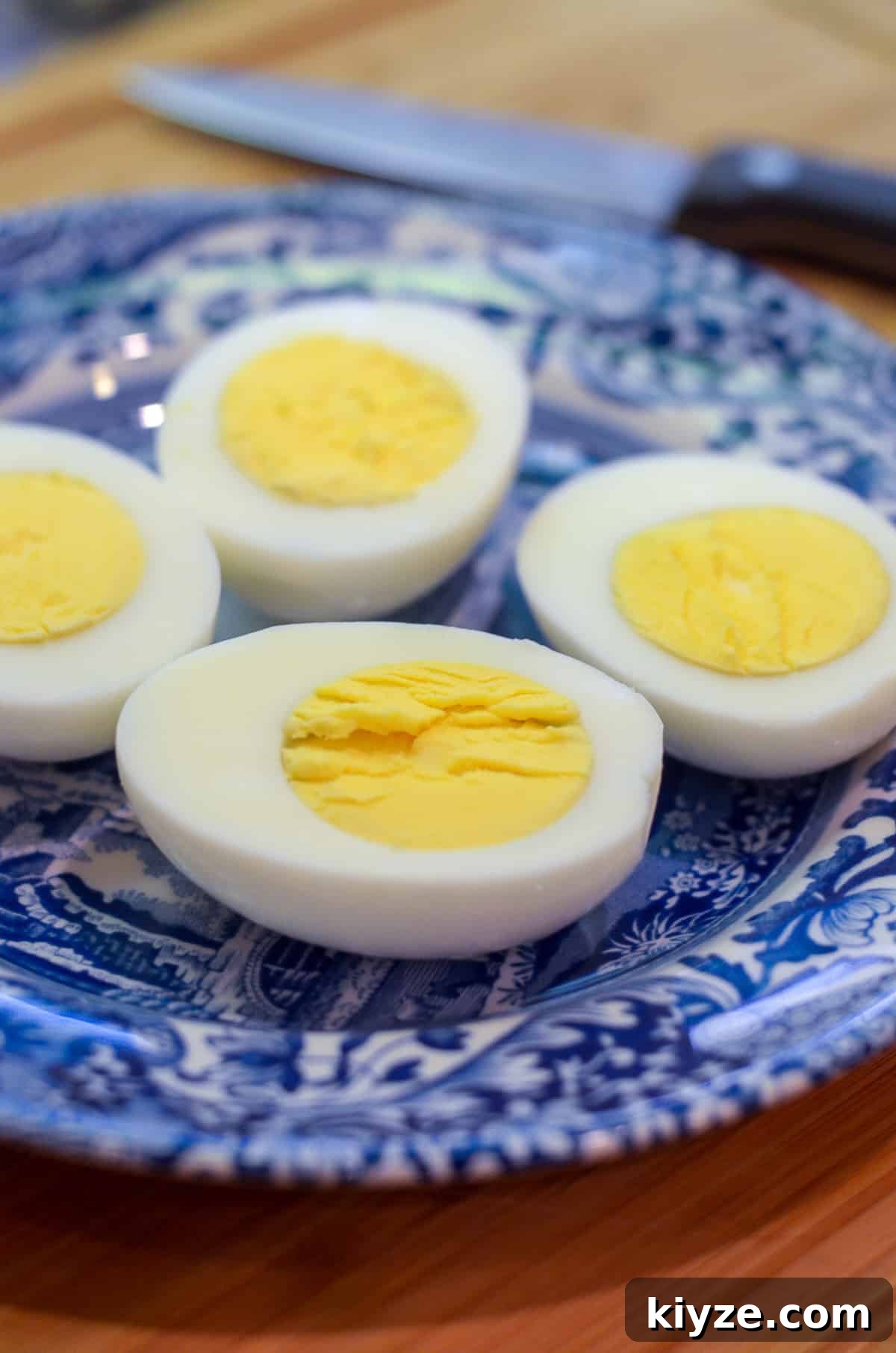
This straightforward method and a few practical tips will help you make perfectly cooked, easy-to-peel hard-boiled eggs every time.
Well-cooked hard-boiled eggs are essential for recipes like Classic Egg Salad, Ham Salad, and Old Fashioned Potato Salad.
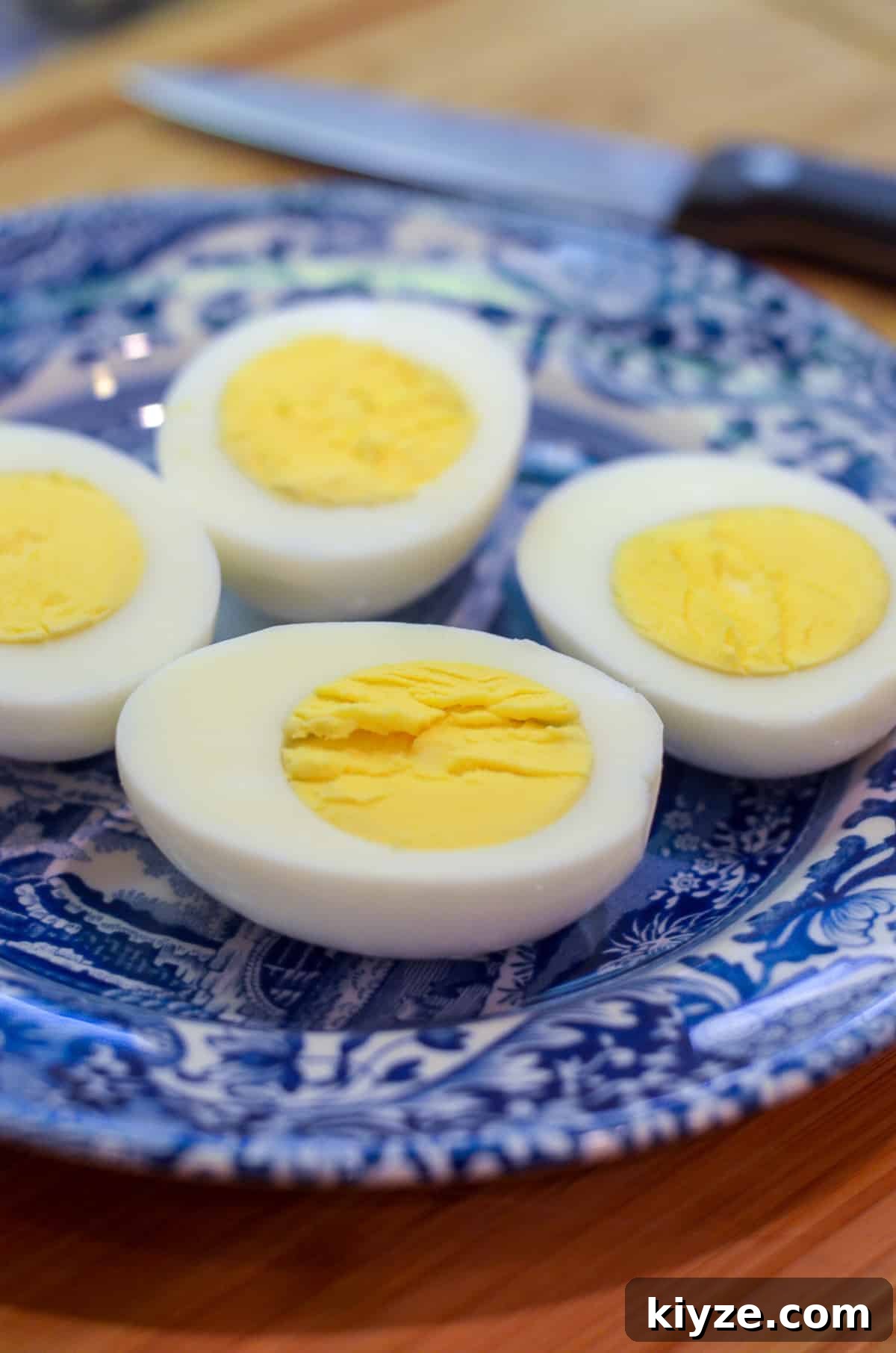
With spring in full swing and Easter coming up, many kitchens will be making deviled eggs and other egg dishes. Below are simple, reliable steps that yield eggs with bright, creamy yolks and shells that come off cleanly — perfect for holiday platters and everyday recipes.
Once you try this method, you’ll likely use it every time you boil eggs.
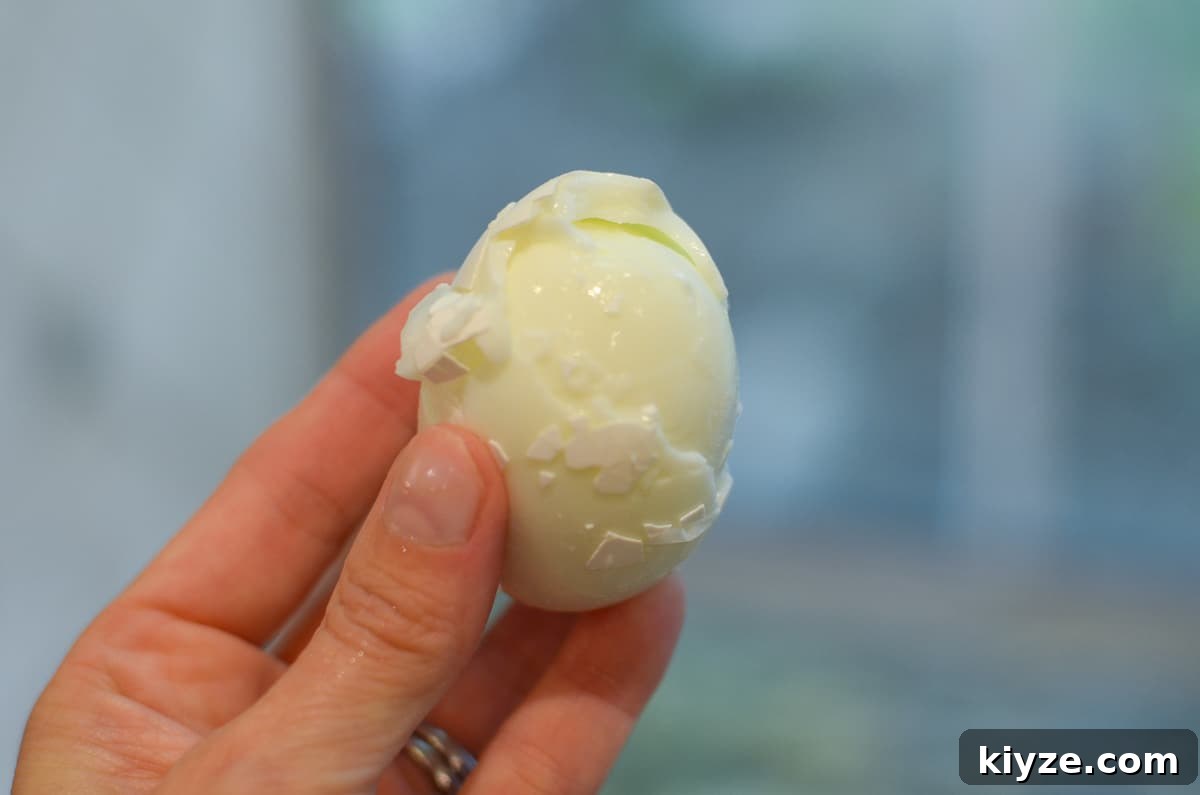
There’s nothing more disappointing than peeling a batch of eggs only to end up with shells clinging and pockmarked whites. That’s fine for chopped egg salad, but not for deviled eggs or presentations where appearance matters.
Let’s get started and make easy-to-peel hard-boiled eggs.
How to Make Easy to Peel Hard-Boiled Eggs
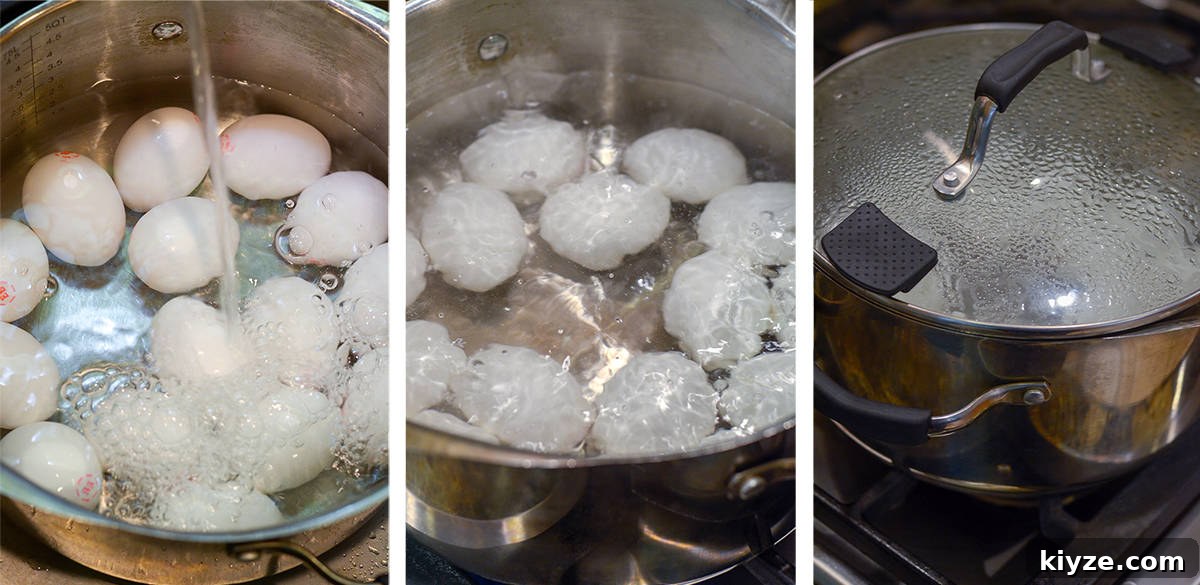
- Arrange eggs in a single layer in the bottom of a large pot. Add cold water until the eggs are covered by about 2 inches.
- Place the pot over high heat and bring the water to a boil.
- As soon as the water reaches a rolling boil, remove the pot from the heat, cover it, and let it sit, covered, for 15 minutes. Use a timer to prevent overcooking.
Tip: Cook 2 or 3 extra eggs beyond what you need in case one is uncooperative. For example, if you need a dozen eggs, boil 14–15.
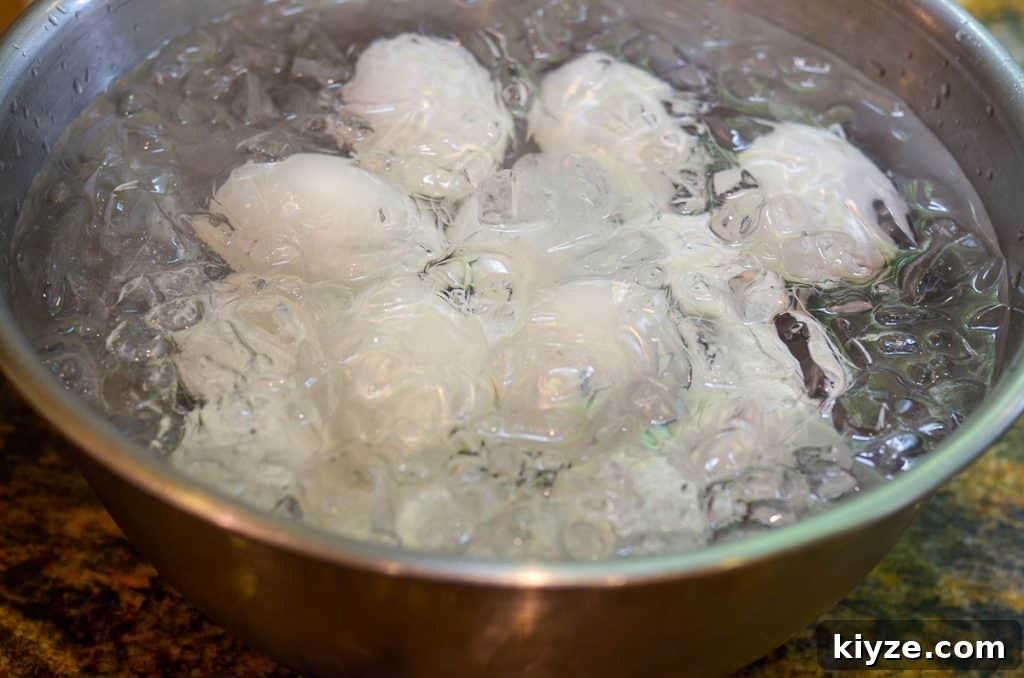
- After 15 minutes, transfer the eggs directly from the hot water to a large bowl of ice water. Let them sit in the ice bath for 15 minutes. This shocking step cools the eggs quickly and helps separate the membrane from the shell for easier peeling.
- After the ice bath, the eggs will be cool and ready to peel or use in your recipe.
Recommendation: Peel the eggs immediately after the ice bath for the best results. If not using right away, store peeled or unpeeled eggs in the refrigerator.
How to Peel Hard-Boiled Eggs
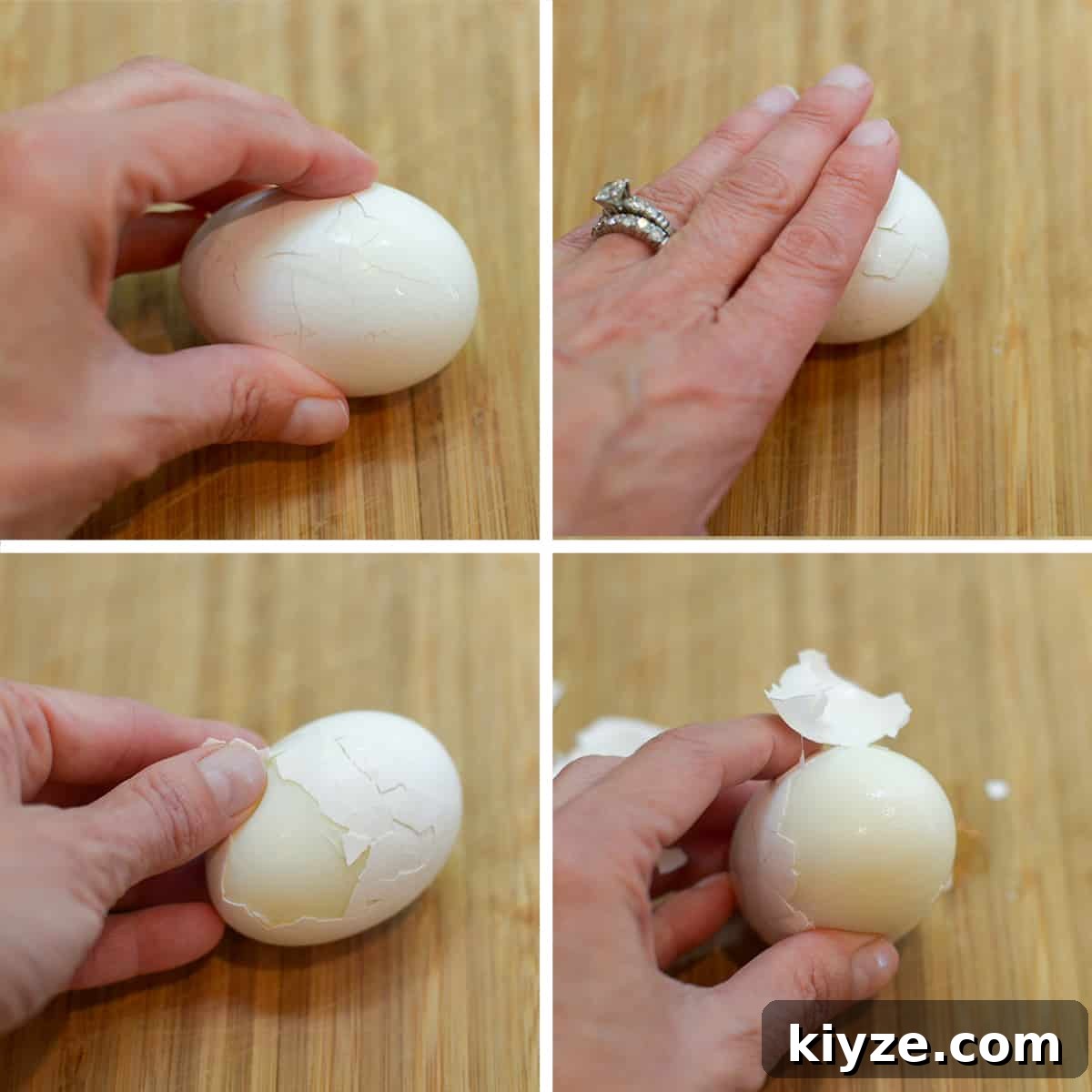
- Tap the egg lightly on a cutting board or counter to crack the shell at both ends.
- Roll the egg gently back and forth to create small cracks across the surface.
- Start peeling at one end and work toward the opposite end, lifting the membrane as you go.
- Shell pieces may be small at first but should come away in larger sections as you reach the air pocket at the end of the egg.
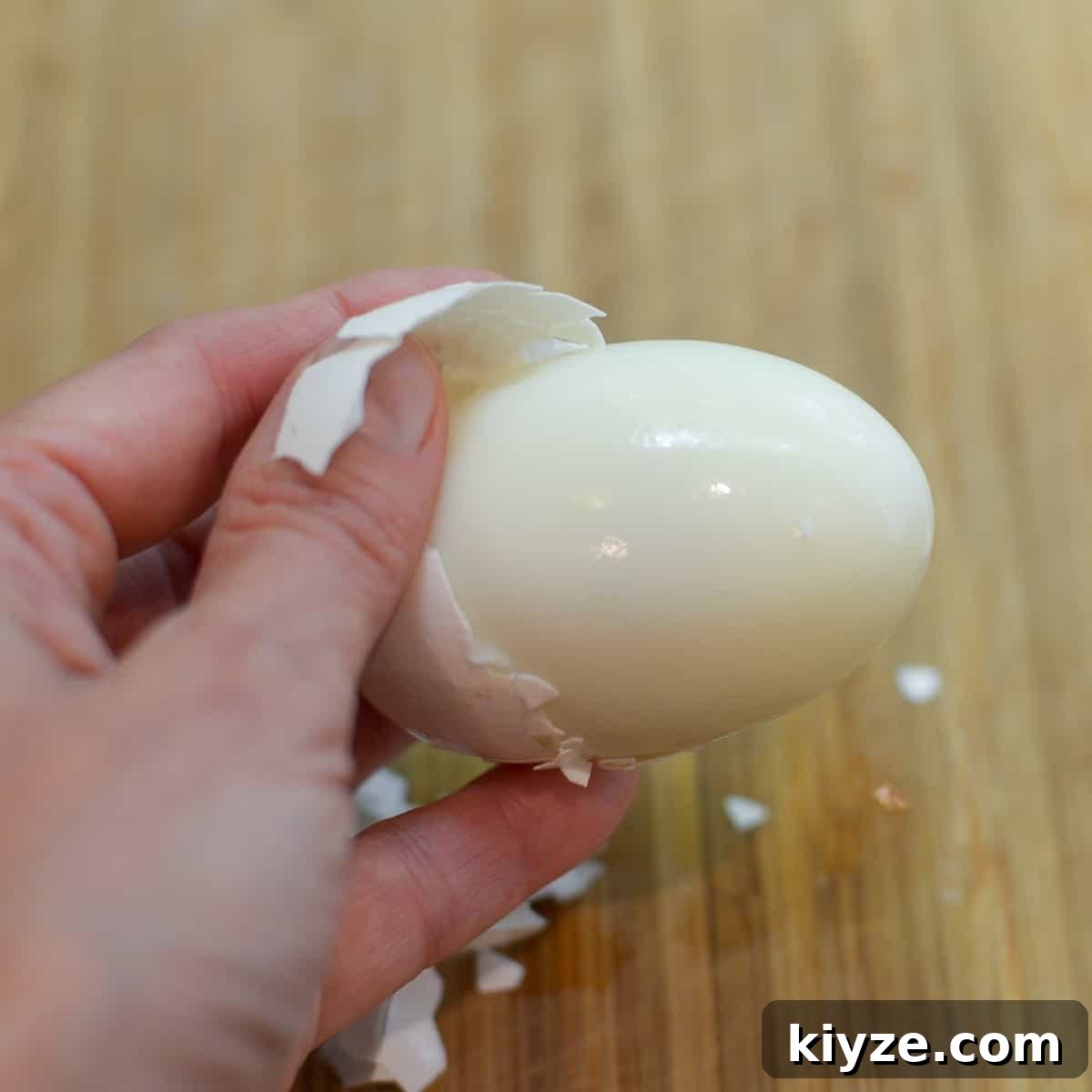
The remainder of the shell should peel off easily in clean sections.
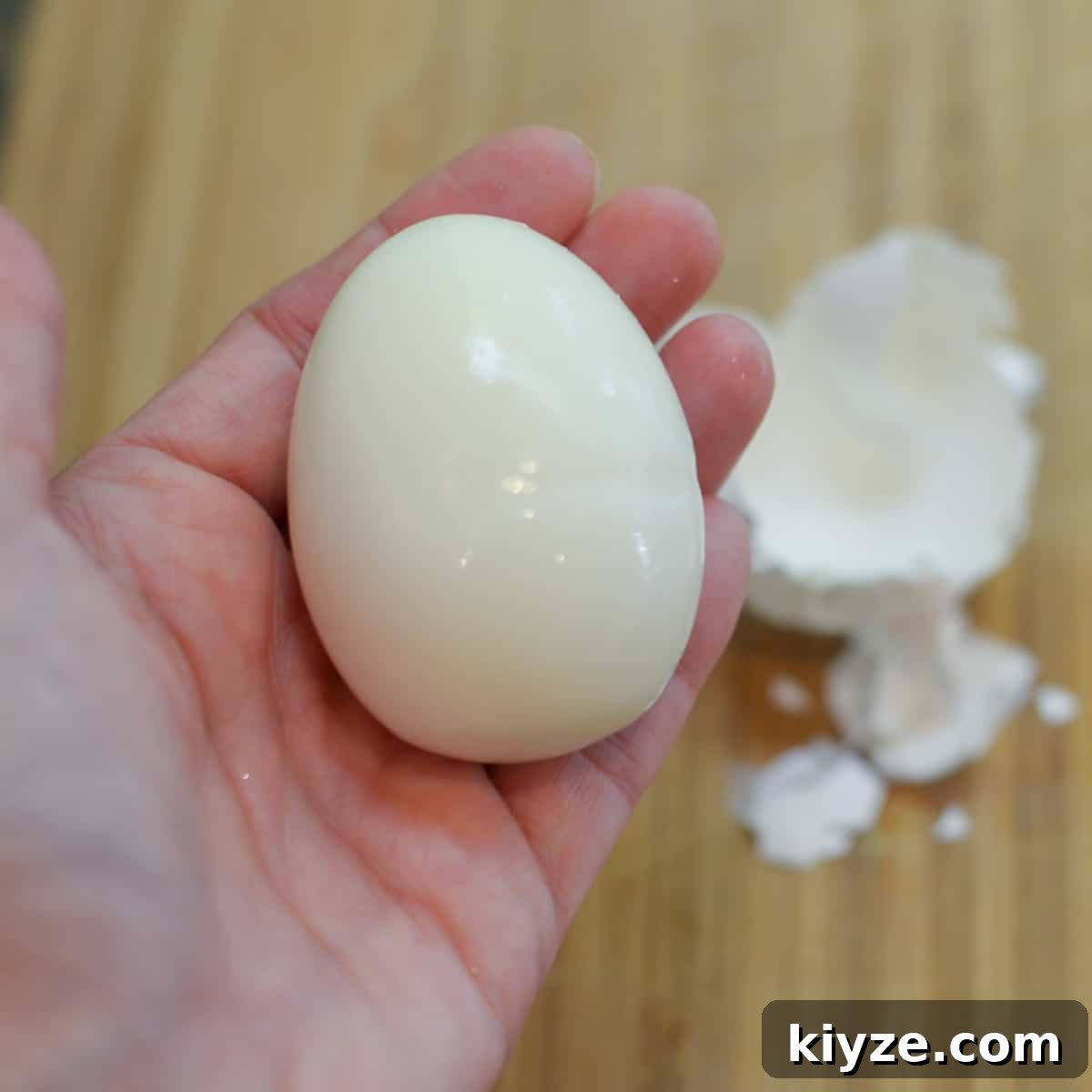
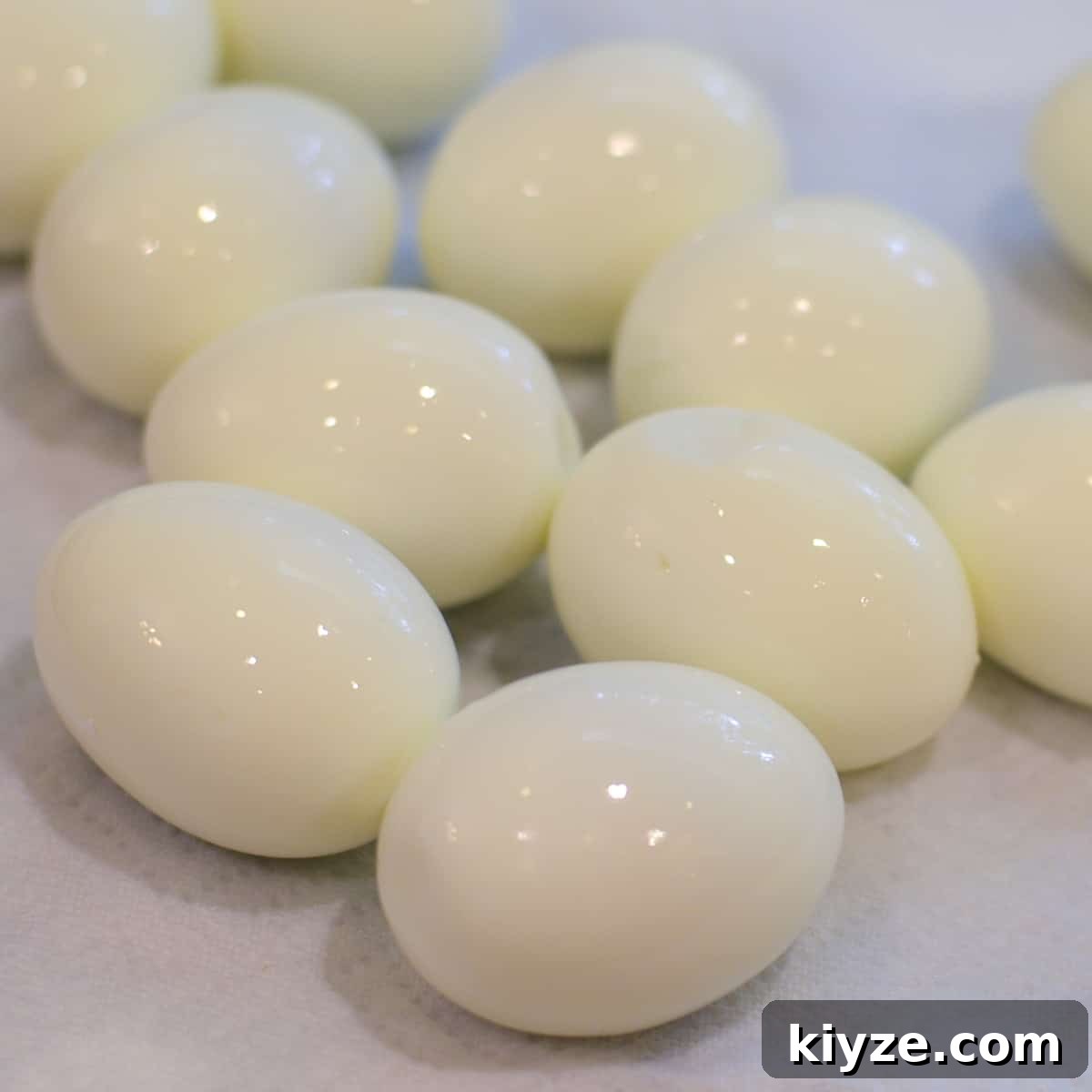
Nicely peeled eggs look smooth and hold their shape well.
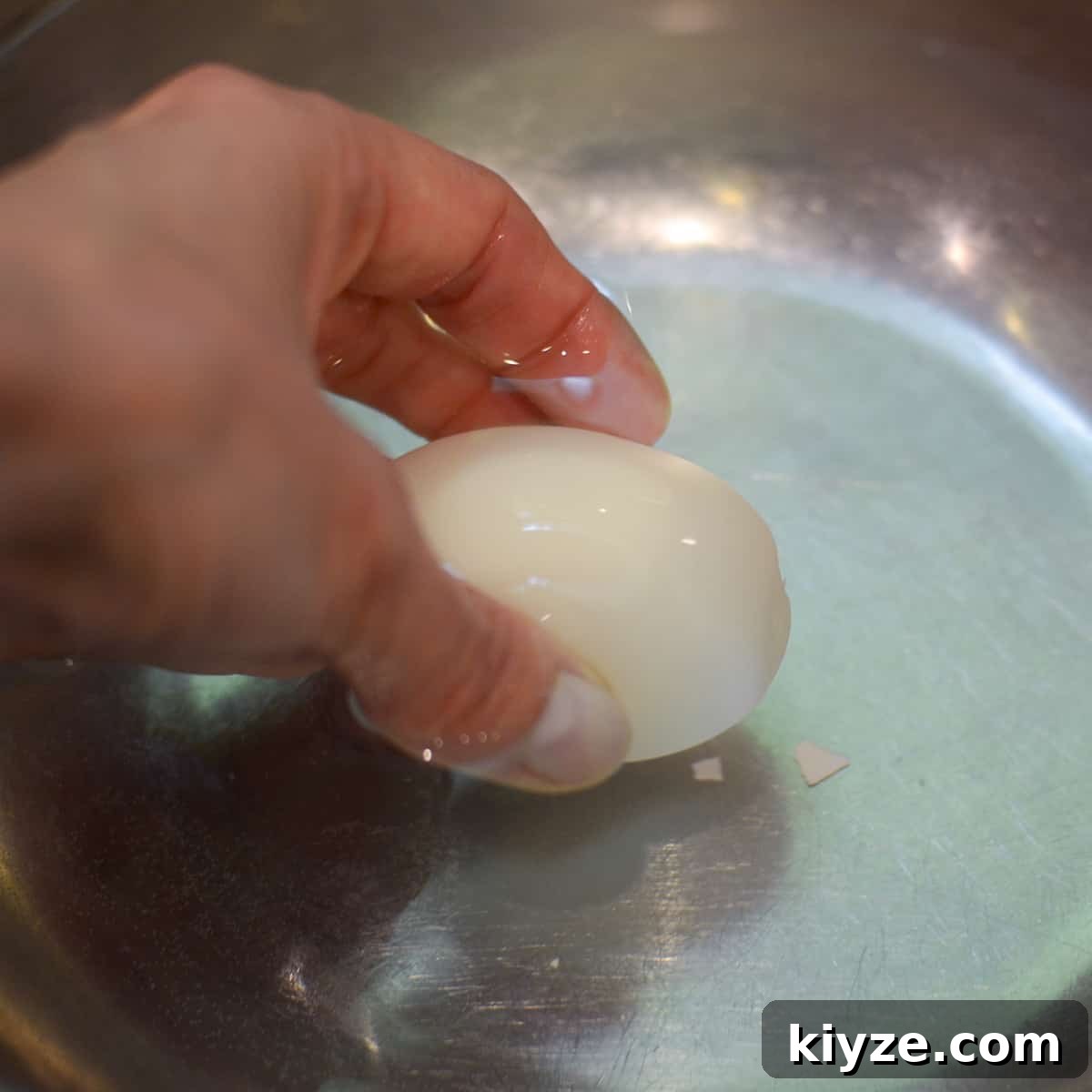
Keep the ice water nearby and give peeled eggs a quick dunk to remove any tiny shell fragments.
FAQs and Tips
If you collect eggs from a backyard hen, very fresh eggs (laid that day) can be harder to peel. Store-bought eggs, which are typically a bit older, work fine and it’s not necessary to plan days in advance. Use the eggs you have on hand; eggs near their sell-by date are fine too.
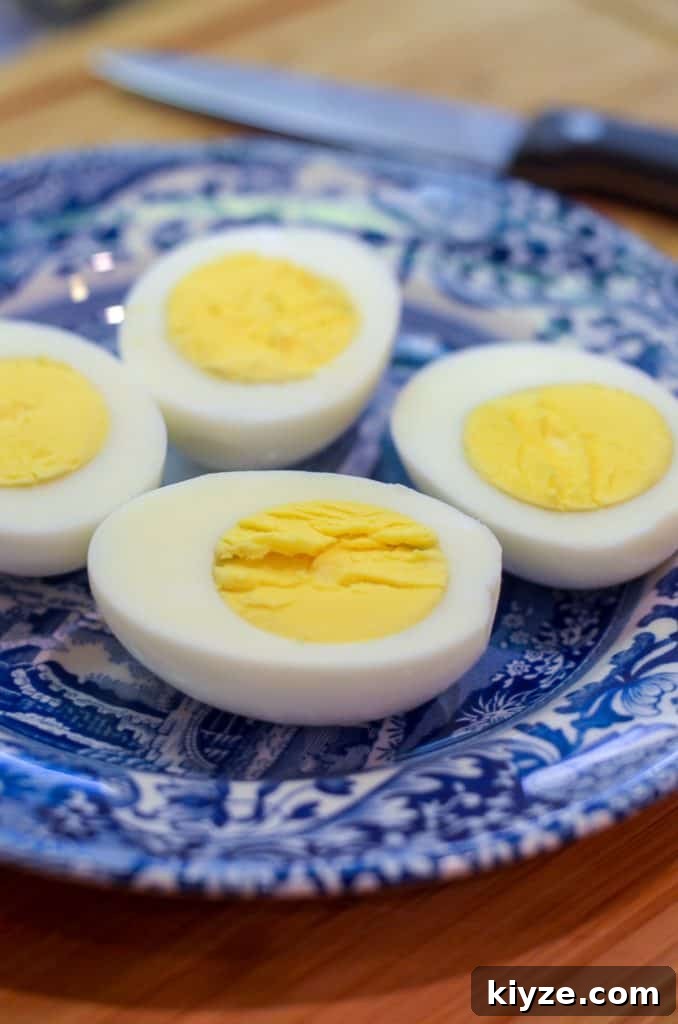
A greenish ring around yolks is a sign of overcooking. Following the timed off-heat method above and immediately shocking the eggs in ice water prevents that and keeps yolks bright yellow and creamy.
Some methods recommend adding salt or vinegar, but it isn’t necessary with this technique. The rapid cooling in the ice bath and the timed resting off heat are the key steps.
Cold eggs peel better than warm ones. Quickly cooling eggs in an ice bath causes the egg to contract slightly away from the shell, making peeling much easier. Letting eggs cool at room temperature often leads to shells that cling to the white.
I hope these steps and tips help you produce perfect hard-boiled eggs for spring gatherings and everyday cooking.
Perfect Easy to Peel Hard-Boiled Eggs
Ingredients
- 1 dozen large eggs
- water, as needed
- ice, as needed
Instructions
-
Place the eggs in a single layer in a large pot and cover with about 2 inches of cold water. Bring to a rolling boil over high heat. Remove from heat, cover, and let sit for 15 minutes.
-
Meanwhile, fill a large bowl about halfway with ice water.
-
Transfer eggs to the ice water, making sure they are fully submerged. Let them cool in the ice bath for 15 minutes. Peel immediately for best results, or refrigerate until needed.
Nutrition
Nutrition information is an estimate based on generic ingredients. For precise values, refer to the labels on your specific ingredients.
If you found this helpful, please rate and comment below!