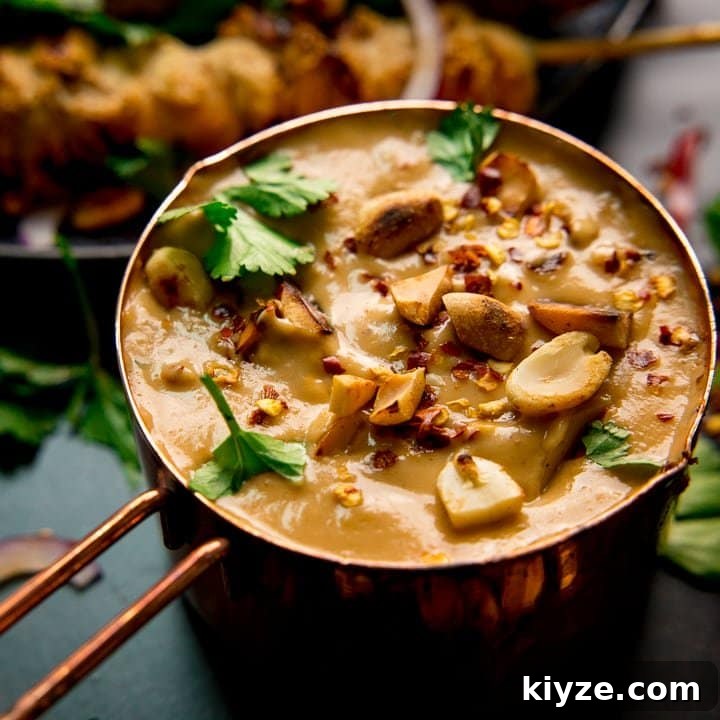
This easy 10-minute satay sauce is a smooth, creamy dip with a gentle chilli kick — perfect for chicken, pork or vegetable skewers.
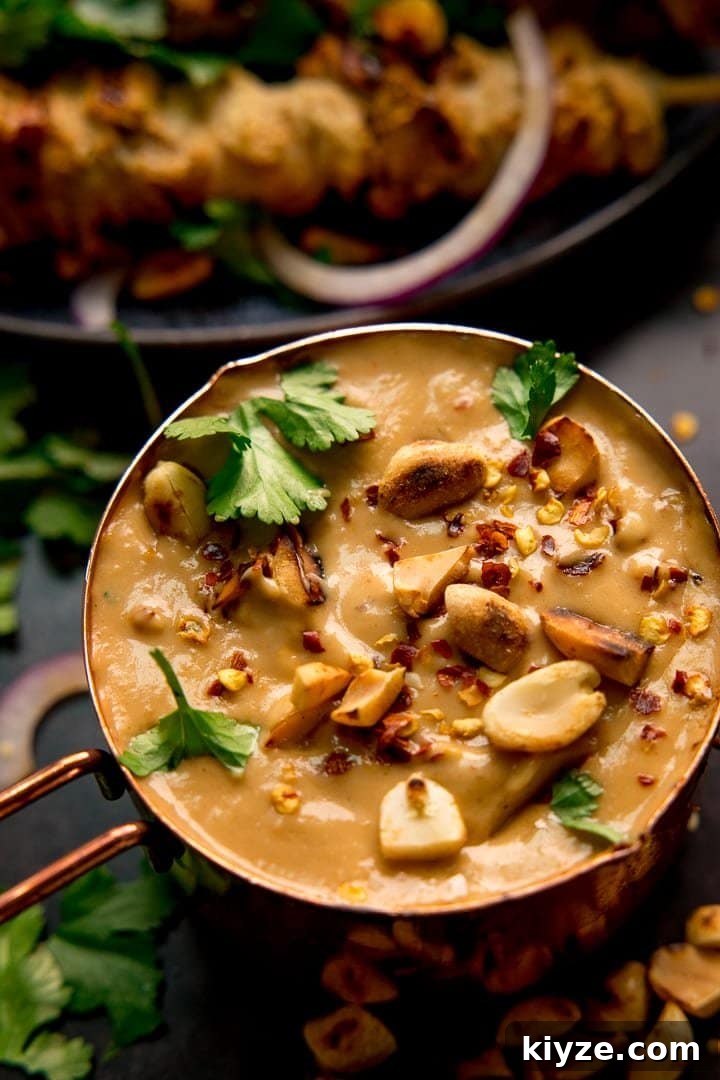
A reliable satay sauce made from storecupboard ingredients is a brilliant thing to have ready. Use it to pep up a rotisserie chicken, drizzle over a salad or serve as a dip for raw or roasted vegetables.
It’s also the ideal partner for satay chicken skewers or beef skewers — versatile, quick and flavourful.
What do we need?
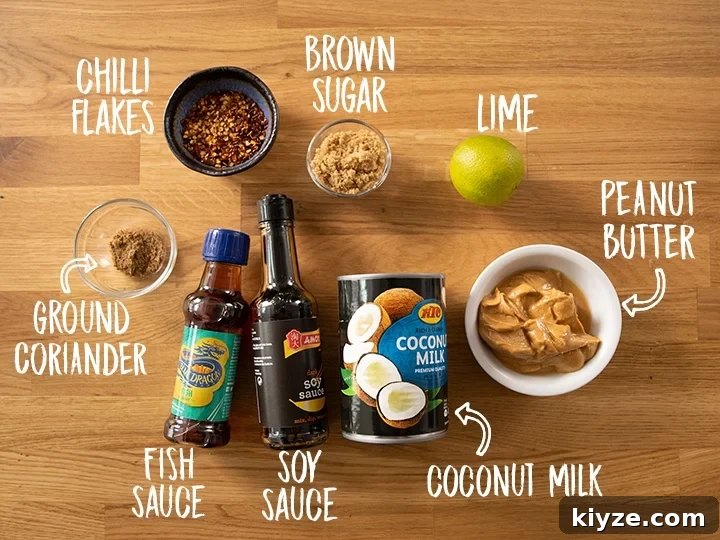
I usually use smooth peanut butter for simplicity, but chunky peanut butter or homemade ground roasted peanuts work equally well. A traditional Indonesian satay uses roasted peanuts ground by hand, which gives a rustic texture if you prefer that style.
How to make Satay Sauce
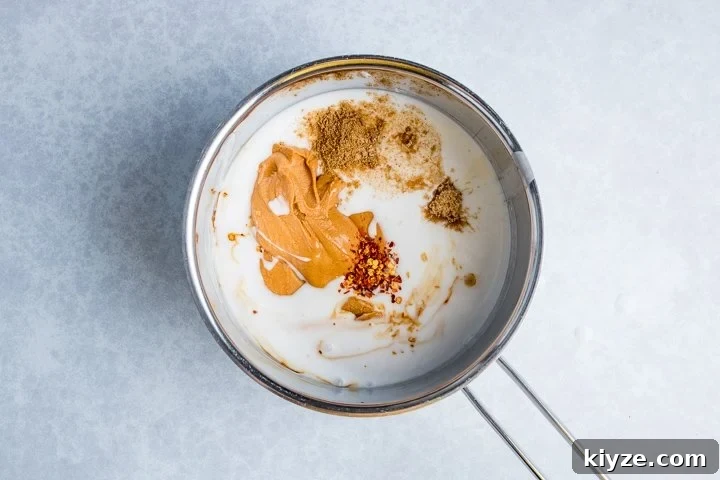
Combine peanut butter, soy sauce, chilli flakes, fish sauce, coconut milk, light brown sugar and ground coriander in a small saucepan. Heat over medium, stirring as the mixture warms.
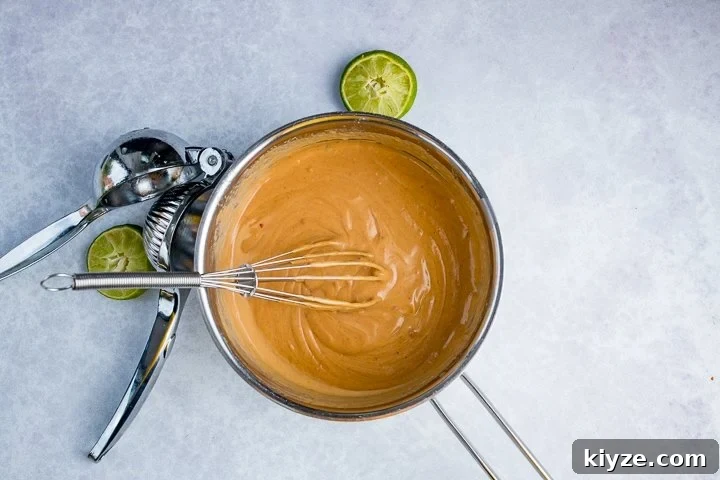
The sauce will thin at first, then begin to thicken as it nears the boil. Reduce the heat before it boils, stir until it reaches a glossy, thick consistency, then remove from heat and stir in fresh lime juice. Serve warm or cold — if serving warm, reheat gently and stir before serving.
Can I make it ahead?
Yes. Make the sauce, let it cool, then cover and refrigerate for 2–3 days. Reheat gently in a pan, stirring, if you prefer it warm. If it separates when cooled, a good stir will bring it back together.
What type of peanut butter?
Either smooth or crunchy peanut butter works. Alternatively, pulse dry-roasted peanuts in a food processor to make your own smooth or chunky peanut butter for a fresher flavour.
Don’t want the heat?
Omit the chilli flakes if you prefer no spice. The recipe is easily adjusted to taste.
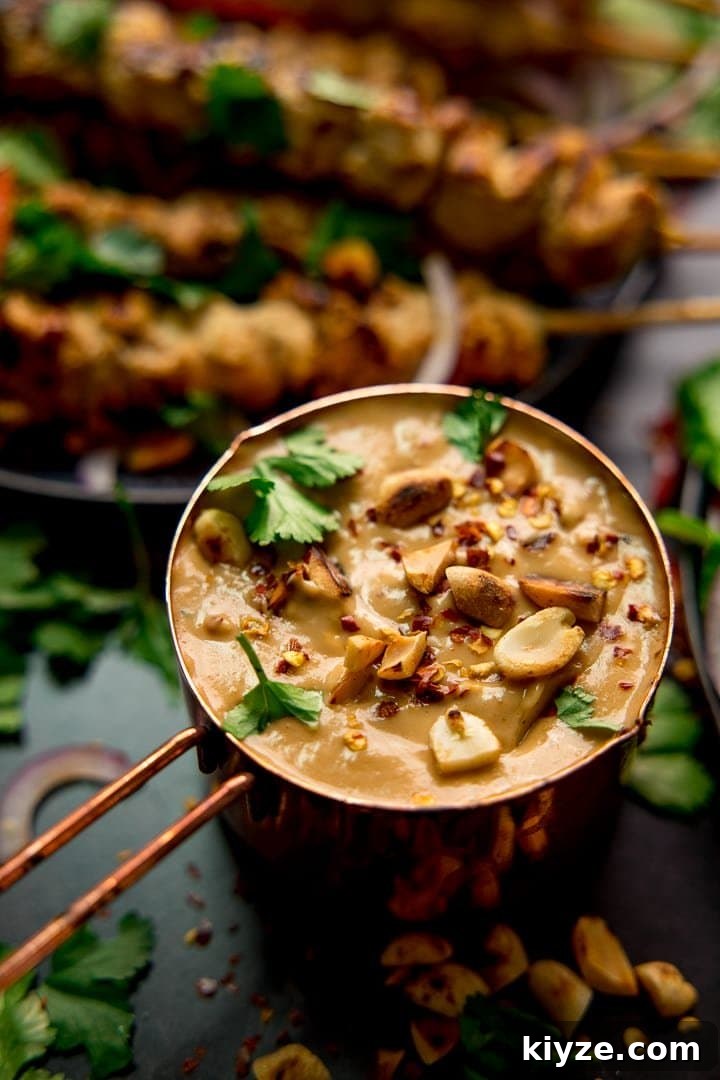
What to serve with your satay sauce
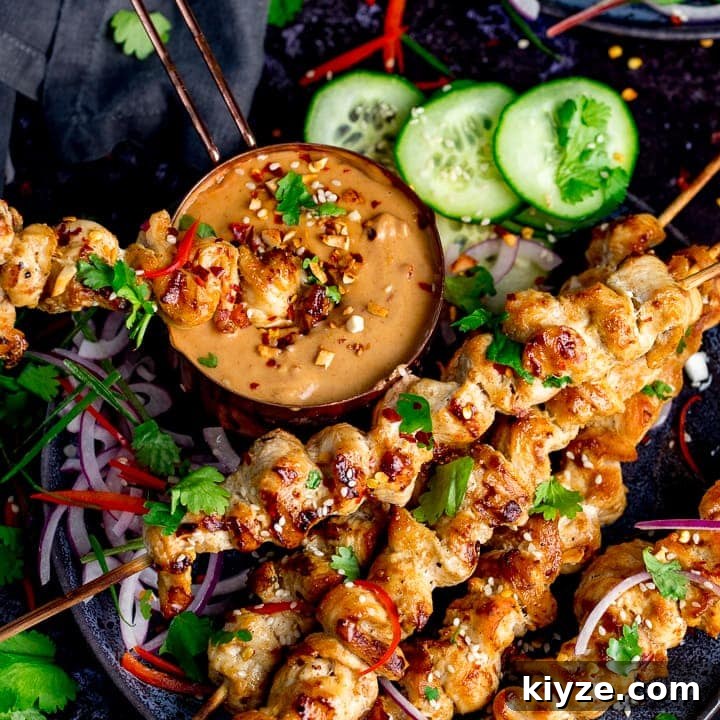
- Chicken or beef satay skewers
- Thai fish cakes
- Honey garlic chicken skewers
- Thai chicken salad with peanut dressing
- Vegetarian Buddha bowls with spicy peanut sauce
- Stir-fried mushrooms with cashews and vegetables
More peanut butter recipes
If you love peanut butter, try savoury dishes like peanut butter chicken, Thai-style peanut pork with broccoli, or African peanut chicken stew. For sweet options, try peanut butter granola bars, chocolate peanut butter ice cream cake with salted caramel, or chocolate peanut nougat.
Watch how to make it
Stay updated with new recipes. Subscribe to the newsletter or follow the author on social channels for new posts and videos.
Easy Satay Sauce Recipe
Ingredients
- 3 heaped tbsp smooth peanut butter
- 1 tbsp dark soy sauce (use tamari for gluten-free)
- ½ tsp chilli flakes (red pepper flakes)
- 1 tbsp fish sauce (substitute vegetarian fish sauce if desired)
- 200 ml (7 oz) coconut milk (from a tin)
- 1 tbsp light brown sugar
- ½ tsp ground coriander
- Juice of 1 lime (about 2 tbsp)
Toppings (optional)
- ½ tsp sesame seeds
- 1 tbsp roasted peanuts, finely chopped
- Pinch of chilli flakes
- 1 tbsp fresh coriander (cilantro) leaves
Instructions
- Place all the satay sauce ingredients except the lime juice into a small pan: peanut butter, dark soy sauce, chilli flakes, fish sauce, coconut milk, light brown sugar and ground coriander.
- Heat over medium, stirring with a wooden spoon. The sauce will seem thin at first; as it approaches boiling point it will thicken. Do not let it boil — reduce the heat as it nears the boil and stir until thickened.
- Remove from the heat and stir in the lime juice.
- Transfer to a serving dish and sprinkle with sesame seeds, chopped peanuts, extra chilli flakes and fresh coriander if desired.
Notes
Reheating: the sauce can be served cool or warm. If reheating, warm gently while stirring. Separation of oil from the peanut butter and coconut milk can occur when cooled; a vigorous stir will recombine the sauce.
Nutrition (per serving, approx.)
Calories: 171 kcal | Carbohydrates: 6 g | Protein: 6 g | Fat: 15 g | Saturated Fat: 7 g | Sodium: 396 mg | Fiber: 1 g | Sugar: 3 g
Nutrition information is approximate and should be used as a guide only.
Some links in the original post may have been affiliate links. Nutritional information is approximate and can vary depending on ingredients and portion sizes.