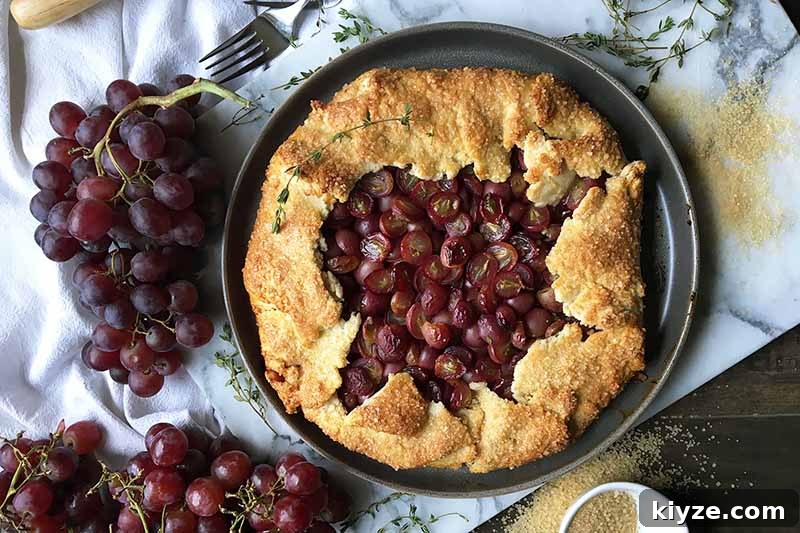
Until recently, I never appreciated the culinary potential of a grape.
For most of my cooking life, grapes meant one thing: a bag to snack from in the fridge. Pick, nibble, repeat.
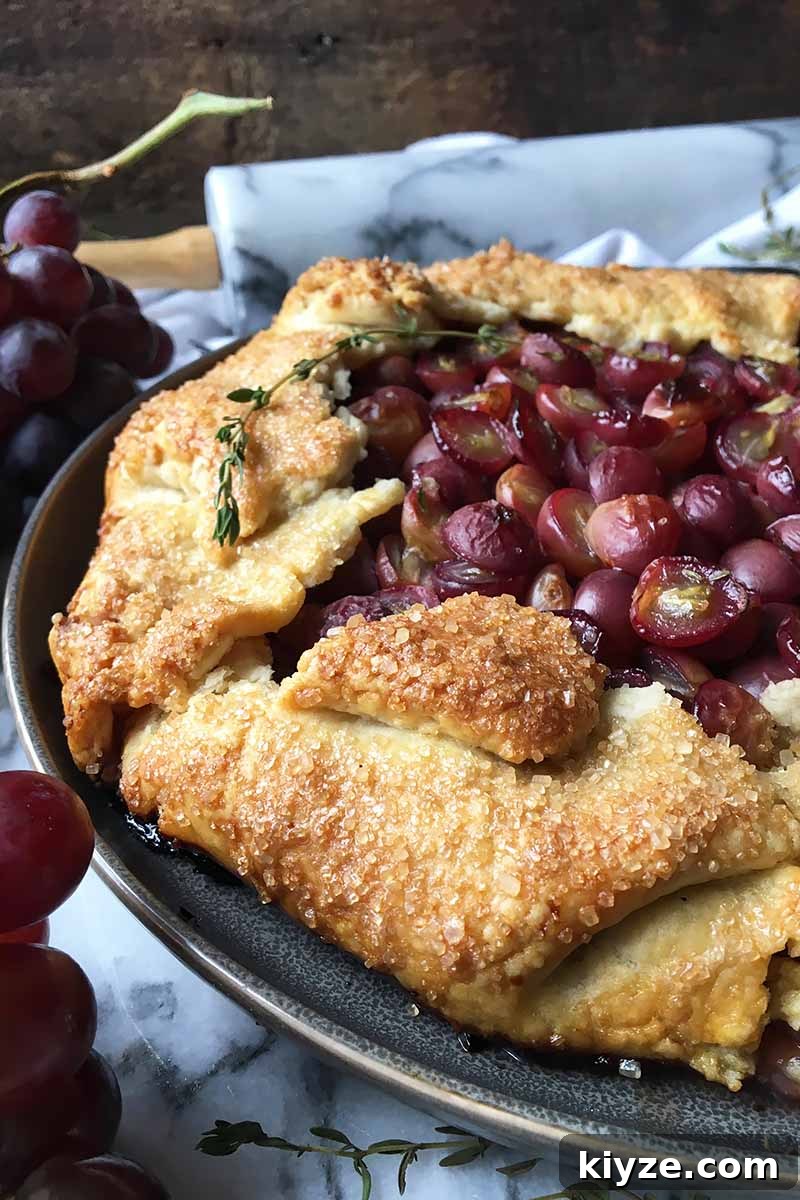
They’re great eaten fresh, of course, but when you view them through the lens of dessert—introducing butter, sugar, and flaky pastry—you unlock an entirely different flavor profile. When roasted or baked inside a rustic galette, grapes soften, release their juices, and become warmly tender and juicy, creating a luscious filling that melts on the tongue.
Paired with brown sugar and a hint of thyme, the grapes take on a sweet, lightly herbal character. The combination is subtle and sophisticated—thyme brightens the fruit without overpowering it. If you prefer, other fresh herbs such as basil, lavender, or sage would also work well for a delicate twist.
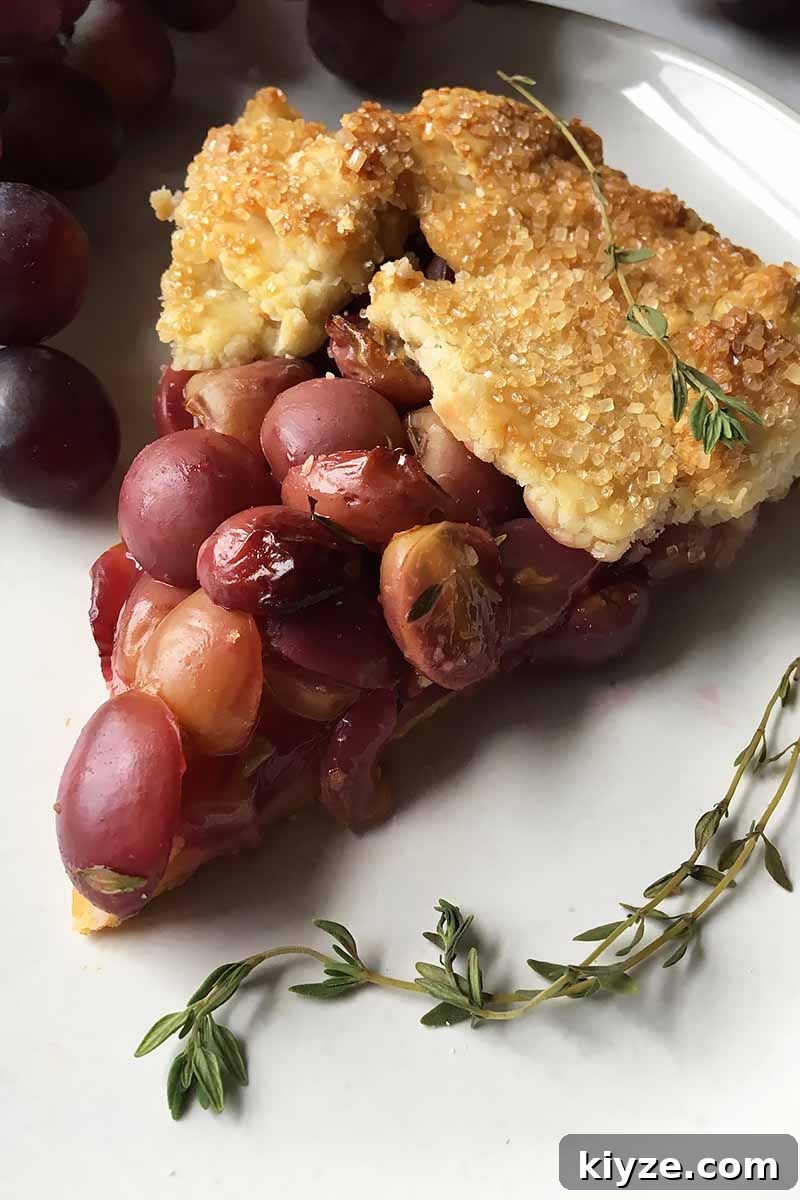
The crust is where the galette truly shines: a buttery pate brisee rolled into a rustic circle, its edge folded over the filling and sprinkled with turbinado sugar so it bakes up golden and slightly crunchy. Embrace the imperfect, freeform look—no lattice or crimping needed. Those rough, rustic edges are part of the charm.
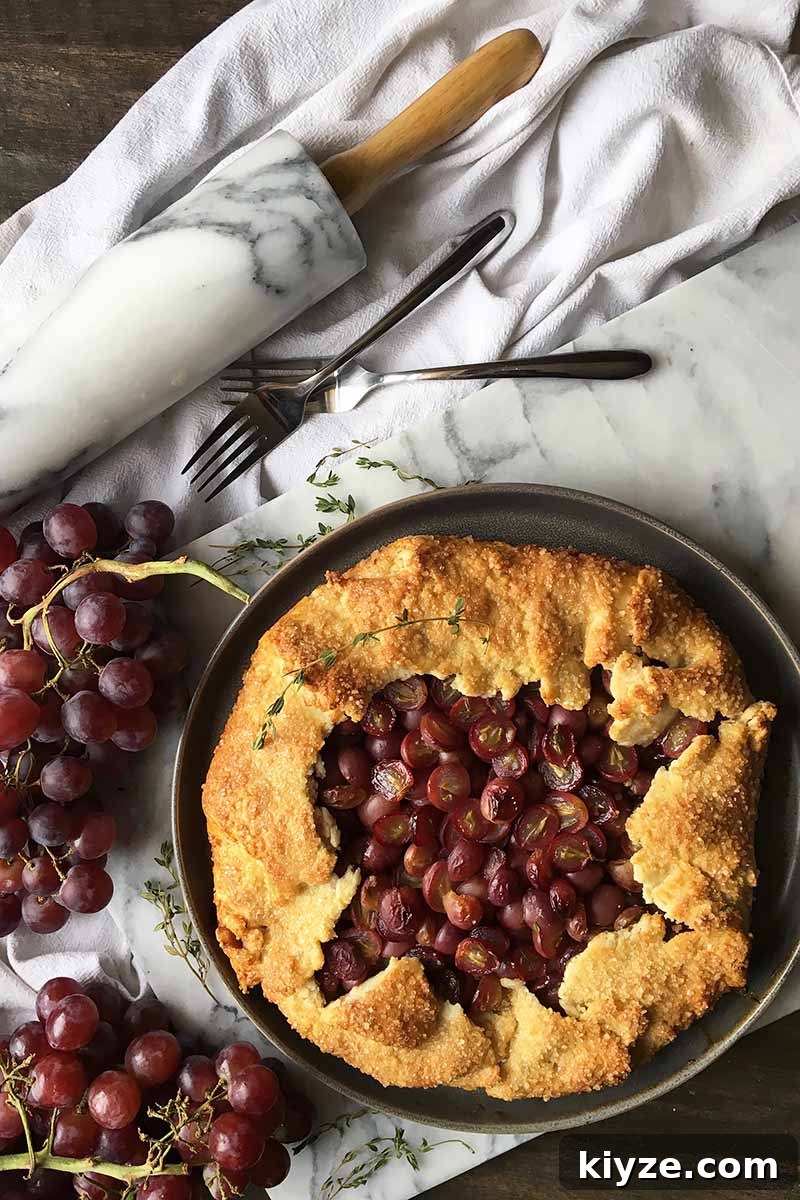
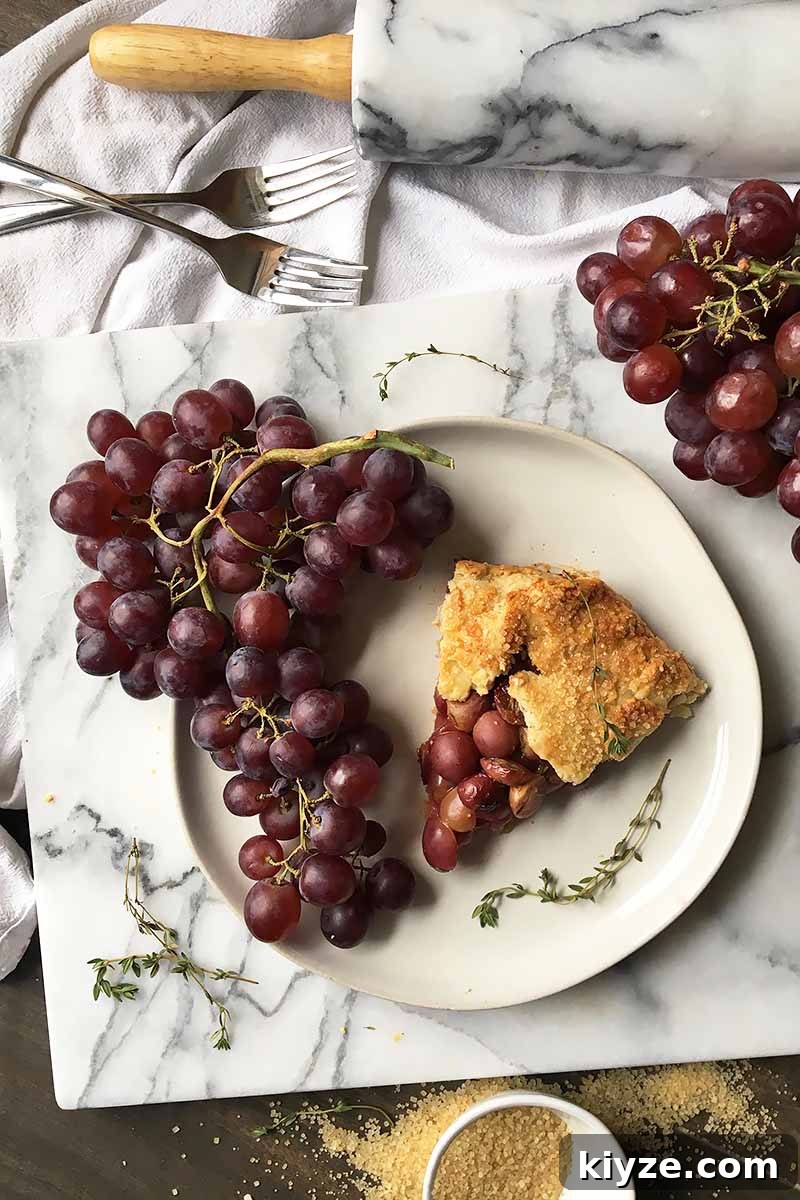
Serve the galette warm from the oven with a scoop of ice cream or a dollop of whipped cream, or enjoy it at room temperature the next day for a delightful breakfast. Either way, the transformation of simple grapes into a refined dessert is impressive and satisfying.
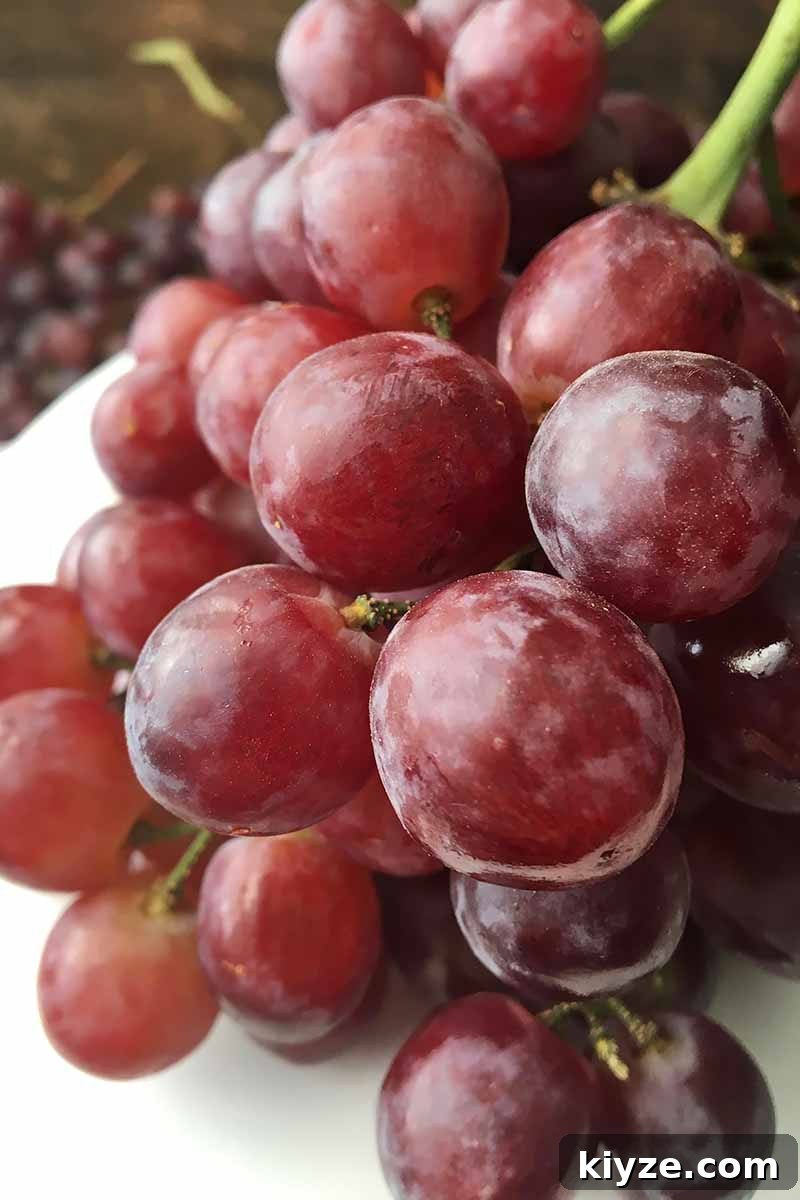
You’ll never look at a bag of grapes the same way again.

Grape Galette with Fresh Thyme
- Author: Nikki Cervone
- Total Time: 2 hours, 15 minutes
- Yield: 1 large galette
Description
Grapes aren’t just for snacking. Baked in a rustic galette with a flaky, buttery crust and a sweet, thyme-scented filling, they become a memorable dessert that’s both simple and elegant.
Ingredients
For the Crust*:
- 2 cups all-purpose flour
- 1 teaspoon Kosher salt
- 1 cup (2 sticks) unsalted butter
- 6 tablespoons ice water
For the Filling:
- 4 cups halved grapes
- 3 tablespoons lightly packed brown sugar
- 2 tablespoons cornstarch
- 5–6 sprigs fresh thyme, leaves removed and roughly chopped
- 1/2 lemon, juiced
For the Egg Wash:
- 1 large egg
- 1 tablespoon whole milk
- 1 tablespoon turbinado sugar
Instructions
For the Pie Dough:
- Line a rimmed sheet pan with parchment paper or a silicone baking mat.
- Cut the butter into the flour and salt using a stand mixer with a paddle attachment, a food processor, or a pastry cutter, until the mixture resembles peas.
- Add the ice water and mix until the dough just comes together.
- Turn the dough onto a clean surface and knead lightly once or twice to form a smooth disc.
- Wrap the disc in plastic wrap and refrigerate for at least one hour.
- When ready, let the dough sit at room temperature for 10 minutes before rolling.
- On a floured surface, roll the dough to a roughly 12-inch circle and transfer it to the prepared sheet pan.
For the Galette:
- In a medium bowl, stir the halved grapes with brown sugar, cornstarch, chopped thyme, and lemon juice. Let rest 5 minutes to macerate.
- Lift the grapes from the bowl with a slotted spoon, allowing excess liquid to drain. Pile the grapes in the center of the dough, leaving a 2-inch border.
- Fold the crust edges over the fruit, pleating as you go to contain the filling.
- Chill the assembled galette on the sheet pan for 30 minutes while you preheat the oven to 350°F (175°C).
- Whisk the egg and milk together and brush the crust. Sprinkle the edge with turbinado sugar.
- Bake for about 40 minutes, until the crust is golden and the filling is bubbling.
- Let rest 5 minutes on the sheet pan, then transfer to a platter and serve warm. Optional: top with ice cream or whipped cream.
Notes
*This galette uses a classic pate brisee pie crust. Chilling the dough after assembling helps the butter solidify again so the crust holds its shape while baking.
- Prep Time: 1 hour, 30 minutes
- Cook Time: 40 minutes
- Category: Galette
- Method: Baking
- Cuisine: Baked Goods
Cooking by the Numbers…
Step 1 – Prep the Dough
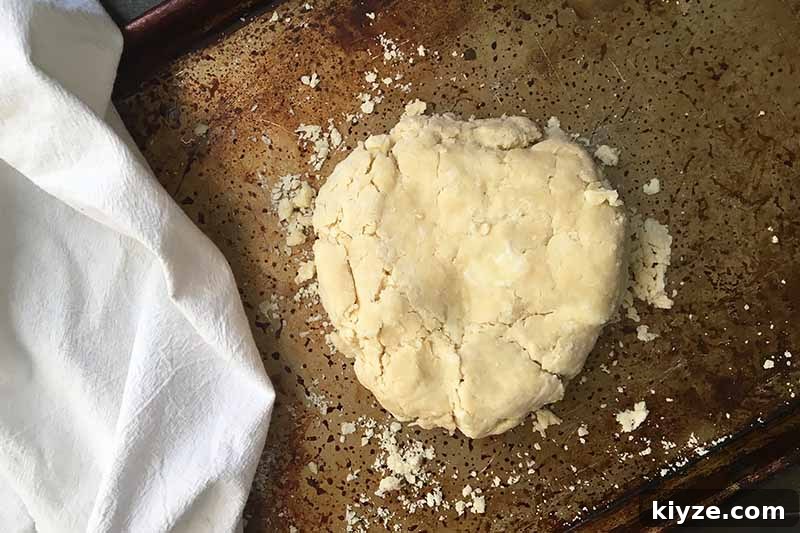
Make a classic pie dough, form it into a disc, wrap it, and chill for at least an hour to rest the gluten and firm up the butter. Chilling prevents the crust from becoming too soft while you assemble the galette.
Step 2 – Roll the Dough
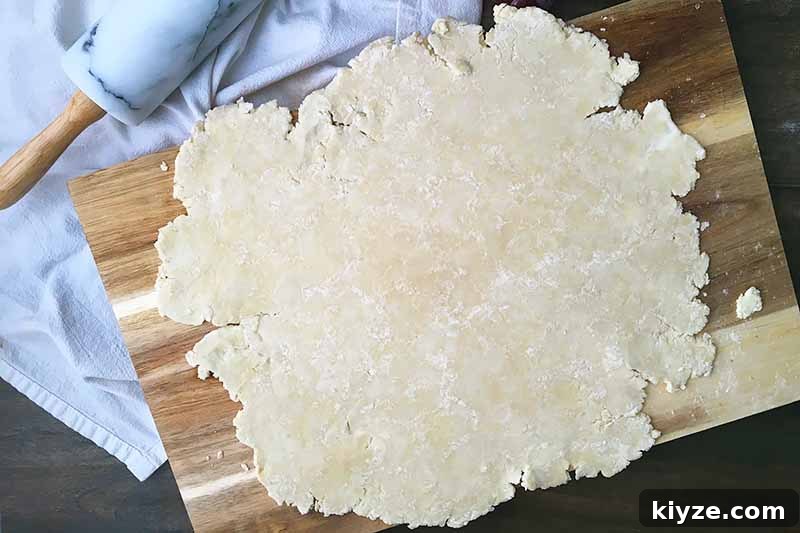
Line a rimmed sheet pan with parchment or a silicone mat. Let the dough soften for 10 minutes out of the fridge so it’s pliable but still cool, then roll to a 12-inch circle about 1/4 inch thick and transfer to the sheet pan.
Step 3 – Make the Filling
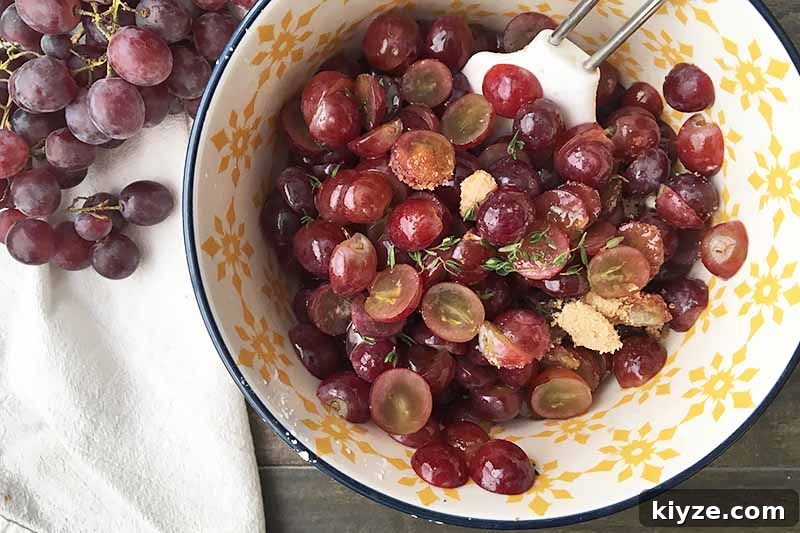
Toss halved grapes with brown sugar, cornstarch, thyme, and lemon juice. Let sit briefly so the sugar draws out some juice and the flavors meld.
Step 4 – Fill
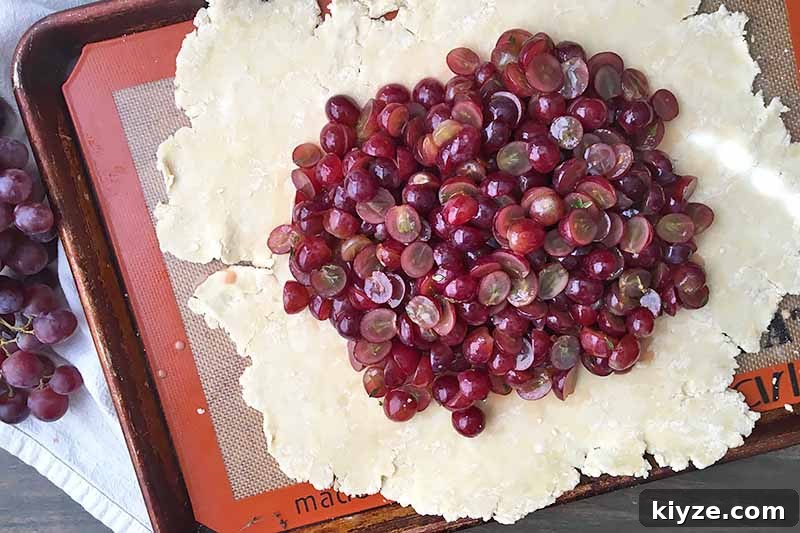
Use a slotted spoon to lift the grapes, letting excess liquid drain, then mound them in the center of the dough and leave a 2-inch border for folding.
Step 5 – Form the Crust and Chill
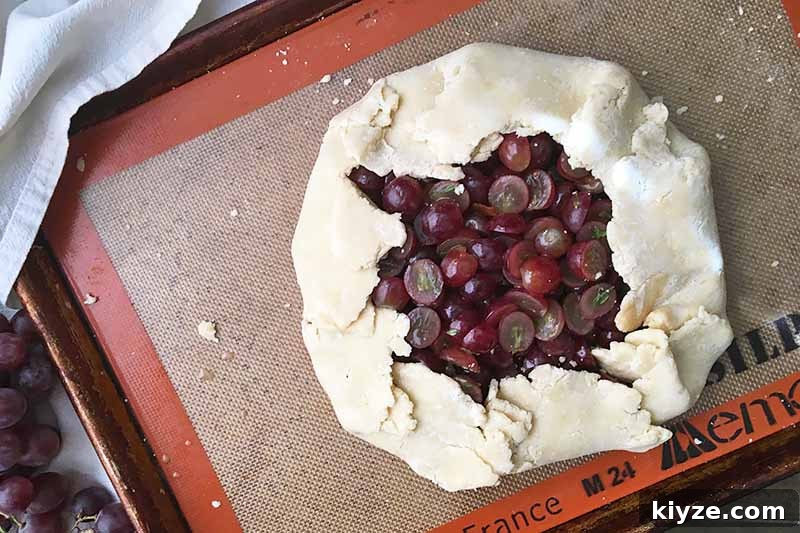
Fold and pleat the dough edge over the filling to secure it. Chill the assembled galette for 30 minutes so the butter firms up again; this helps the crust hold its shape during baking. Preheat the oven to 350°F while it chills.
Step 6 – Egg Wash
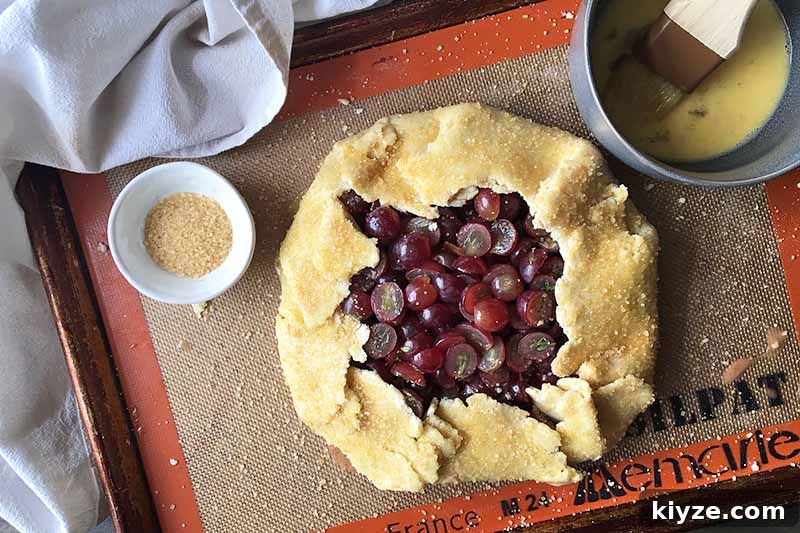
Whisk the egg with milk, brush the crust, and sprinkle turbinado sugar over the edge for a golden, crunchy finish.
Step 7 – Bake
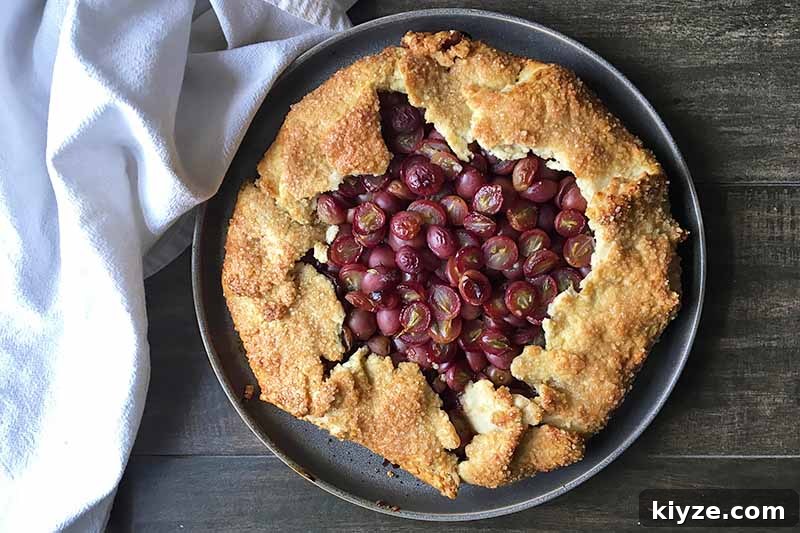
Bake the galette for about 40 minutes until the crust is golden and the filling bubbles. Let rest on the sheet pan for 5 minutes before transferring to a platter and serving warm.
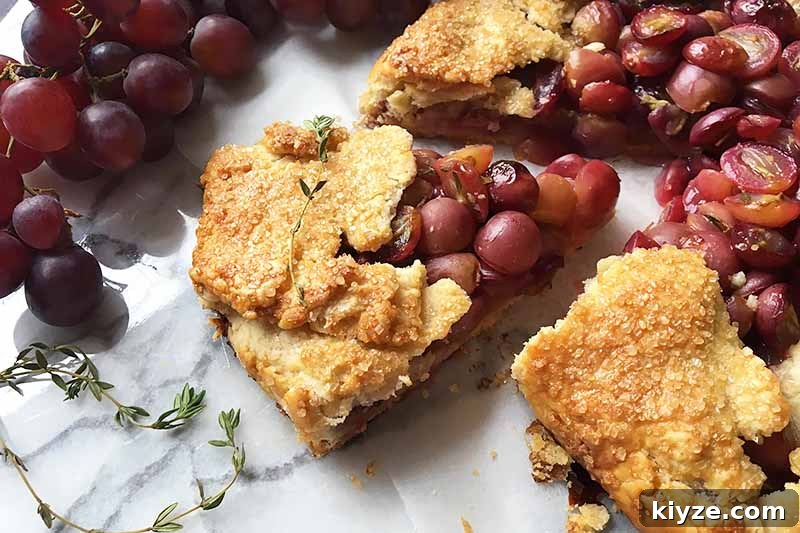
Re-Think What to Do with Your Fruit!
Grapes aren’t only a refreshing snack—they make a surprising and elegant dessert. Combined with sugar and thyme and baked in a buttery crust, they become a sophisticated rustic galette that highlights seasonal fruit in a new way.
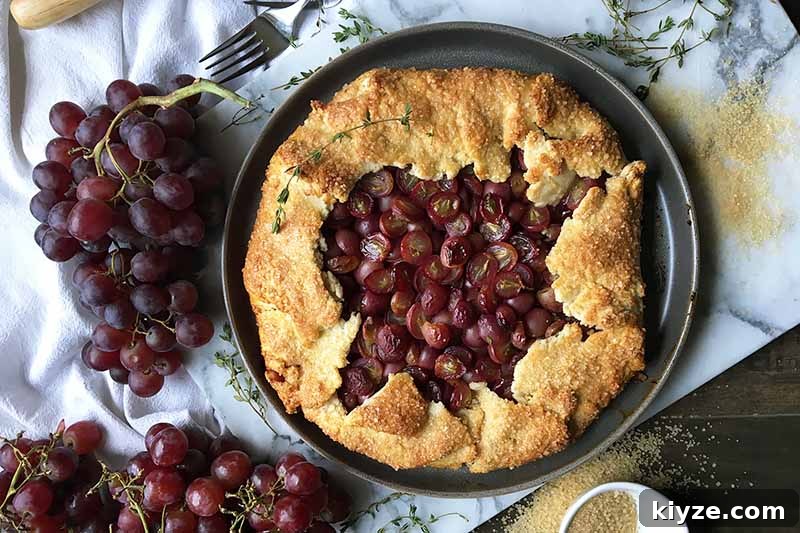
Have you cooked with grapes before, or tried fruit in unexpected preparations? Share your experiences and ideas in the comments below—we’d love to hear how you use fruit in creative ways.
Photos by Nikki Cervone, © Ask the Experts, LLC. ALL RIGHTS RESERVED. Originally published July 2, 2013. Last updated August 27, 2022.
Nutritional information is an approximation derived from a database of common foods and ingredients and was not compiled by a registered dietitian or submitted for laboratory testing.