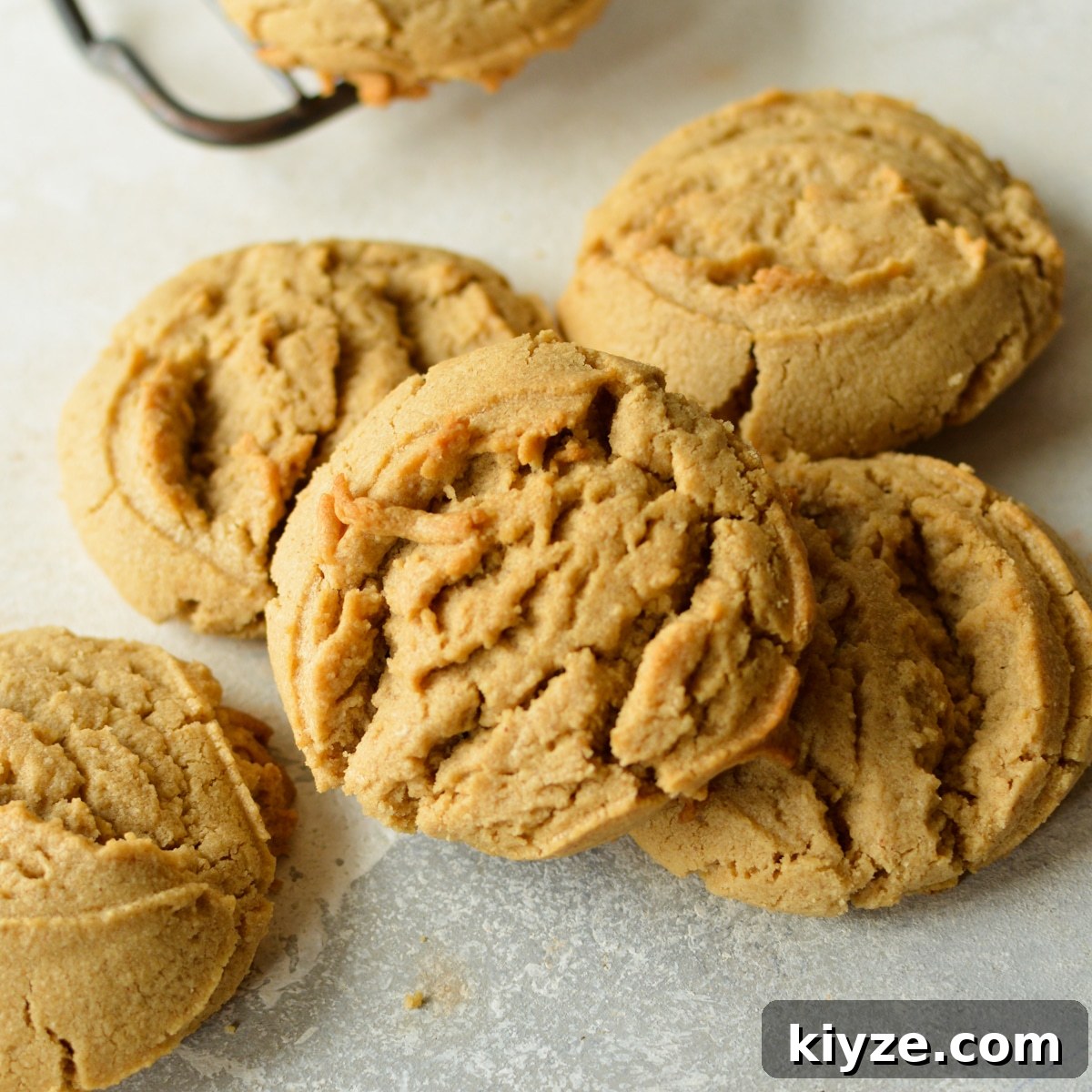
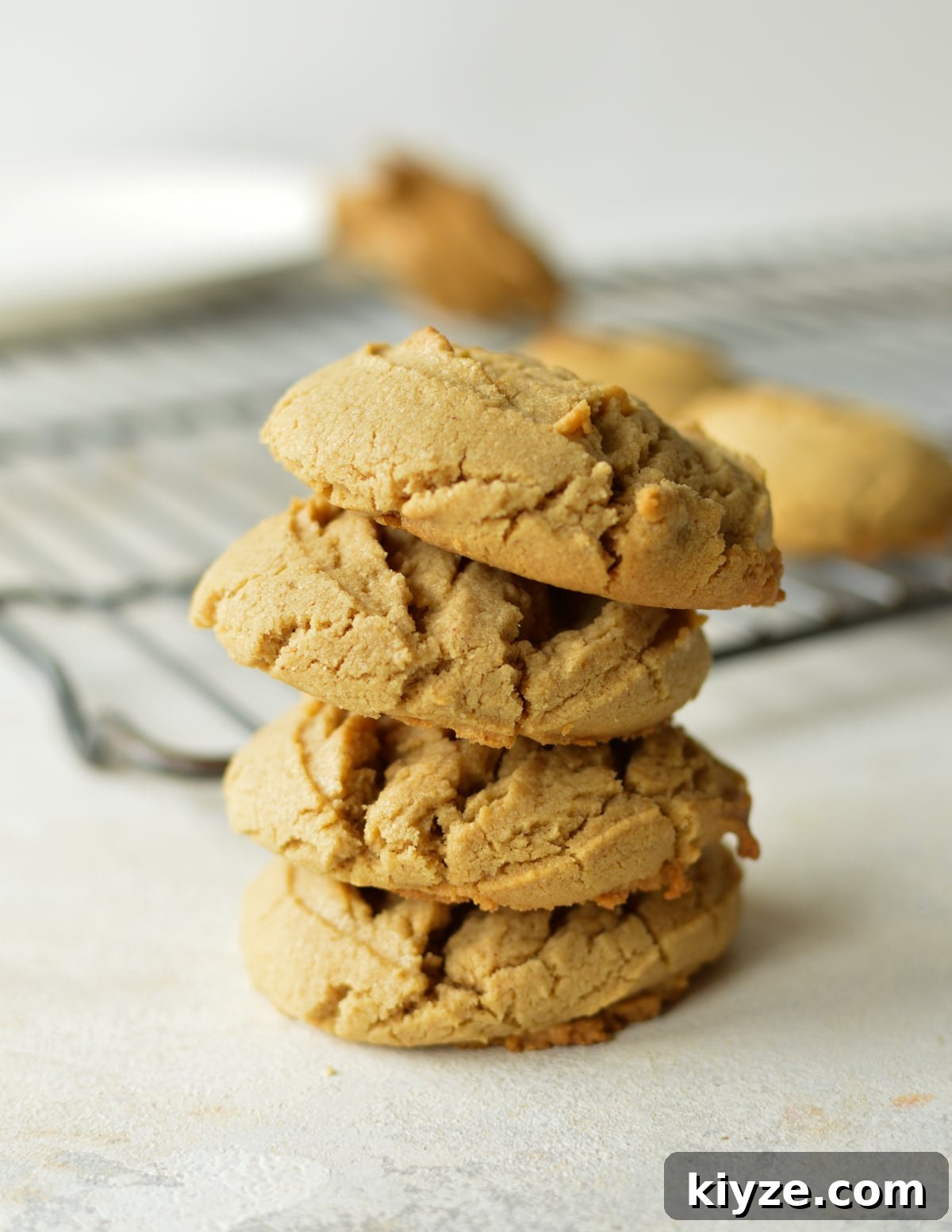
For peanut butter lovers everywhere: these oat flour peanut butter cookies are delightfully satisfying, with crisp edges, tender centers, and a rich peanut butter flavor.
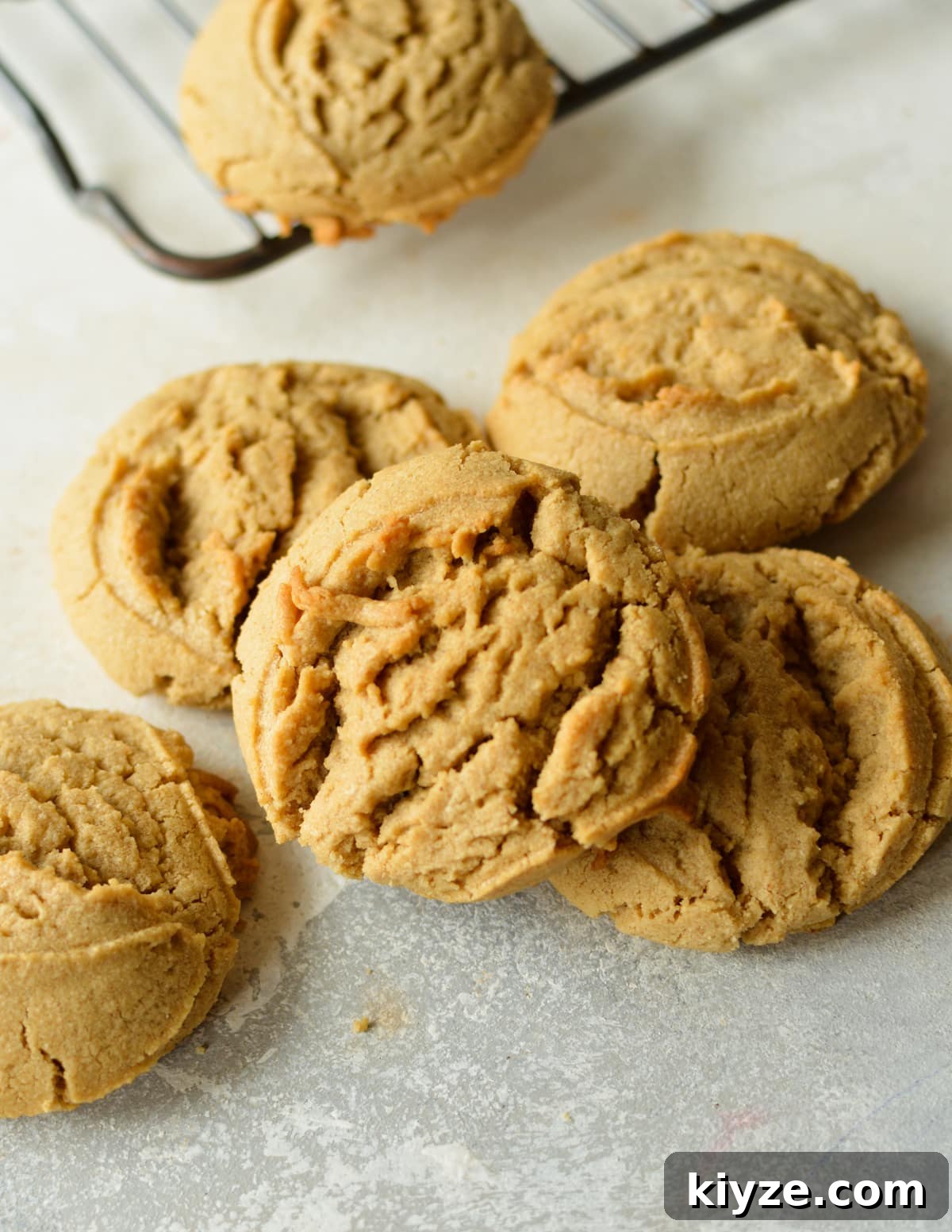
Why you’ll love them
Cookies may as well be a love language — these peanut butter oat flour cookies are a perfect example. They bake up with golden-brown edges and soft, chewy centers, delivering plenty of peanut butter flavor in every bite.
They are the ideal thickness and texture on their own, and they also make a great base for mix-ins: try chocolate chips, white chocolate chips, or M&M’s to switch things up. These oat-flour cookies are naturally gluten-free and easy to adapt to dairy-free diets when you swap in a vegan butter alternative.
Be warned: they disappear fast, so set one aside if you want to actually taste your own batch.
Key Ingredients
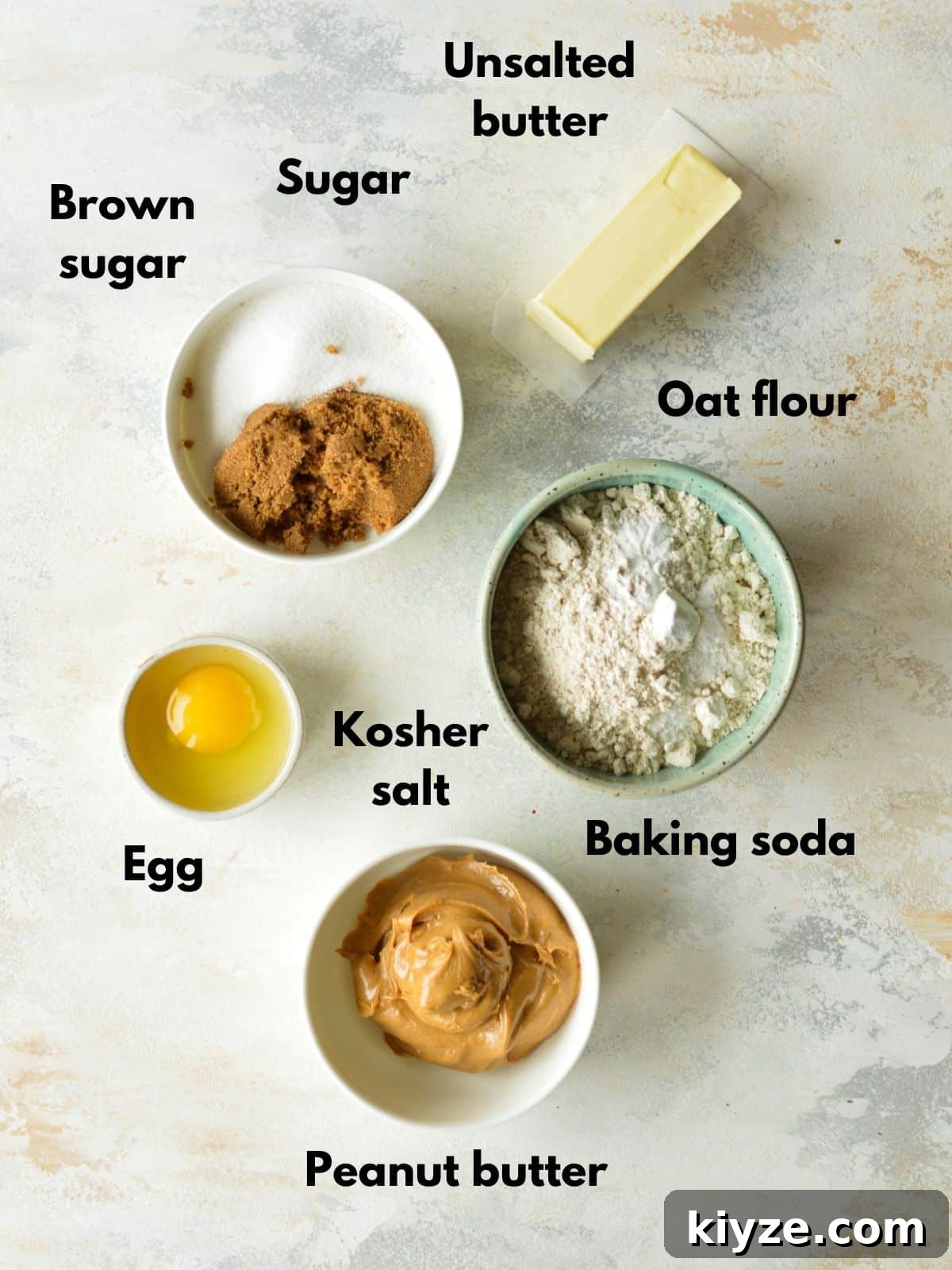
Oat flour — a mild-tasting, naturally gluten-free flour that works well in cookies. It’s more absorbent than all-purpose flour, so recipes should be written specifically for it.
Peanut butter — a creamy, commercial peanut butter works best for this recipe. If you use a natural peanut butter, stir it well before measuring and be aware the texture may change the dough slightly.
Unsalted butter — use room-temperature unsalted butter so you can control the salt level. If it’s too cold, soften it briefly in the microwave in short bursts.
How to Make Oat Flour Cookies
Start by preheating the oven to 375°F (190°C). Line a baking sheet with parchment paper or a silicone mat.
If you have silicone baking mats, they’re convenient and reusable, so you can skip parchment entirely.
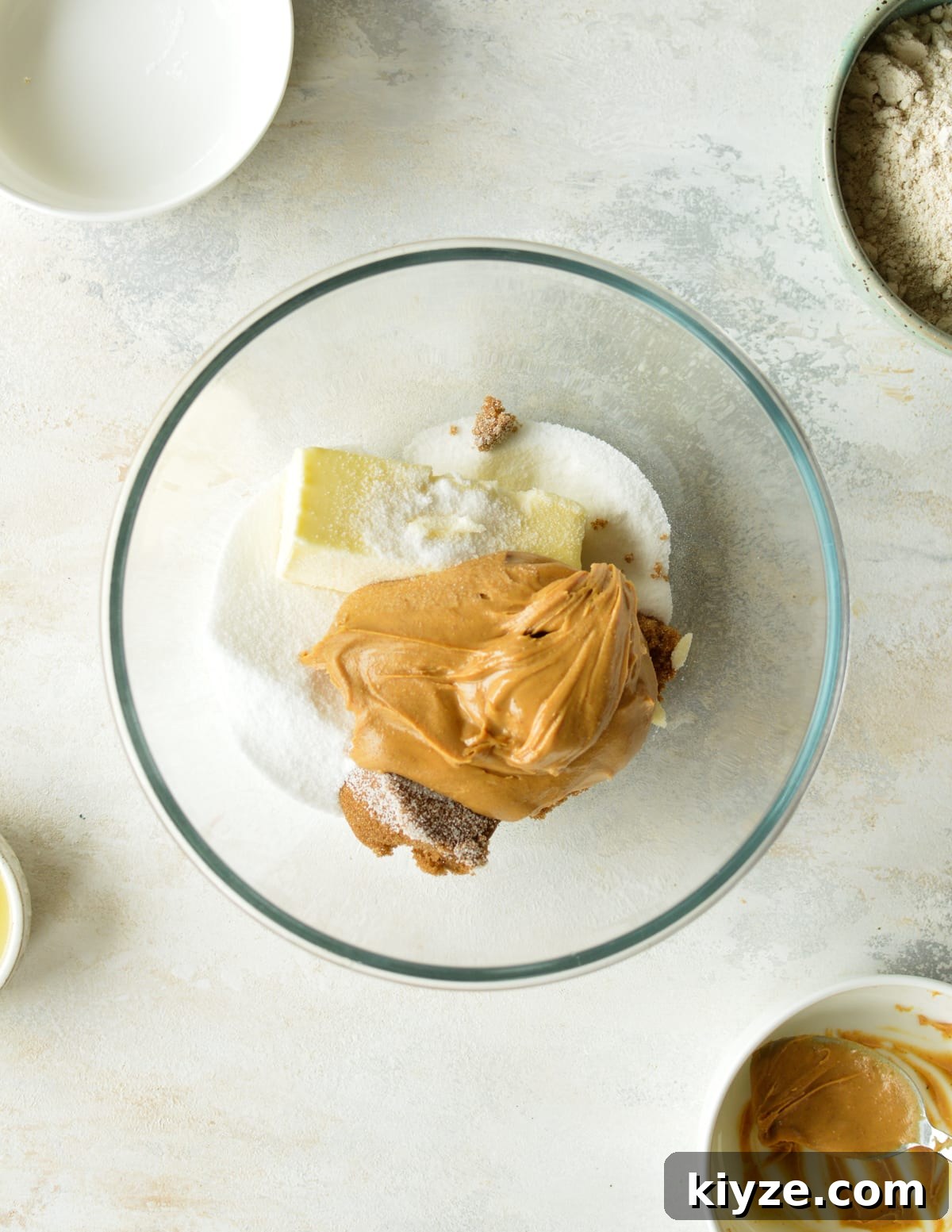
1. Cream the butter, sugars, & peanut butter
In a stand mixer fitted with a paddle attachment or using an electric hand mixer, beat the butter, granulated sugar, brown sugar, and peanut butter until the mixture is light and fluffy.
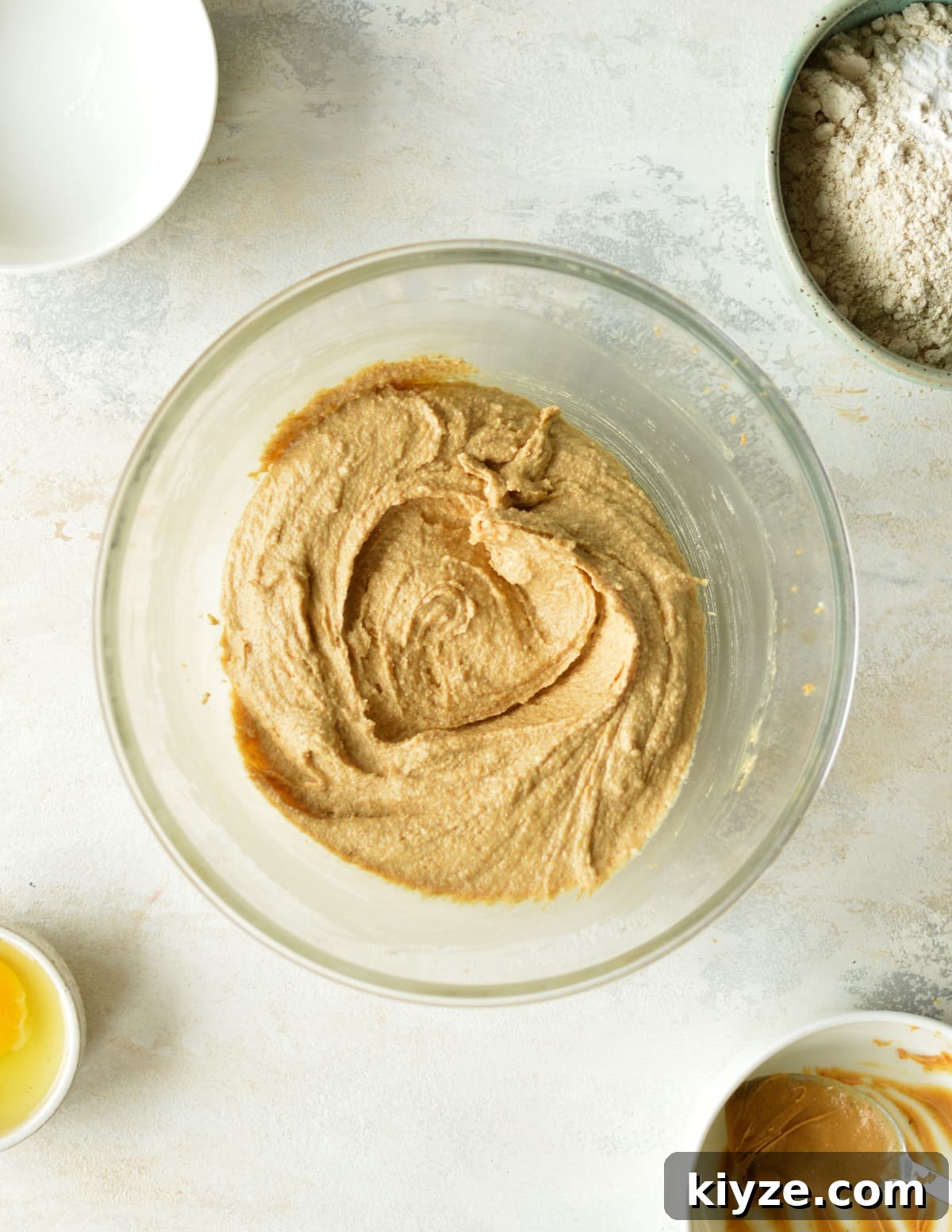
2. Mix in the egg
Add the egg and beat until just combined, then scrape down the bowl with a spatula to ensure everything is incorporated.
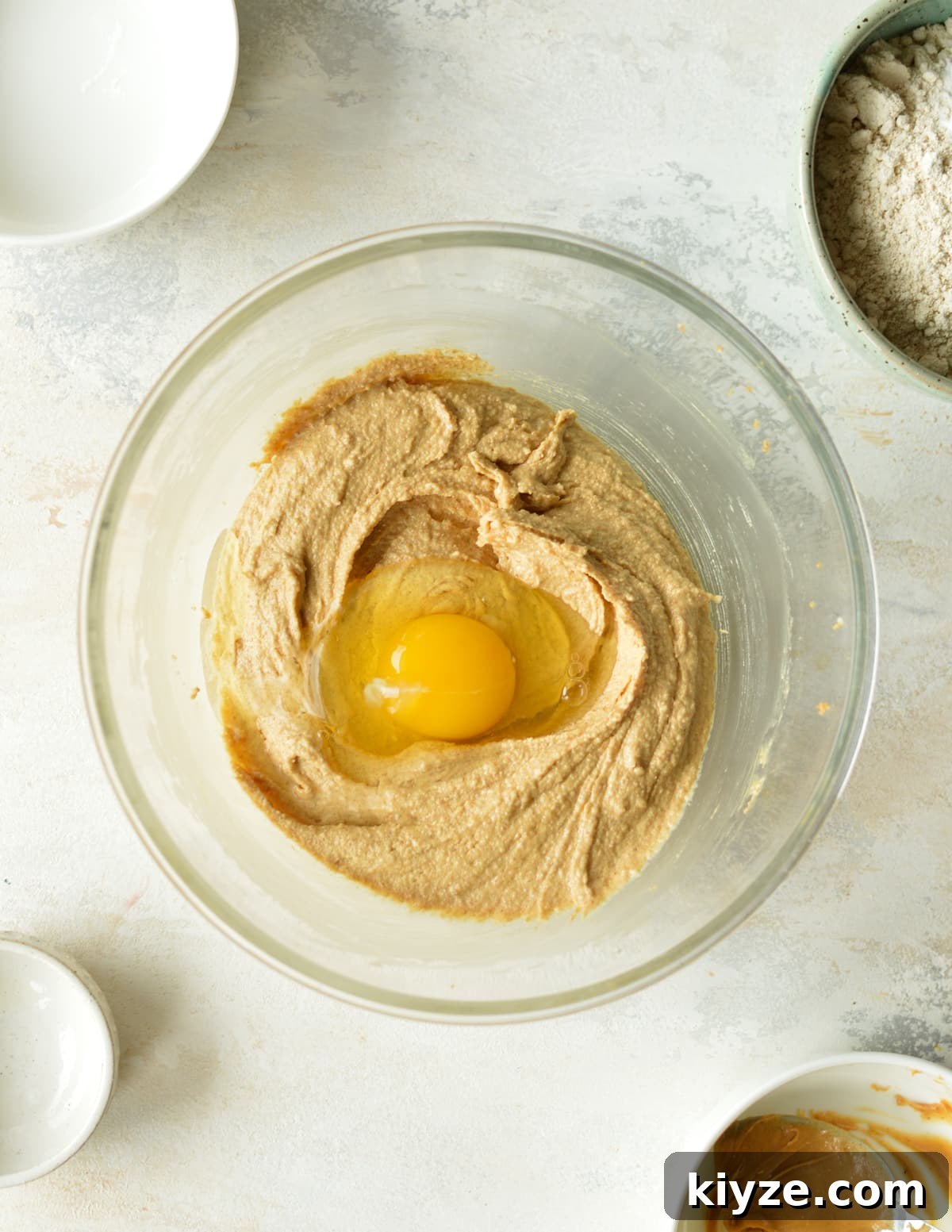
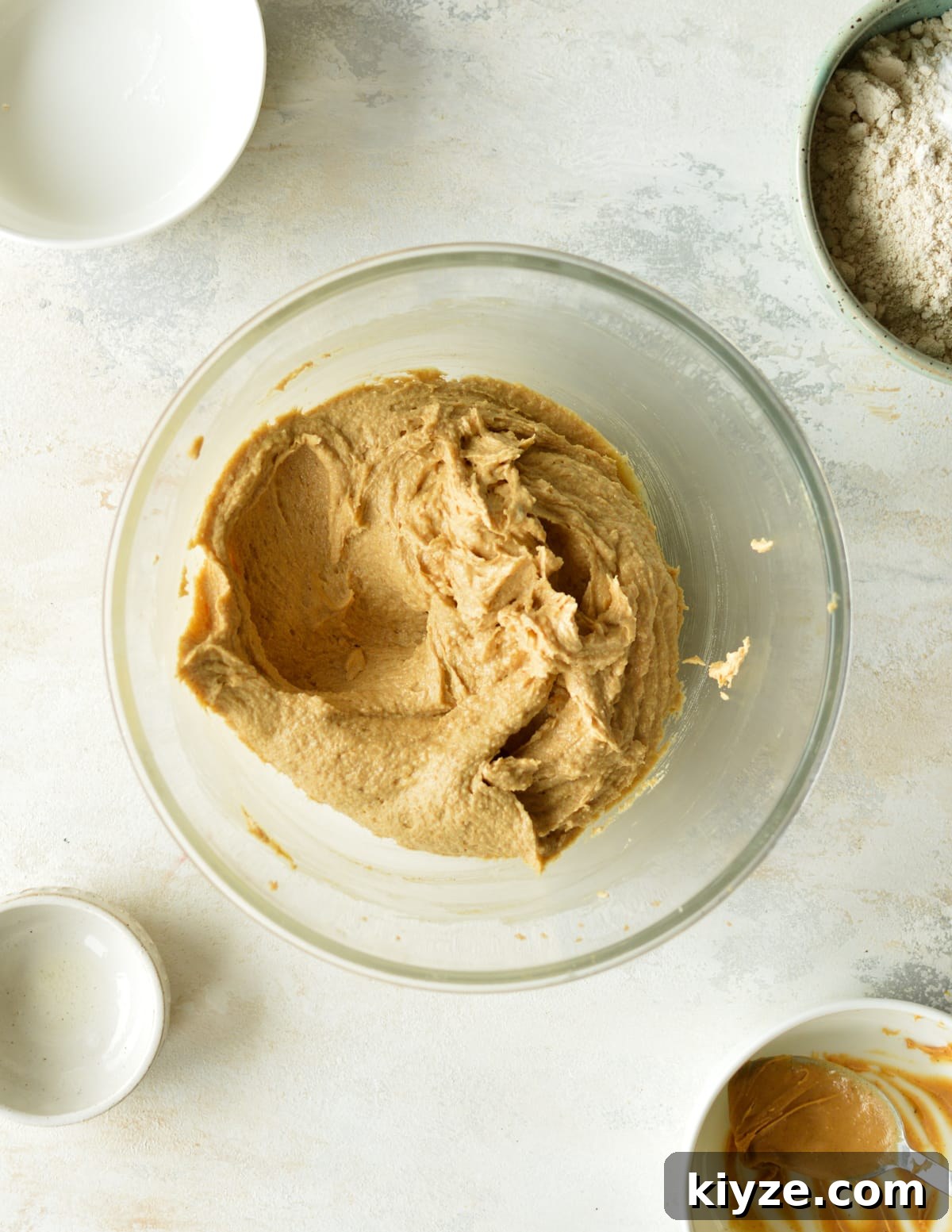
3. Add the dry ingredients
Sift or measure the oat flour, then add it to the bowl with the baking soda and kosher salt. Beat on low briefly, then increase to medium speed until a cohesive cookie dough forms.
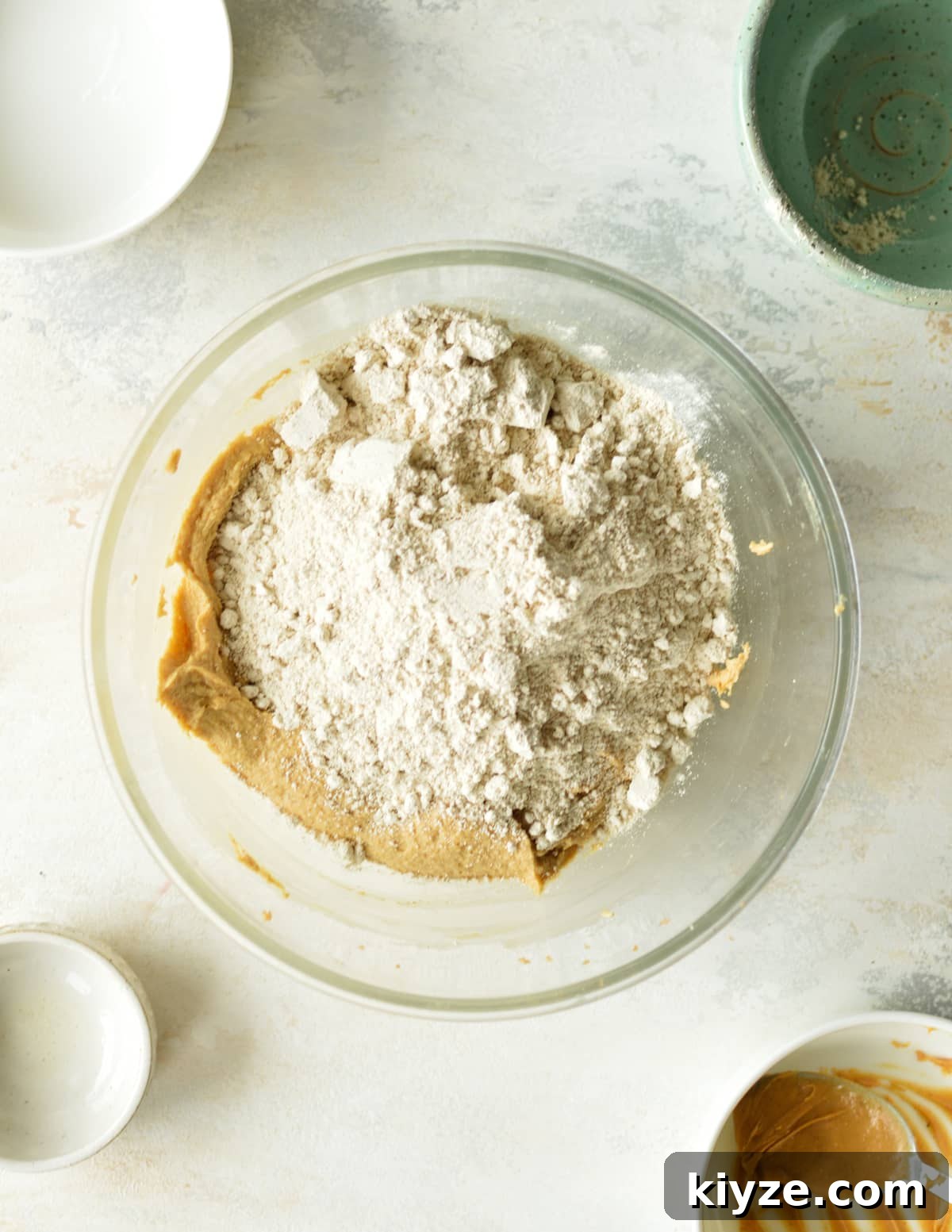
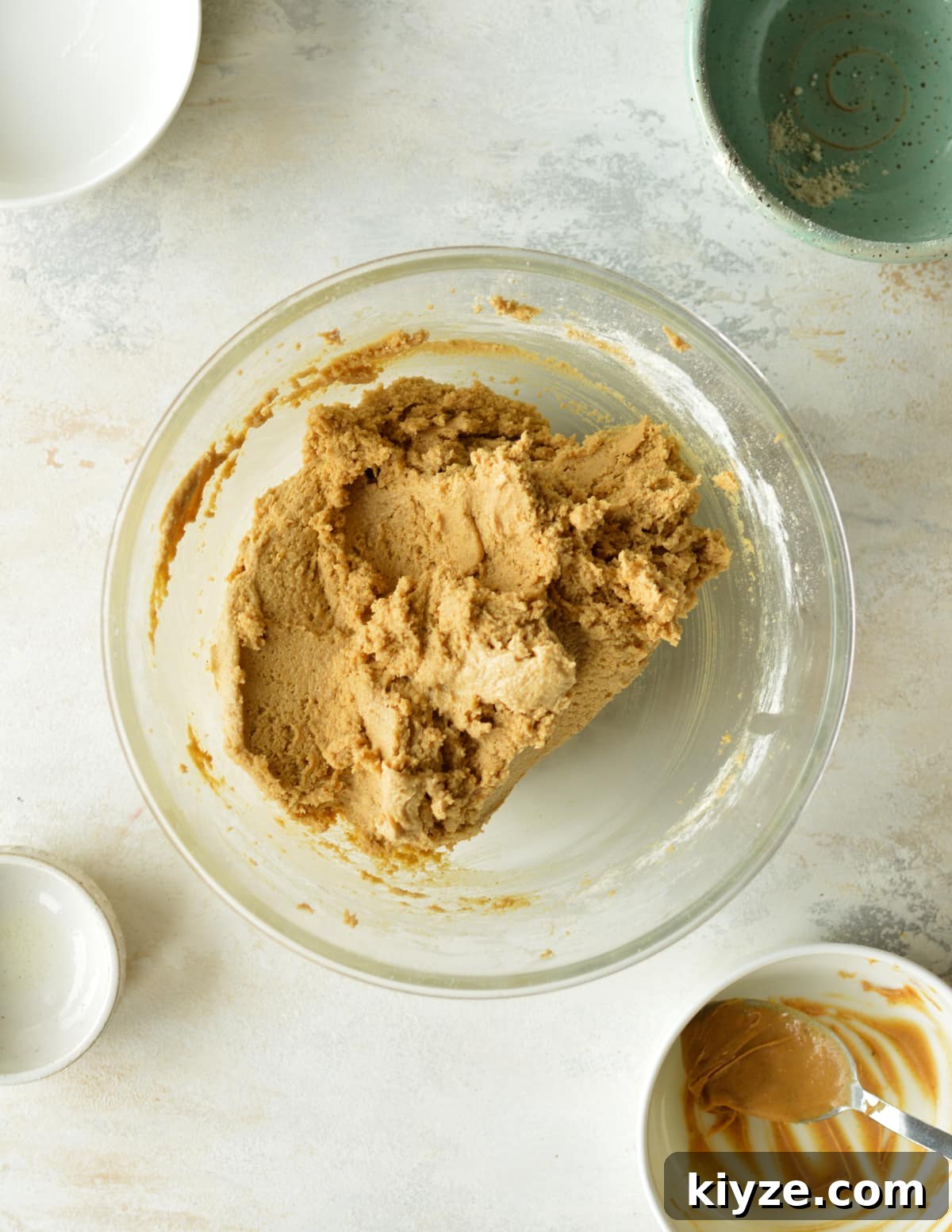
4. Scoop cookies & bake
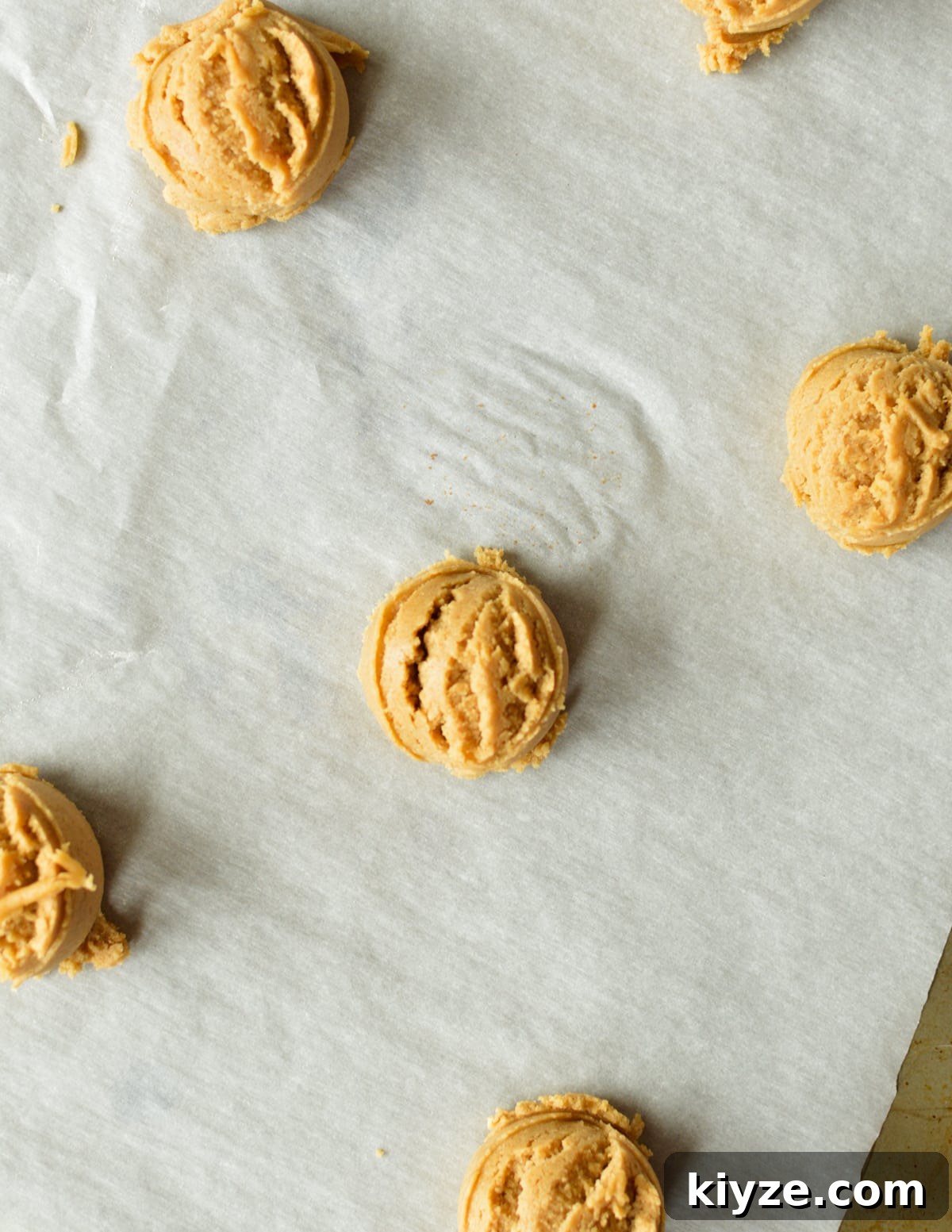
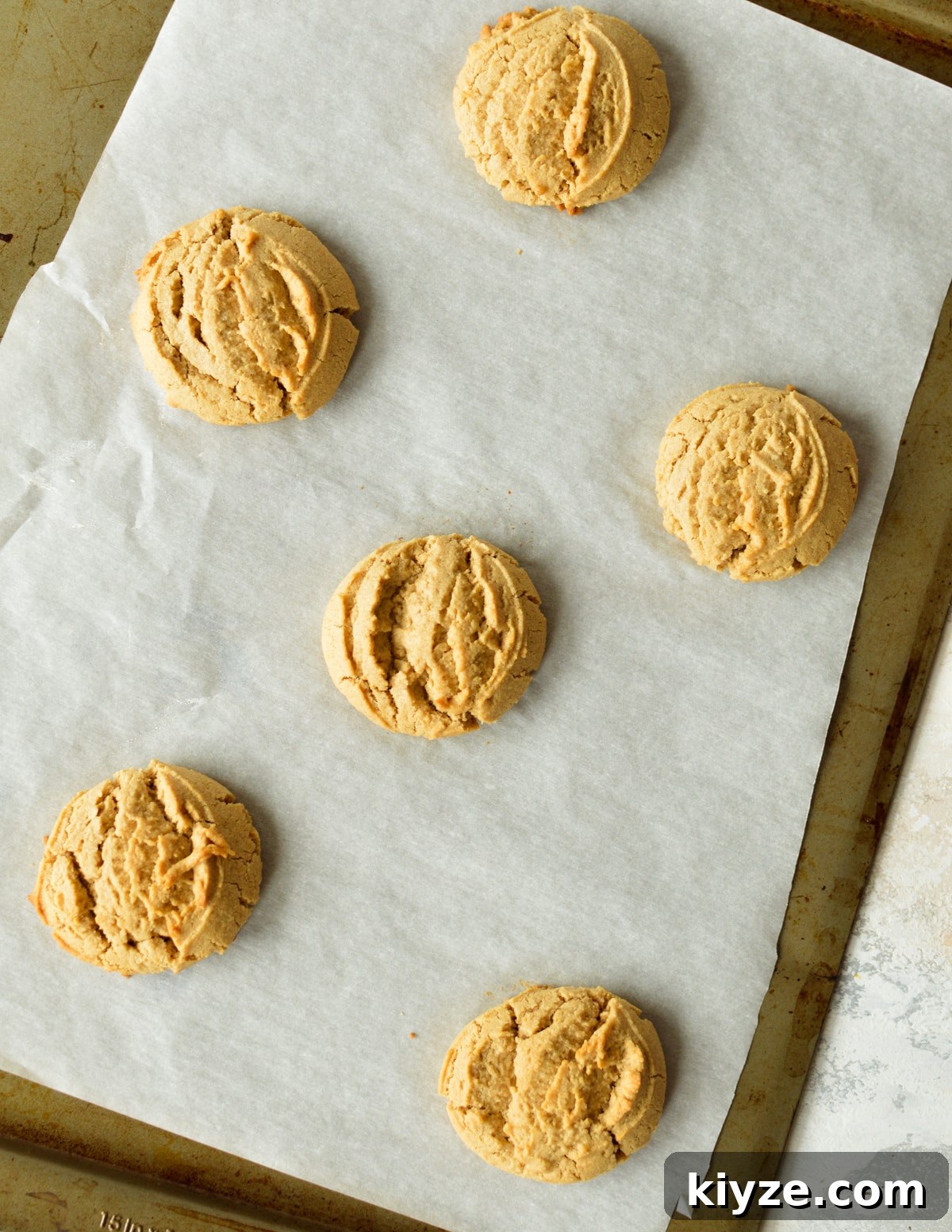
Use a small cookie scoop to portion the dough: place six scoops onto the prepared sheet pan. Bake for 10 to 12 minutes—remove the pan when the edges are golden and the centers still look slightly underdone. If the entire cookie appears fully set when you pull it out, it’s likely overbaked.
Cookie Making Tips
- Don’t overbake. Cookies continue to set after they leave the oven. Pull them when the edges are golden and the centers still look slightly underdone to keep a chewy middle.
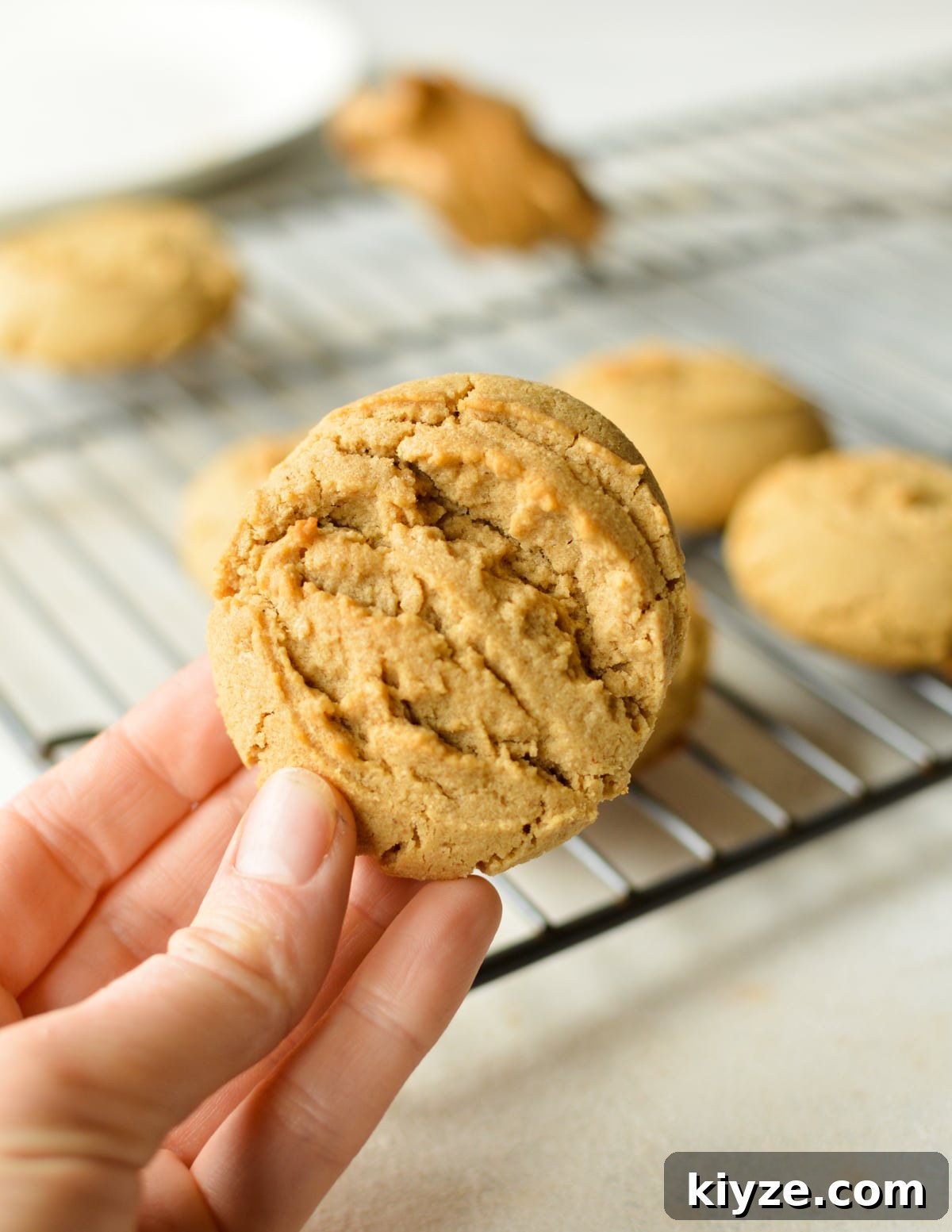
- Let them set on the pan. Allow cookies to cool on the baking sheet for at least five minutes before transferring to a cooling rack. Hot cookies are fragile and can fall apart if moved too soon.
Storage & Freezing Tips
- Once completely cooled, store cookies in an airtight container at room temperature for up to four days, or refrigerate for up to one week.
- Freezer-friendly: Freeze either unbaked cookie dough balls or fully baked cookies.
- Unbaked dough: Scoop dough onto a lined sheet pan and freeze until firm. Transfer the frozen balls to a zip-top bag and use within three months.
- Baked cookies: Place cooled cookies in a freezer-safe container or bag for up to three months. Thaw at room temperature or warm briefly in the microwave in 10-second increments.
Variations
- Dairy-free: Replace the butter with your preferred vegan butter stick.
- Mix-ins: Fold in chocolate chips, white chocolate chips, M&M’s, peanut butter chips, chopped peanuts, or even crushed pretzels for texture and flavor.
FAQs
Oat flour acts as the primary dry ingredient and binder, adding a mild, oat-forward flavor and a tender texture. It behaves differently from wheat flour, so follow recipes specifically developed for oat flour.
Yes. Oat flour works well in pancakes, muffins, cookies, and many quick-bread recipes. Because it absorbs liquid more readily than all-purpose flour, it’s not a direct 1:1 substitute for every recipe.
No—different alternative flours react to liquids and fats in unique ways. If you want to use a different flour, look for a recipe written specifically for that flour.
Peanut Butter Cookie Recipes
- Almond Flour Peanut Butter Cookies
- Peanut Butter Oatmeal Cookies
- Flourless Peanut Butter Cookies

Oat Flour Peanut Butter Cookies
Carolyn
10 mins
12 mins
22 mins
18 cookies
169 kcal
Equipment
- Stand mixer with paddle attachment or electric hand mixer
- Sheet pan
- Small cookie scoop
- Measuring cups & spoons
Ingredients
- 3 ounces unsalted butter, room temperature (6 tablespoons)
- ¾ cup creamy peanut butter
- ⅔ cup sugar
- ¼ cup brown sugar
- 1 large egg
- 1 cup oat flour
- ½ teaspoon baking soda
- ¼ teaspoon kosher salt
Instructions
- Preheat oven to 375°F. Line a sheet pan with parchment paper or a silicone baking mat.
- In a stand mixer with a paddle attachment or using an electric hand mixer, beat the butter, brown sugar, sugar, and peanut butter until light and fluffy, about 3 minutes.
- Add the egg and beat until just combined. Scrape the sides of the bowl to incorporate everything.
- Add the oat flour, baking soda, and kosher salt. Beat on low briefly, then increase to medium speed and mix until combined.
- Use a small cookie scoop to place 6 cookies on the sheet pan and bake for 10–12 minutes, until edges are golden and centers look slightly underdone.
- Remove from oven and let cookies set on the pan for at least 5 minutes before transferring to a cooling rack. Repeat with remaining dough.
Nutrition
Carbohydrates: 17 g
Protein: 4 g
Fat: 10 g
Saturated Fat: 4 g
Sugar: 12 g
oat flour cookies, oat flour peanut butter cookies, peanut butter oat flour cookies
Let us know how it was!