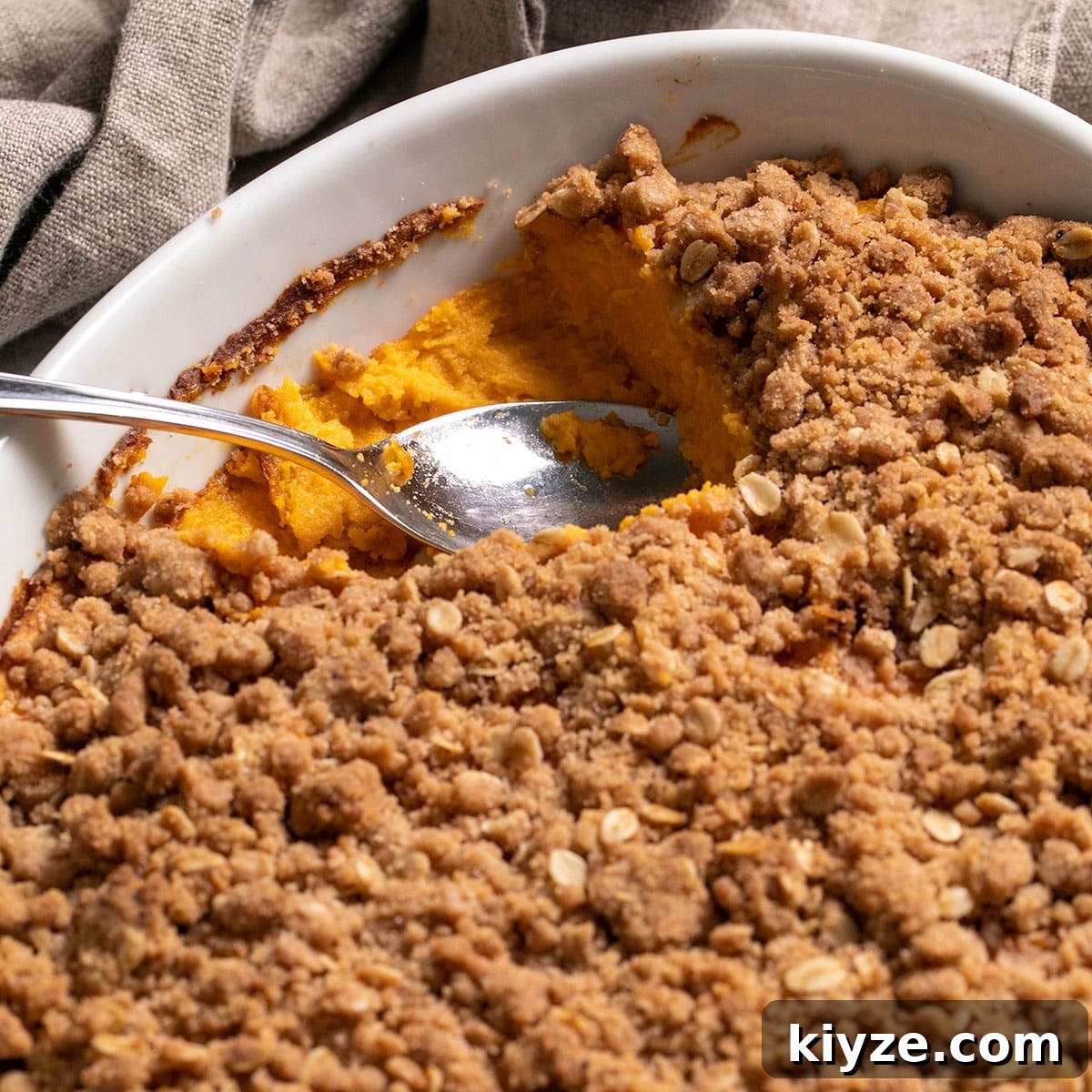
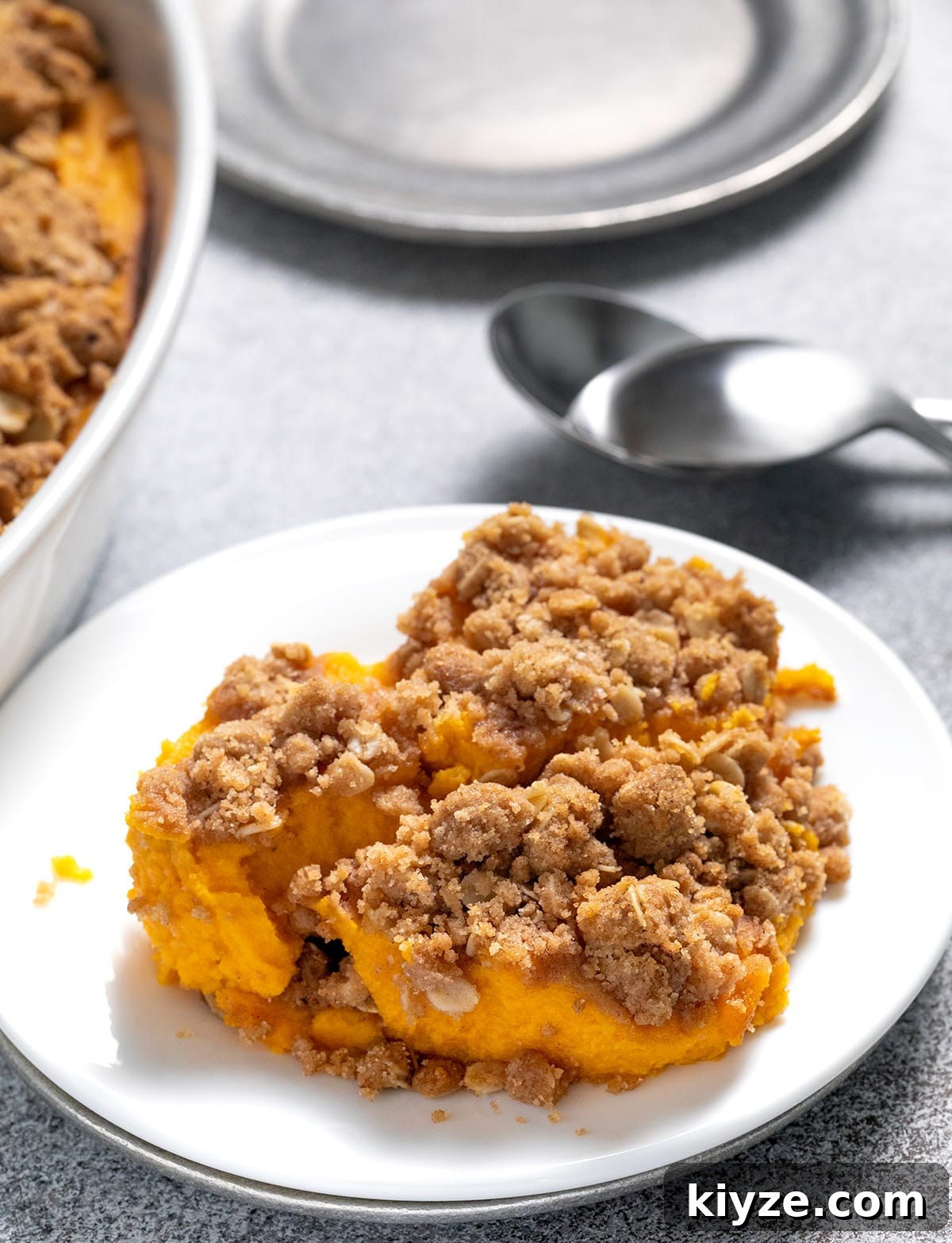
This gluten-free sweet potato casserole balances textures beautifully: a light, fluffy, smooth filling finished with a sweet, nubby crumble that’s both crisp and slightly chewy.
Roasting the sweet potatoes concentrates their natural sugars and earthy flavor so the filling stays flavorful with minimal added sugar. Because the potatoes are roasted rather than boiled, the filling remains thick and never watery. This straightforward casserole is a dependable favorite on any holiday table.
Why this recipe works
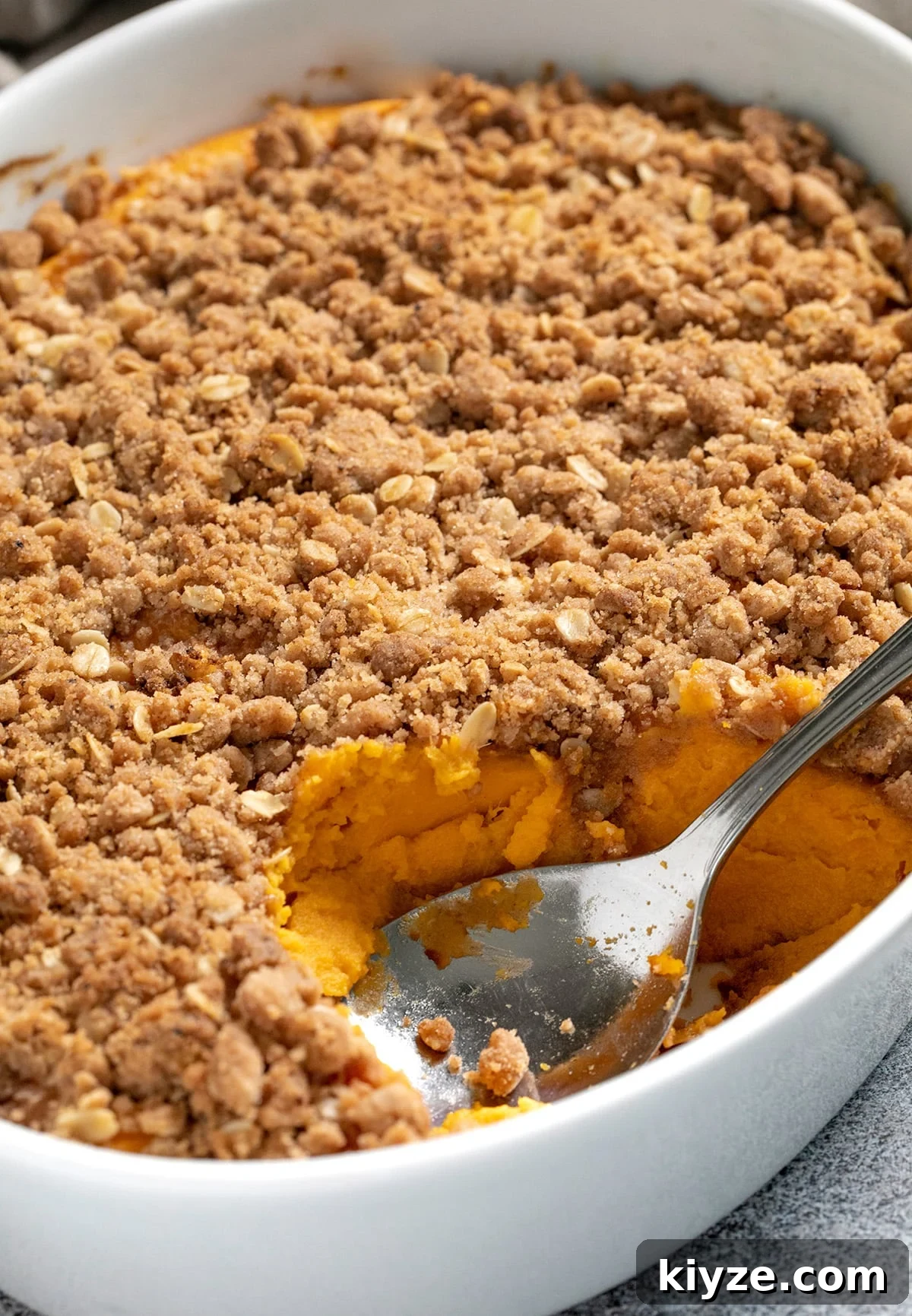
Roasting the sweet potatoes intensifies their natural sweetness and develops deeper flavor than steaming or boiling. Roasting also produces a creamy texture with no excess water, so the filling sets properly after baking.
The crumble topping is deliberately thin and toasty, with optional oats for a little chew. It provides the ideal contrast to the pillow-soft filling and contributes warm cinnamon notes. With savory sides like stuffing and gravy on the table, this casserole adds a welcome, restrained sweetness.
Key ingredients
The filling and topping use many of the same pantry staples. Below is a short summary of each ingredient and the role it plays:
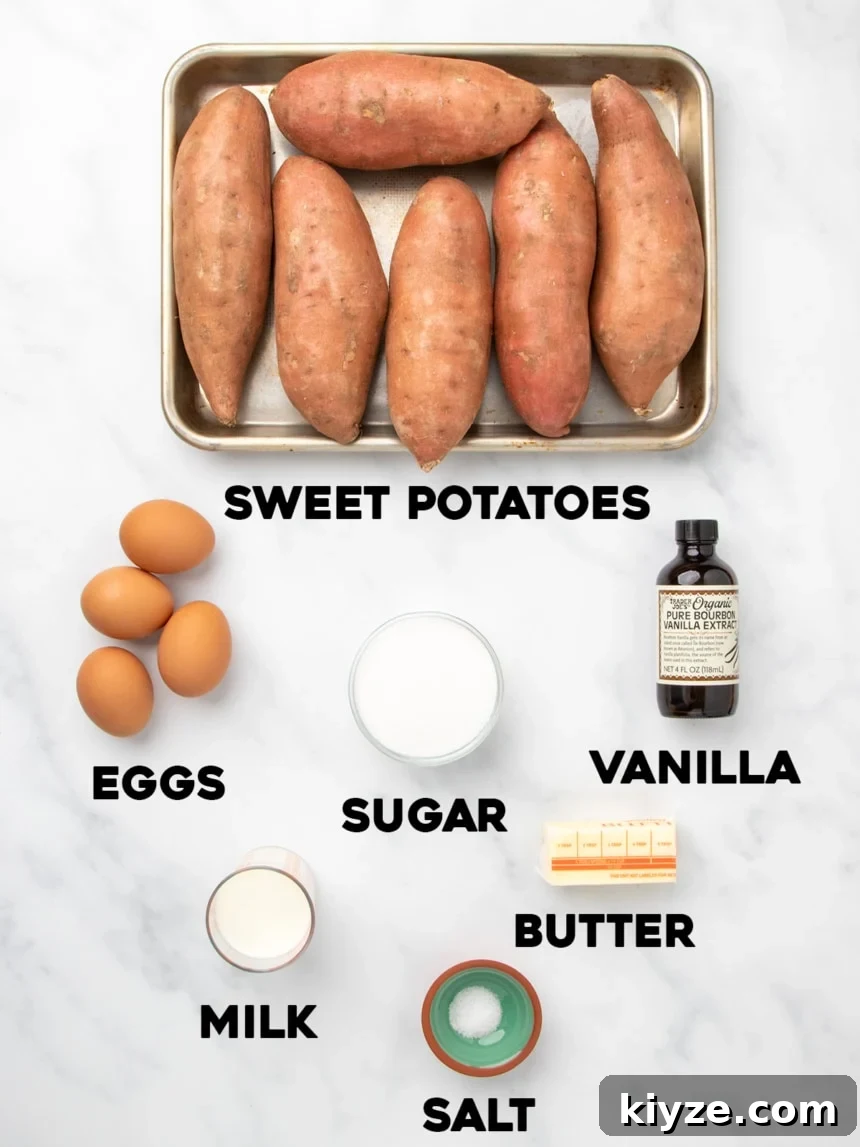
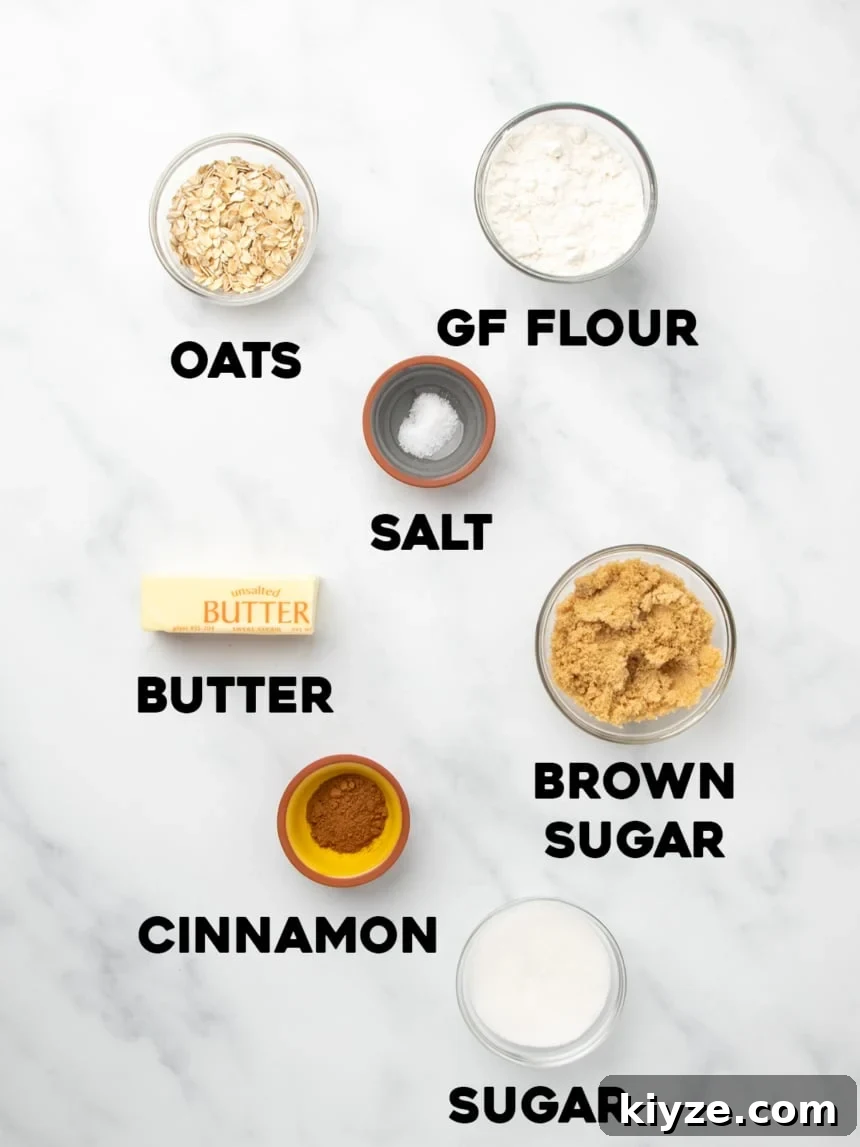
- Sweet potatoes: Roasting enhances sweetness and creates a creamy texture for the filling.
- Sugars: Granulated sugar adds sweetness and moisture; brown sugar in the crumble contributes chew and depth.
- Butter: Adds richness to the filling and helps the crumble form clumps and brown in the oven.
- Milk: Smooths and loosens the filling so it purees easily.
- Eggs: Provide structure and lift; yolks add richness while whites help the filling set.
- Gluten-free flour: Stabilizes the topping so it holds its shape during baking. Use a blend that isn’t gritty for the best texture.
- Oats: Optional; add chew and help the topping hold together.
- Cinnamon: Warms and enhances the topping’s sweetness.
- Salt: Balances and brightens the flavors throughout the dish.
- Vanilla: Adds depth to the mild-sweet filling.
How to make gluten-free sweet potato casserole
1. Prepare the sweet potatoes
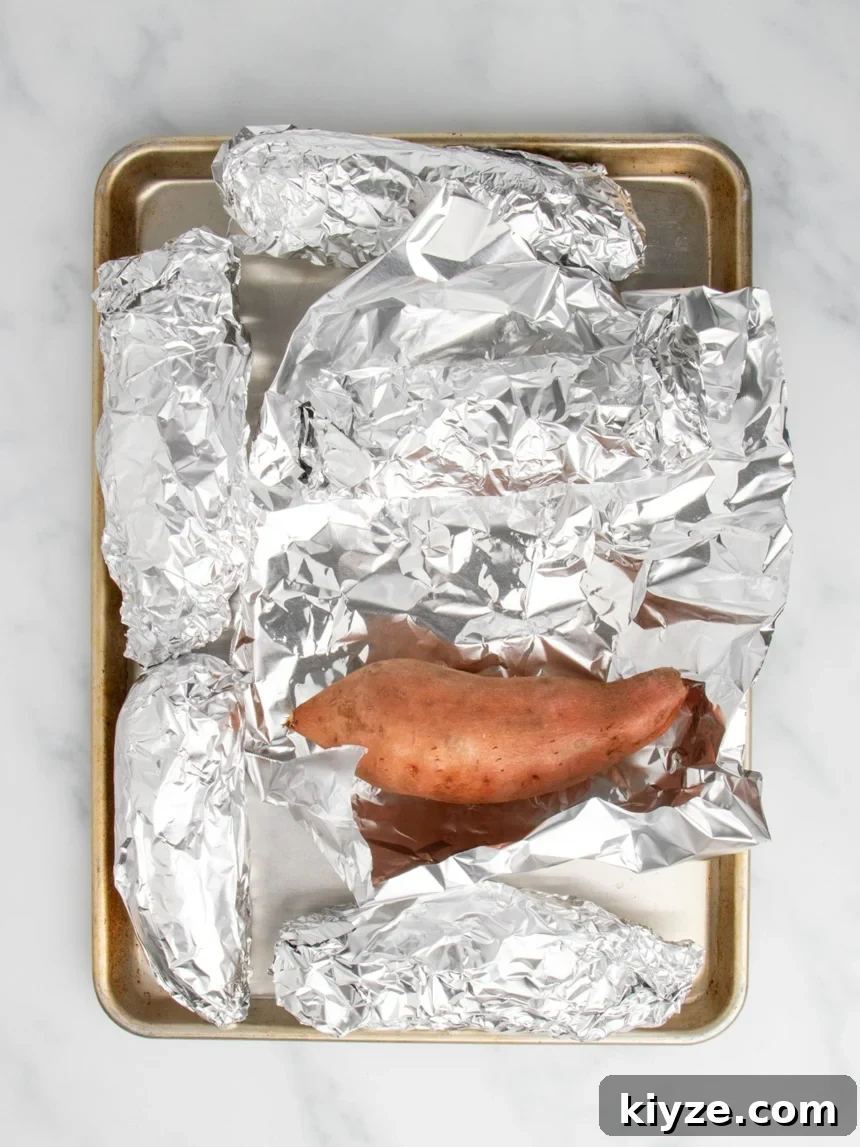
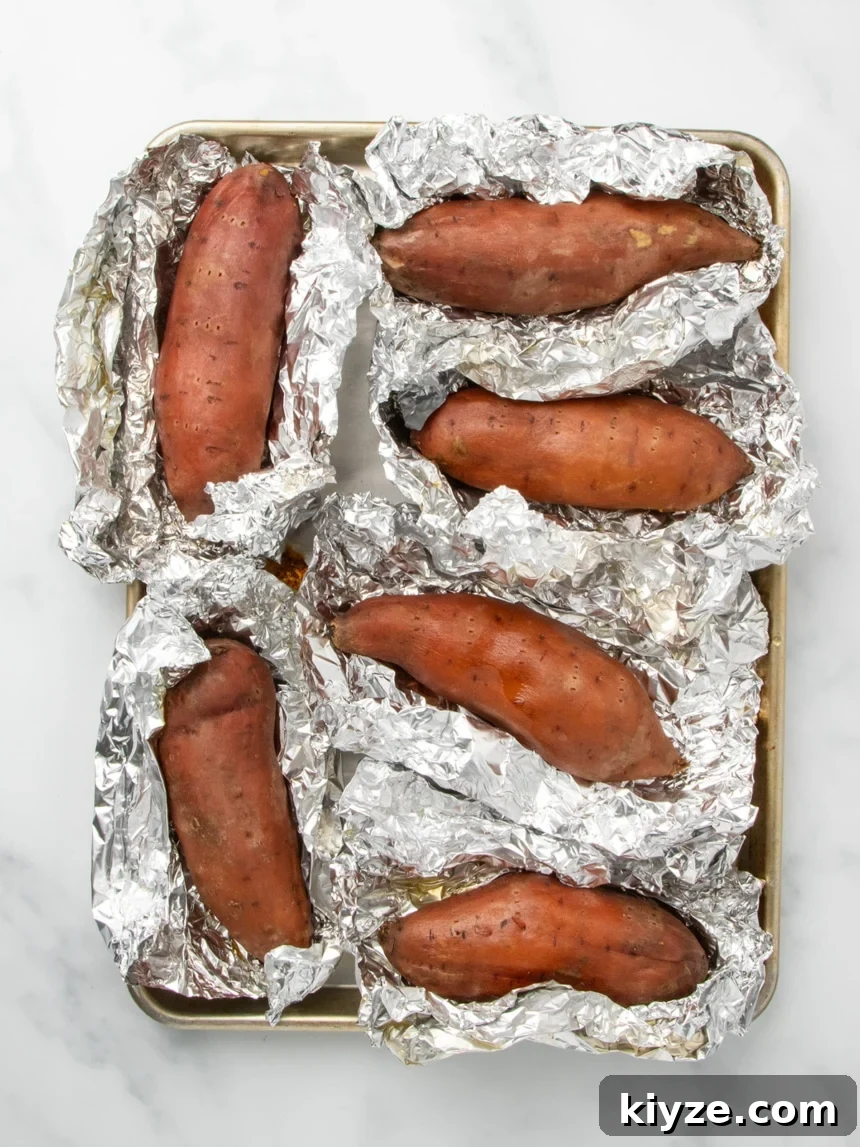
Wash and dry the sweet potatoes, pierce them with a fork to vent steam, and wrap each potato in foil. Place on a rimmed baking sheet and roast at 375°F until a paring knife slides in easily (about 45 minutes to 1 hour, depending on size).
Remove from the oven as each potato finishes, unwrap, and let cool until you can handle them. Once roasted and peeled, you should have at least 3 1/2 pounds of sweet potato flesh.
2. Combine the topping ingredients
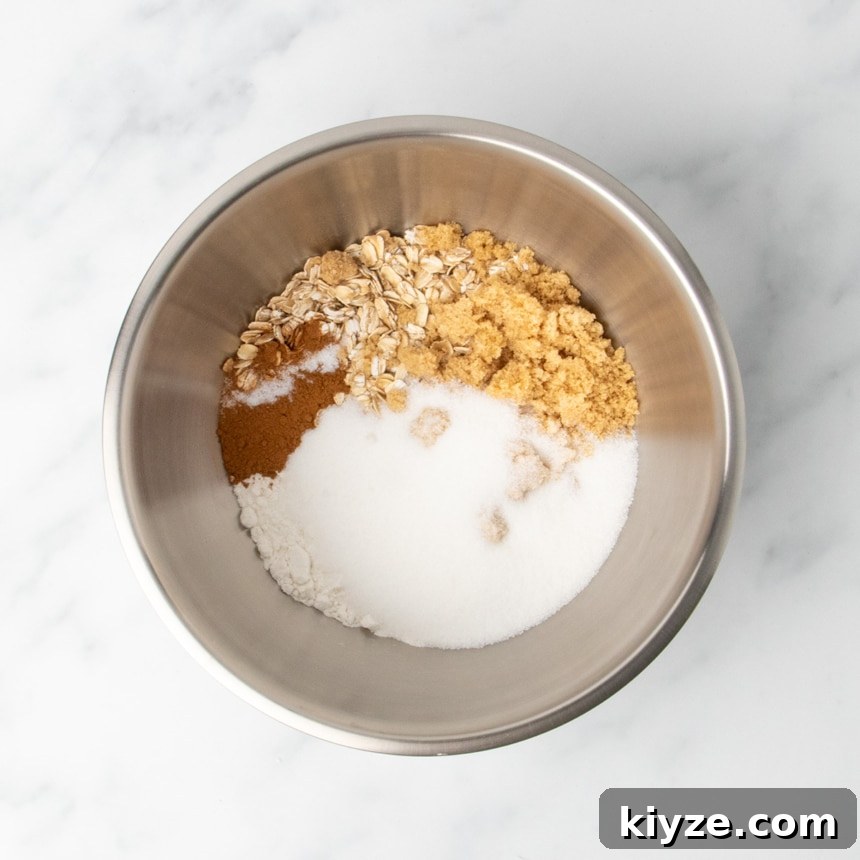
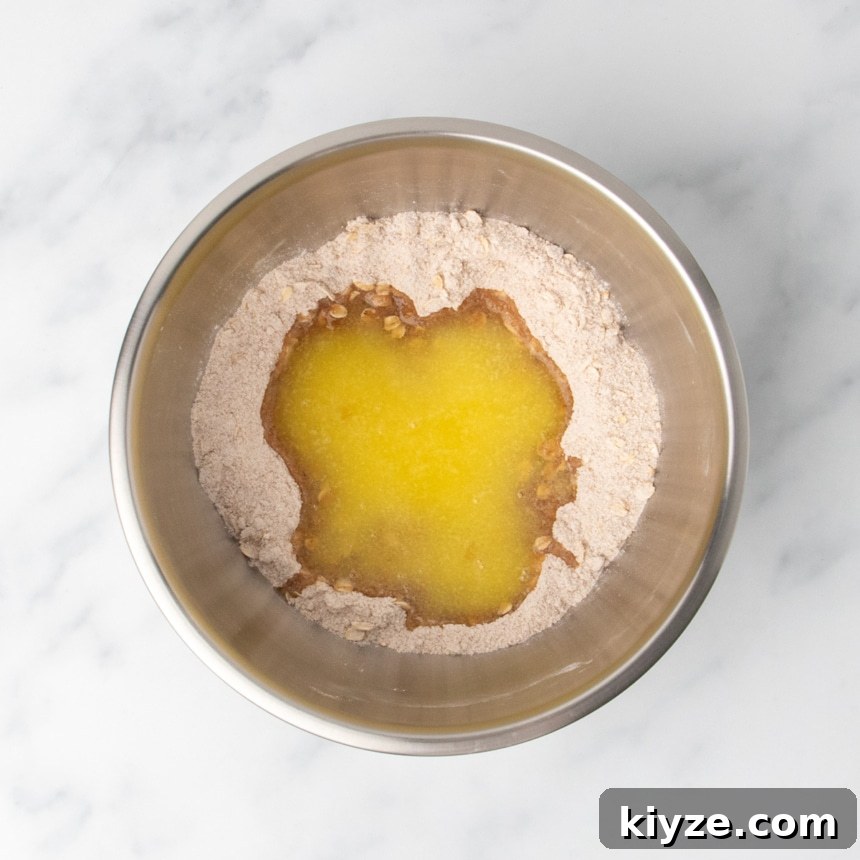
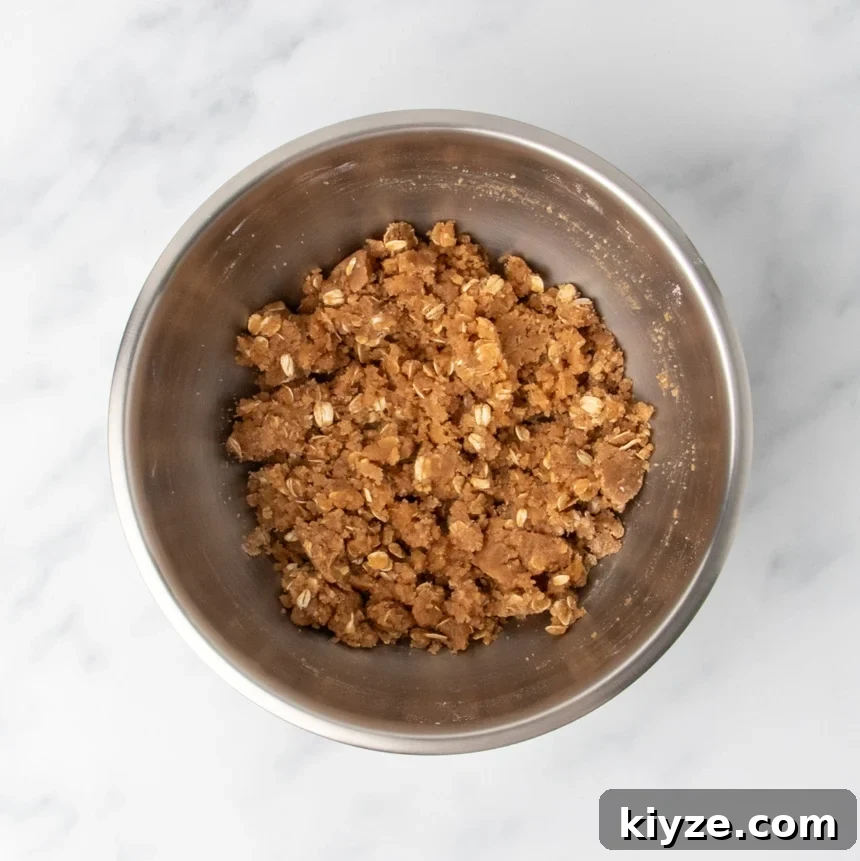
Whisk together gluten-free flour, xanthan gum (if needed), oats (optional), brown sugar, granulated sugar, cinnamon, and salt. Press out any brown sugar lumps. Make a well in the center and add melted, cooled butter, stirring until all the dry ingredients are moistened and the mixture is thick.
3. Chill, then break up the topping
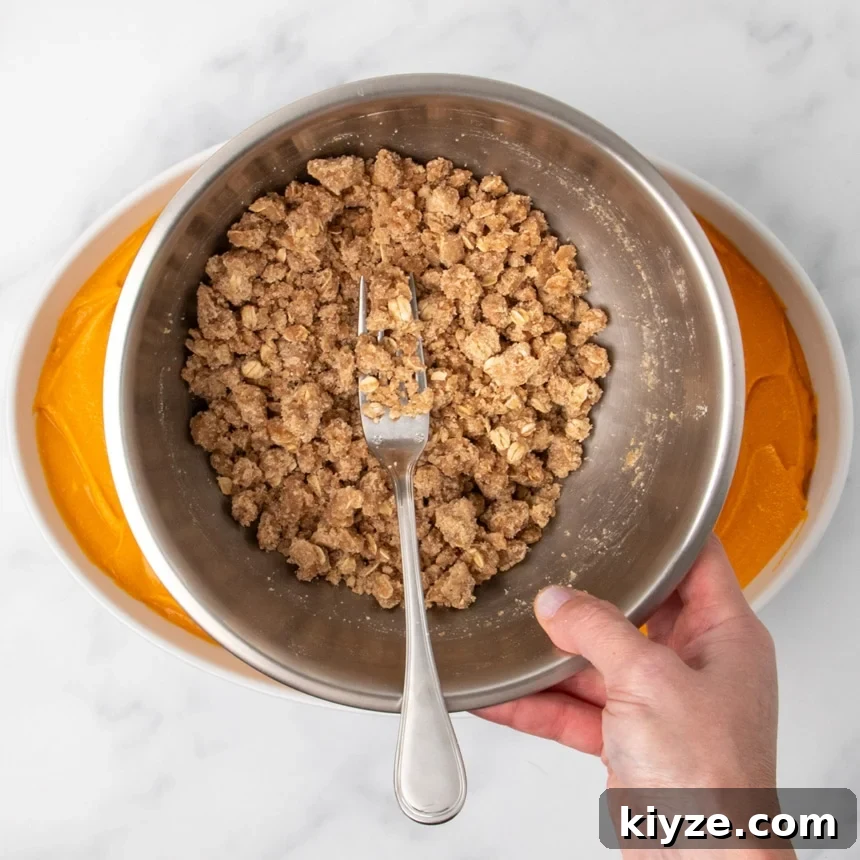
Chill the topping so the butter solidifies again—this prevents it from melting into the filling during baking. Once firm, use a fork to break the mixture into irregular clumps and keep it cold until assembly.
4. Puree the potatoes
Peel the roasted sweet potatoes and place the flesh in a large food processor fitted with the steel blade. Process for about 2 minutes to begin breaking down the potatoes; add a splash of milk if needed to get the blades moving.
5. Finish preparing the filling
Add sugar, salt, milk, eggs, melted cooled butter, and vanilla to the food processor and process until very smooth, stopping to scrape down the sides as needed. The final filling should be thick, soft, and velvety.
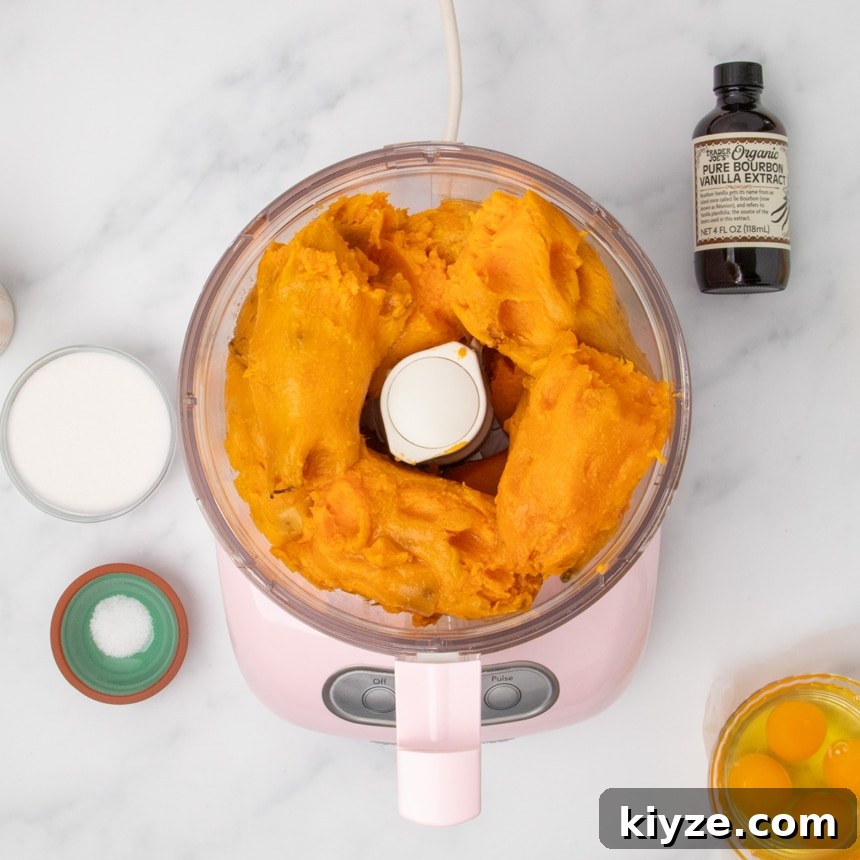
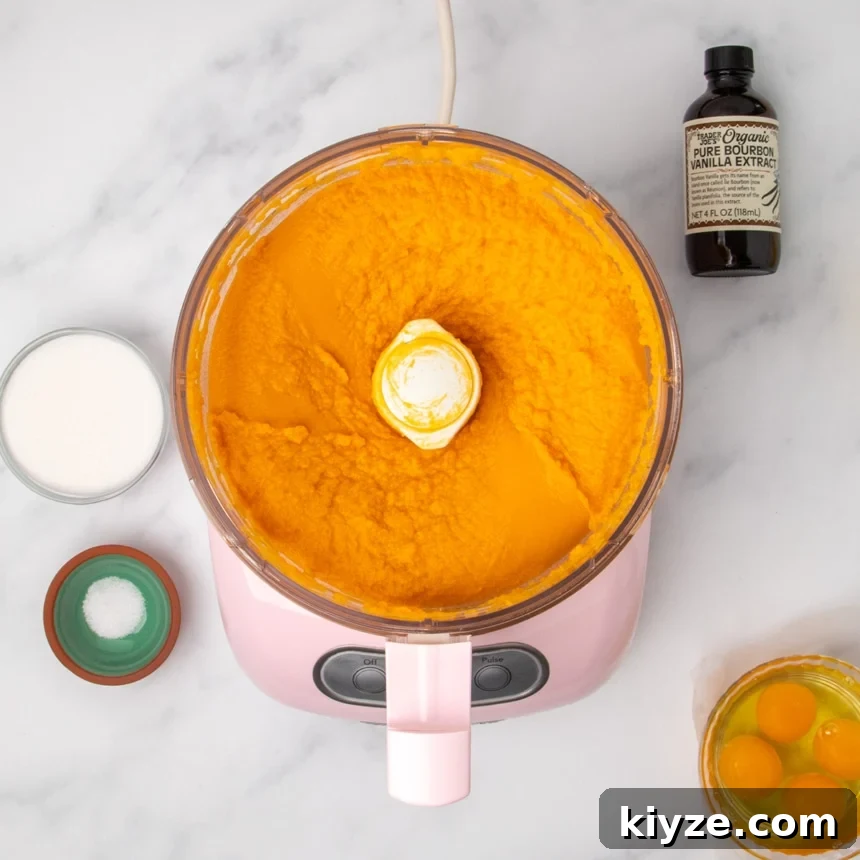
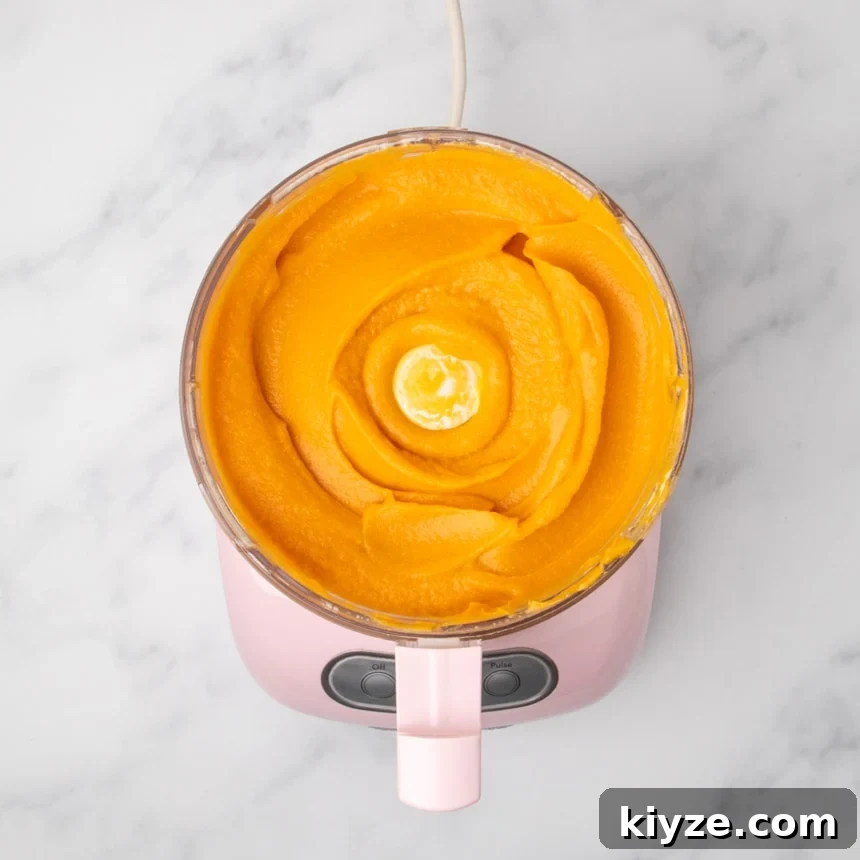
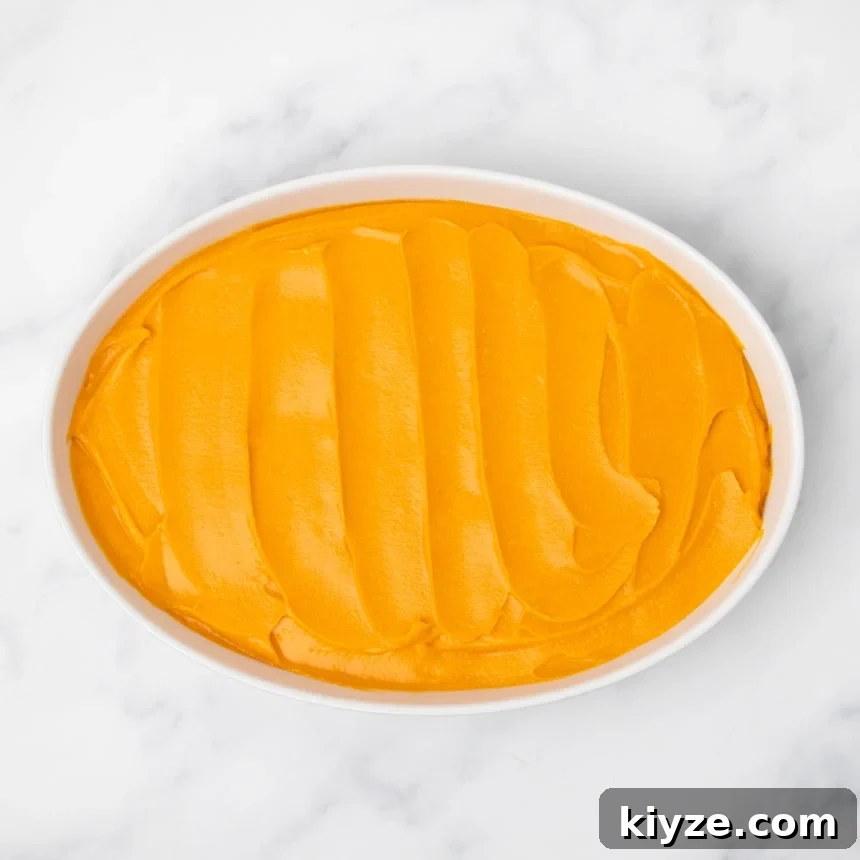
6. Assemble the dish
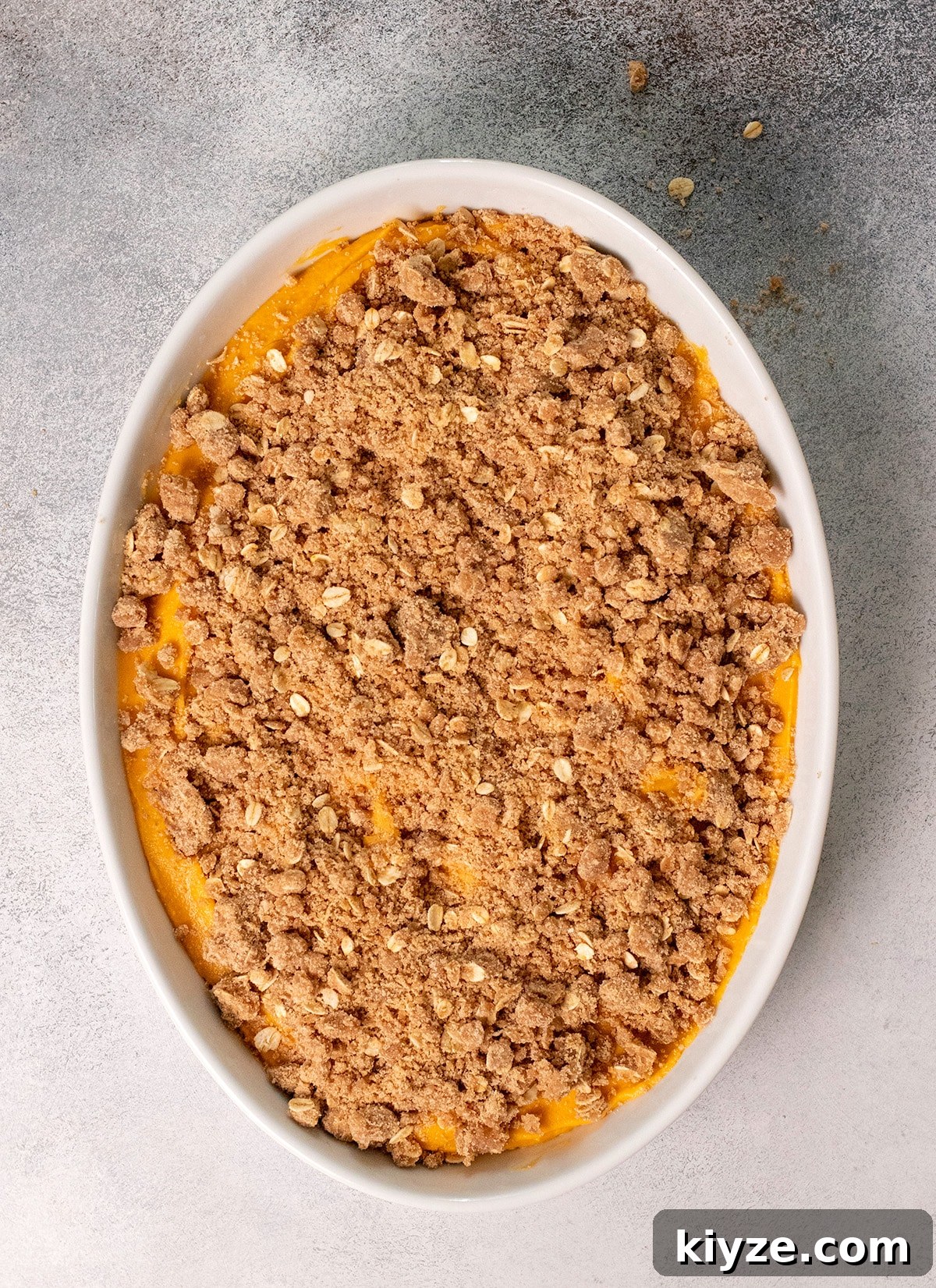
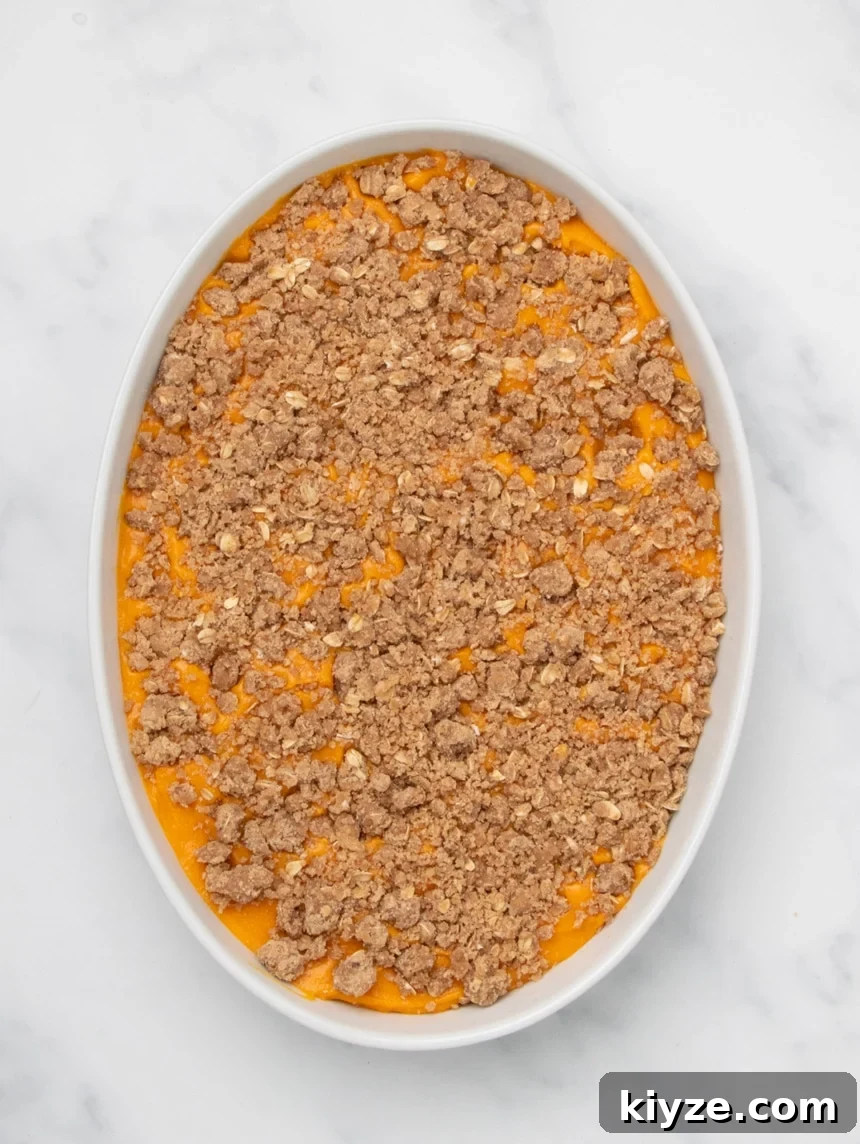
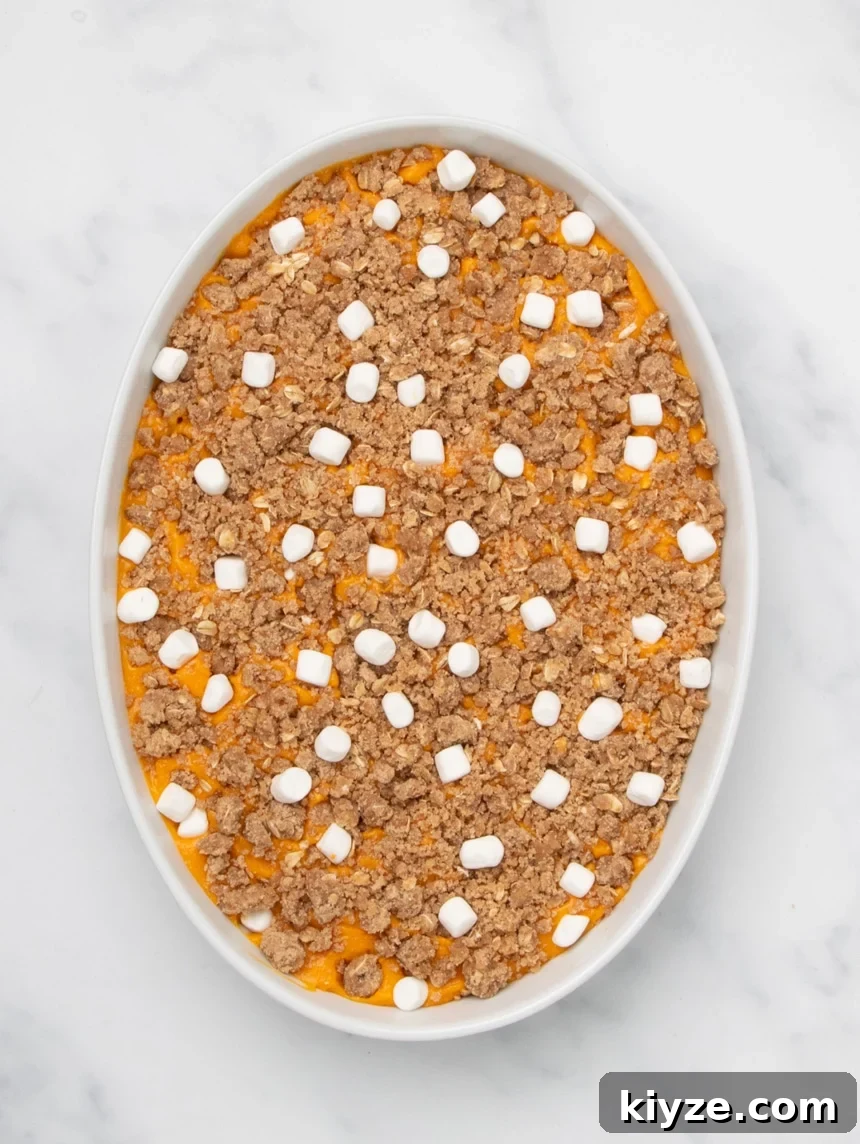
Transfer the filling to a greased 9 x 12- or 9 x 13-inch casserole dish and smooth into an even layer. Wipe the edges clean to prevent burned spills. Scatter the cold crumble pieces evenly over the filling; if you like, tuck a few mini marshmallows into gaps. Gently press the topping so it adheres.
7. Bake
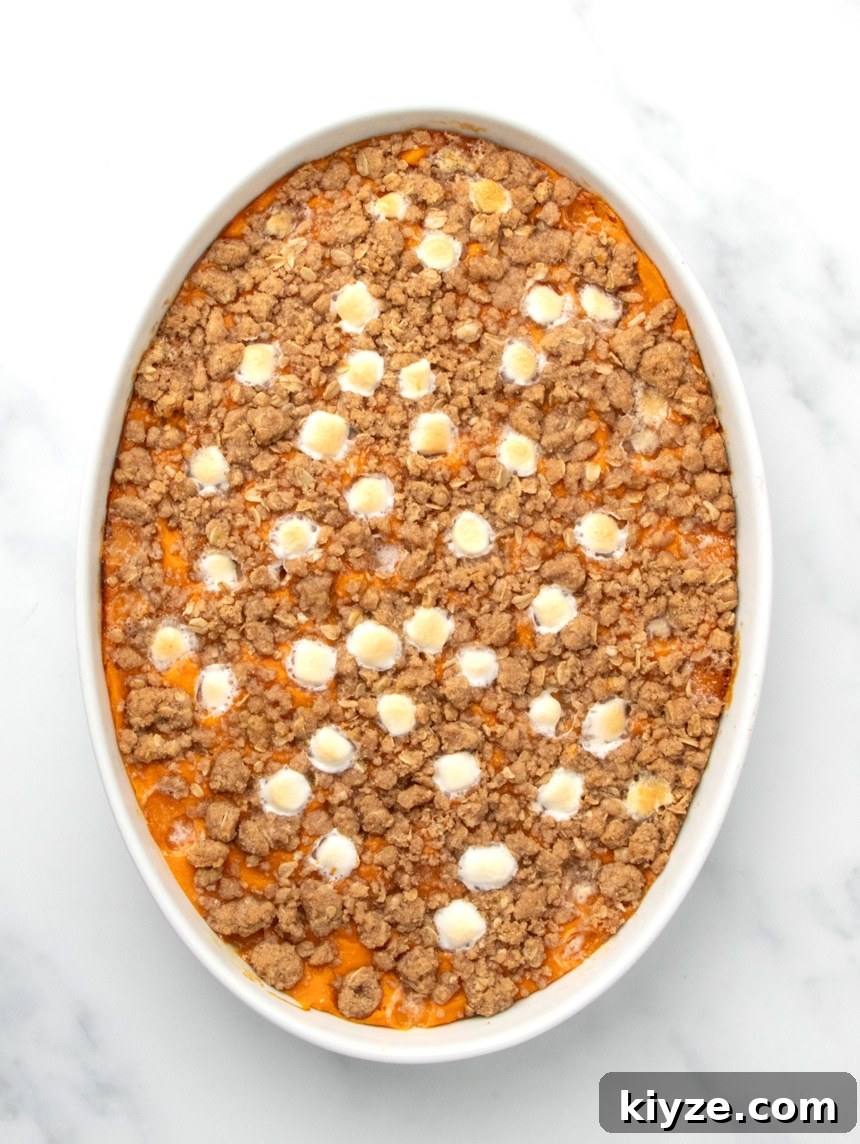
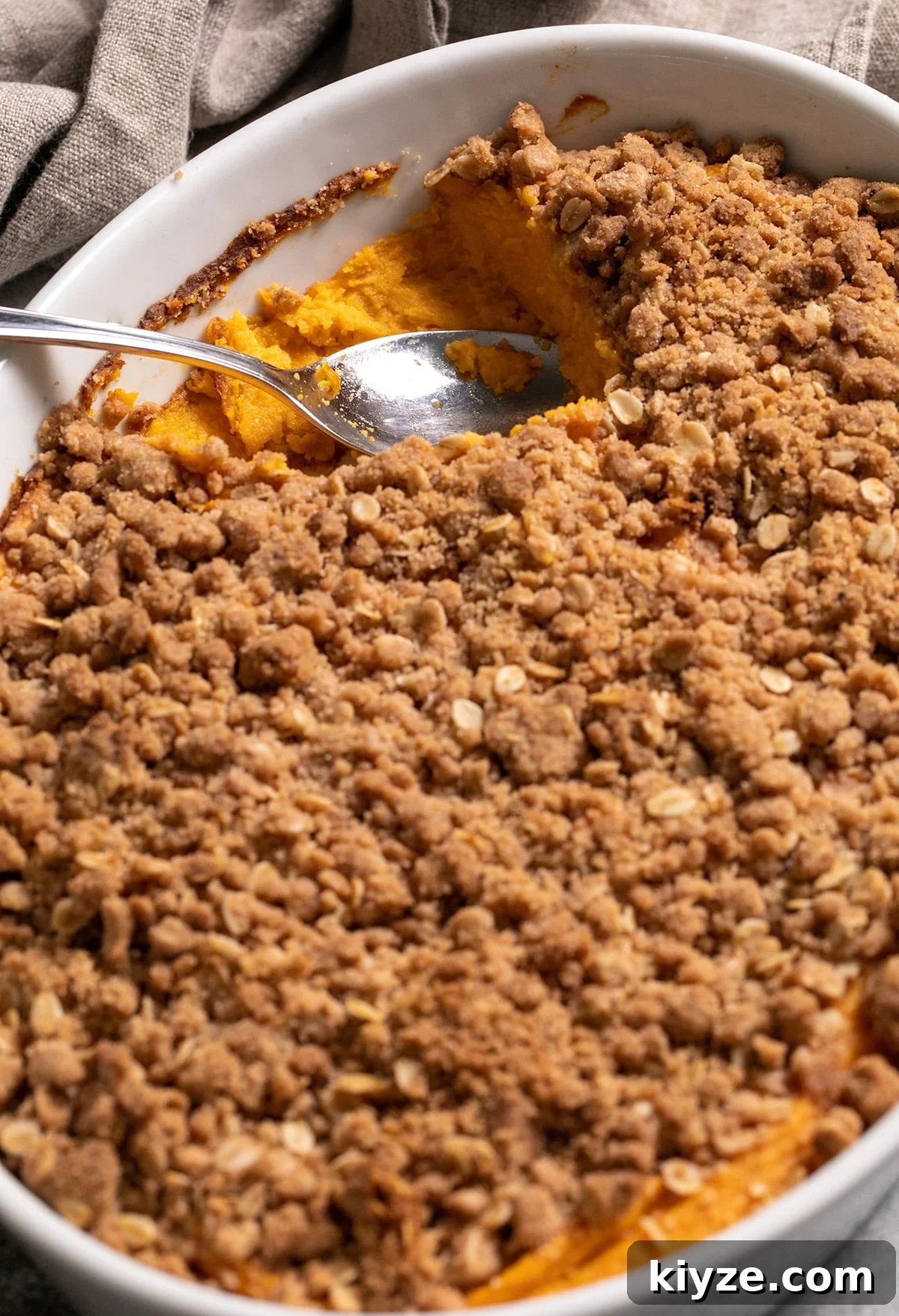
Bake at 350°F in the center of the oven until the topping is golden and the filling appears set, about 45 minutes. The filling should not jiggle excessively; allow the casserole to cool until fully set before scooping and serving warm.
Expert tips
Roast your sweet potatoes
Roasting concentrates flavor and avoids the watery filling that can result from boiling or steaming. It’s less work overall and preserves texture and taste.
Prepare the potatoes ahead
The most time-consuming step is roasting. You can roast sweet potatoes up to 1 week ahead and refrigerate them (with or without skins). Bring them to room temperature before using.
Make the filling as smooth as possible
A large food processor (about 7 cups) yields the smoothest results. If you only have a small processor, puree in batches and combine with a hand mixer or by hand. A hand mixer alone can work in a pinch but won’t achieve the same silkiness.
Ingredient substitutions
Dairy-free
Use a block-style vegan butter (Melt or Miyoko’s) in both filling and topping. Avoid buttery spreads in the crumble—they may prevent the topping from holding its shape. Substitute unsweetened, neutral nondairy milk (carton coconut or soy) for cow’s milk.
Egg-free
Replacing all four eggs to mimic the souffle-like texture is challenging. One option is to combine 3/8 cup milk (6 tablespoons), 3/8 cup Greek yogurt (6 tablespoons), and 2 1/4 tablespoons cornstarch as an egg substitute and add it with the other liquid ingredients.
Oat-free
Omit the oats and add an extra 1/4 cup (36 g) gluten-free all-purpose flour to the crumble (total 1 cup / 140 g). You can also substitute equal weight flattened buckwheat or rice flakes for a similar texture.
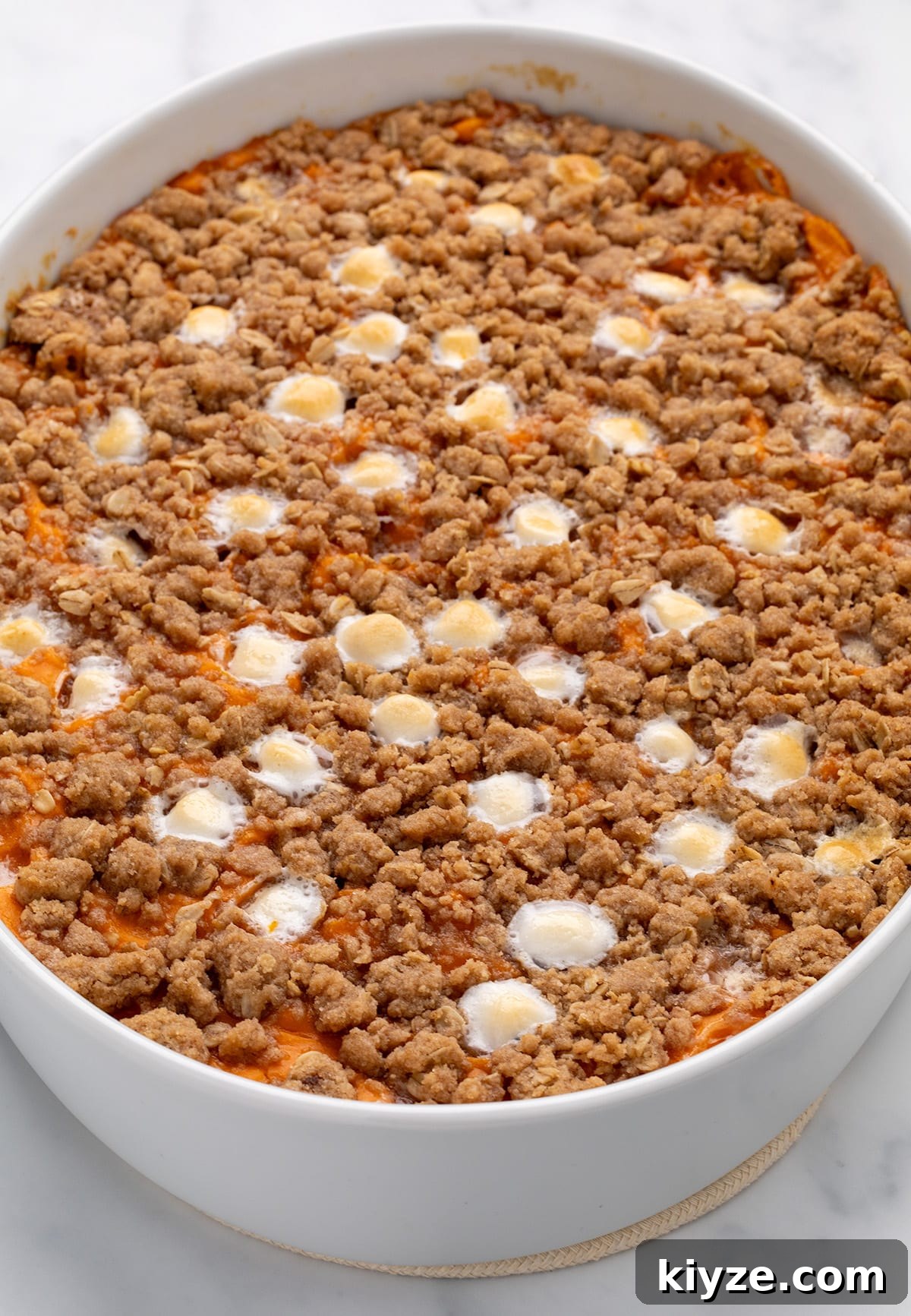
Gluten Free Sweet Potato Casserole Recipe
Ingredients
For the crumble topping
- ¾ cup (105 g) all-purpose gluten-free flour blend
- ½ teaspoon xanthan gum (omit if your blend already contains it)
- ¼ cup (25 g) gluten-free old-fashioned rolled oats (optional)
- ¼ cup (55 g) packed light brown sugar
- ¼ cup (50 g) granulated sugar
- 1 ½ teaspoons ground cinnamon
- ⅛ teaspoon kosher salt
- 6 tablespoons (84 g) unsalted butter, melted and cooled
For the filling
- 4 ½ pounds sweet potatoes (5 to 6 large)
- ¼ cup (50 g) granulated sugar
- ¼ teaspoon kosher salt
- ½ cup (4 fl oz) milk
- 4 eggs, lightly beaten (about 200 g)
- 5 tablespoons (70 g) unsalted butter, melted and cooled
- ½ teaspoon vanilla extract
Instructions
Make the crumble topping
- Whisk the flour blend, xanthan gum, oats (if using), brown sugar, granulated sugar, cinnamon, and salt. Add melted butter and mix until combined. Chill until firm, at least 10 minutes.
Roast the sweet potatoes
- Preheat oven to 375°F. Wash, dry, pierce, and wrap each sweet potato in foil. Roast on a rimmed sheet until tender (45–60 minutes). Remove, cool, peel, and reduce oven temperature to 350°F. Grease a 9 x 12–13 inch baking dish.
Make the filling
- Process the sweet potato flesh in a food processor for about 2 minutes. Add sugar, salt, milk, eggs, butter, and vanilla and process until completely smooth, 3–4 more minutes. Scrape down the sides as needed.
Assemble and bake
- Spread the filling into the prepared dish. Break the chilled crumble into clumps and sprinkle evenly over the top. Bake in the center of the oven until the topping is golden and the filling is set, about 45 minutes. Cool before serving.
Notes
Flour blend choices – Use a balanced, non-gritty gluten-free blend for the crumble. If your blend lacks xanthan gum, add a small amount as noted in the ingredients.
About the oats – To omit oats, replace them with an extra 1/4 cup (36 g) gluten-free flour so the crumble totals 1 cup (140 g).
Nutrition
Nutrition information is an approximation.

Make ahead instructions
The raw topping can be made up to 1 week ahead and stored in a sealed container in the refrigerator. Roasted sweet potatoes can also be made up to a week ahead, stored with or without skins, and brought to room temperature before using.
You can prepare the entire filling up to a week in advance; bring it to room temperature, top, and bake when ready. The casserole may be served warm or cool, so baking a few hours before serving is fine.
Storing leftovers
To keep the crumble separate from the filling when storing, lift portions with a wide spatula into a container, layer with parchment or wax paper over the crumble, and continue filling. Refrigerate up to 1 week or freeze up to 2 months.
Defrost in the refrigerator, lift out portions using the paper liner, and reheat in a toaster oven until the filling is warmed and the topping is crisp.