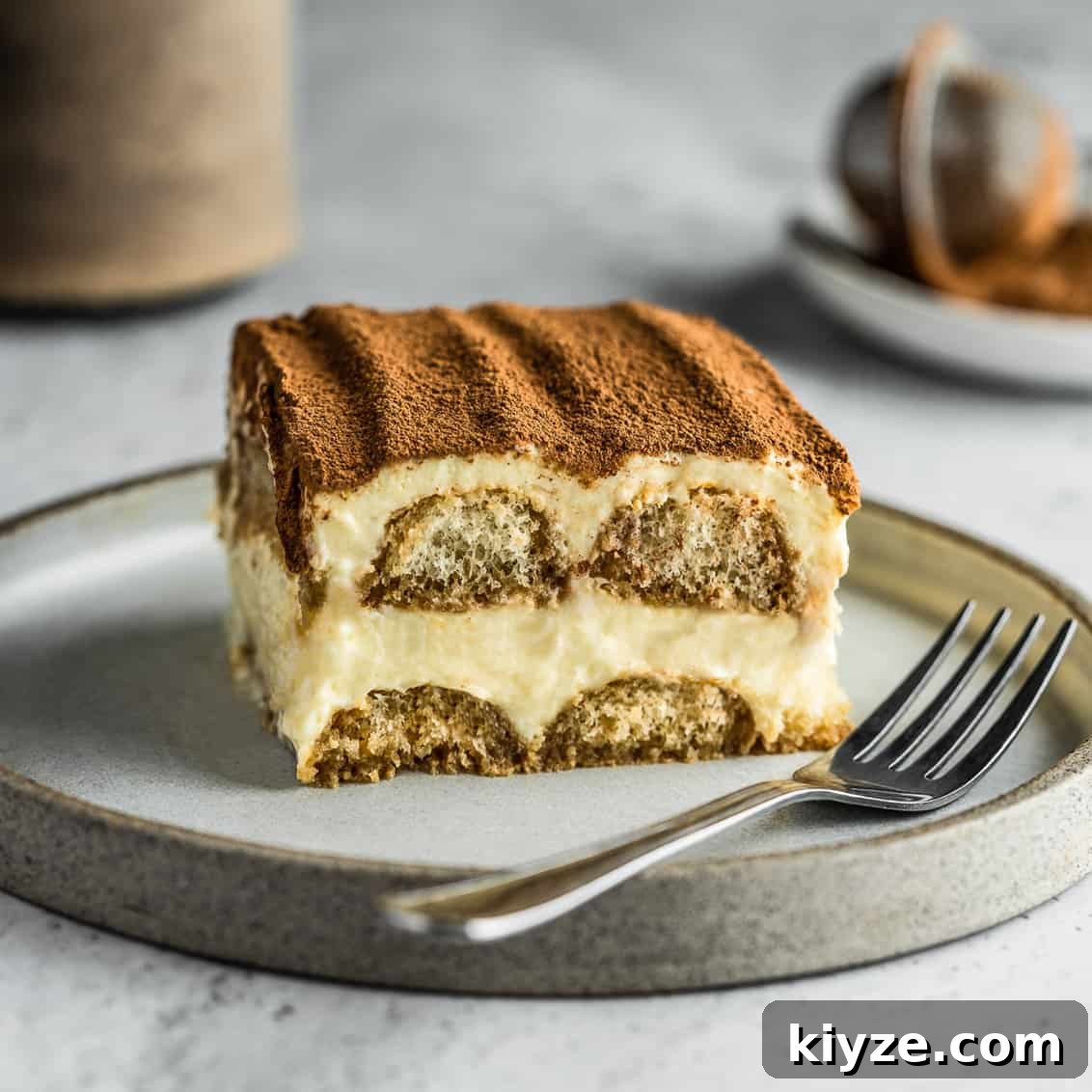
This original tiramisu made with Marsala wine is one of the world’s most beloved Italian desserts. The classic version combines eggs, Marsala, mascarpone, layers of coffee-soaked ladyfingers and a final dusting of unsweetened cocoa for a balanced bitter finish.
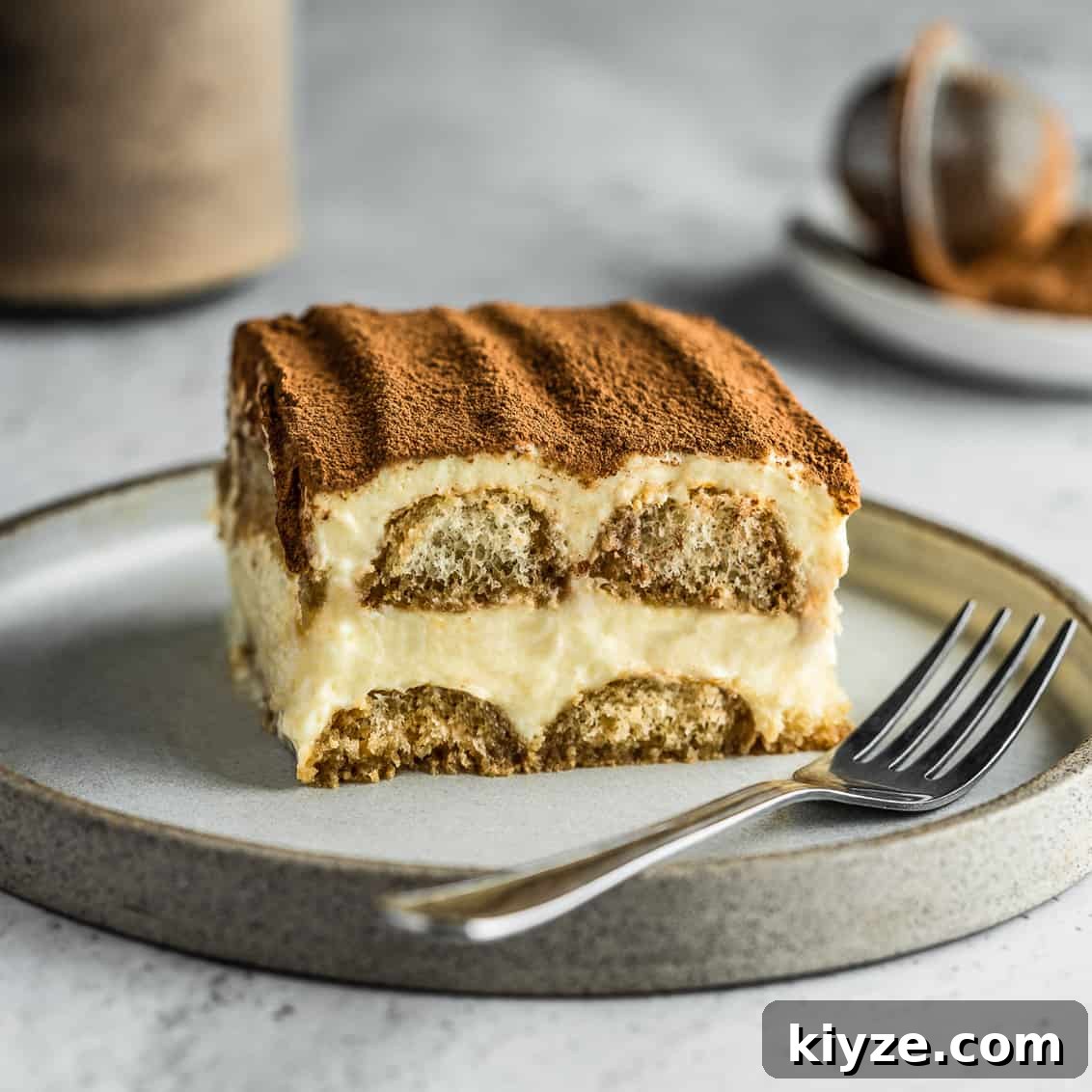
Authentic Italian tiramisu
The authentic tiramisu uses raw eggs, mascarpone, strong coffee, unsweetened cocoa and traditionally a fortified wine such as Marsala. Preparation methods vary across Italy and from home to home — with yolks only, with whipped whites folded in, with a touch of whipped cream, or occasionally without alcohol — but the core elements remain the same.
Below is a traditional recipe often called the “grandma’s” tiramisu: raw eggs, mascarpone, Marsala, coffee-soaked ladyfingers and a light cocoa dusting. It’s a no-bake dessert that can be assembled quickly and chilled until set.
Almost everyone appreciates tiramisu: it’s easy to prepare and ideal when you want an elegant, make-ahead dessert.
Tiramisu ingredients
For exact quantities and a printable list, see the recipe card below.
Use only the freshest eggs and the freshest mascarpone you can find. Key ingredients:
- Espresso – Real espresso works best; if unavailable, use a very strong brewed coffee. Avoid instant coffee for best flavor. Use decaf if you prefer a caffeine-free dessert.
- Italian ladyfingers (savoiardi) – Choose crisp, cookie-style ladyfingers rather than cake-style. Brands like Forno Bonomi, Balocco or Matilde Vicenzi are commonly recommended. For gluten-free versions, select gluten-free ladyfingers.
- Eggs – Use pasteurized eggs if possible and bring them to room temperature. Because the recipe uses raw eggs, extra-fresh eggs with a long use-by date are preferred; if needed, you can pasteurize eggs at home.
- Sugar – Granulated or caster sugar to sweeten the egg mixtures.
- Mascarpone cheese – Cold from the fridge; the fresher the mascarpone, the thicker and richer the cream. If mascarpone is unavailable, cream cheese can be used as a substitute, though the texture and flavor will differ.
- Marsala wine – The traditional alcohol in tiramisu; omit if you prefer an alcohol-free version.
- Unsweetened cocoa powder – For dusting the finished dessert.
How to make traditional tiramisu step-by-step
Step 1. Brew strong espresso and chill it in the refrigerator. Separate the egg whites from the yolks using an egg separator or carefully by hand.
Pro tip: Clean eggs with a dry cloth rather than washing, crack them on a flat surface, and wash your hands before and after handling them. Keep yolks and whites free from shell contact during separation.
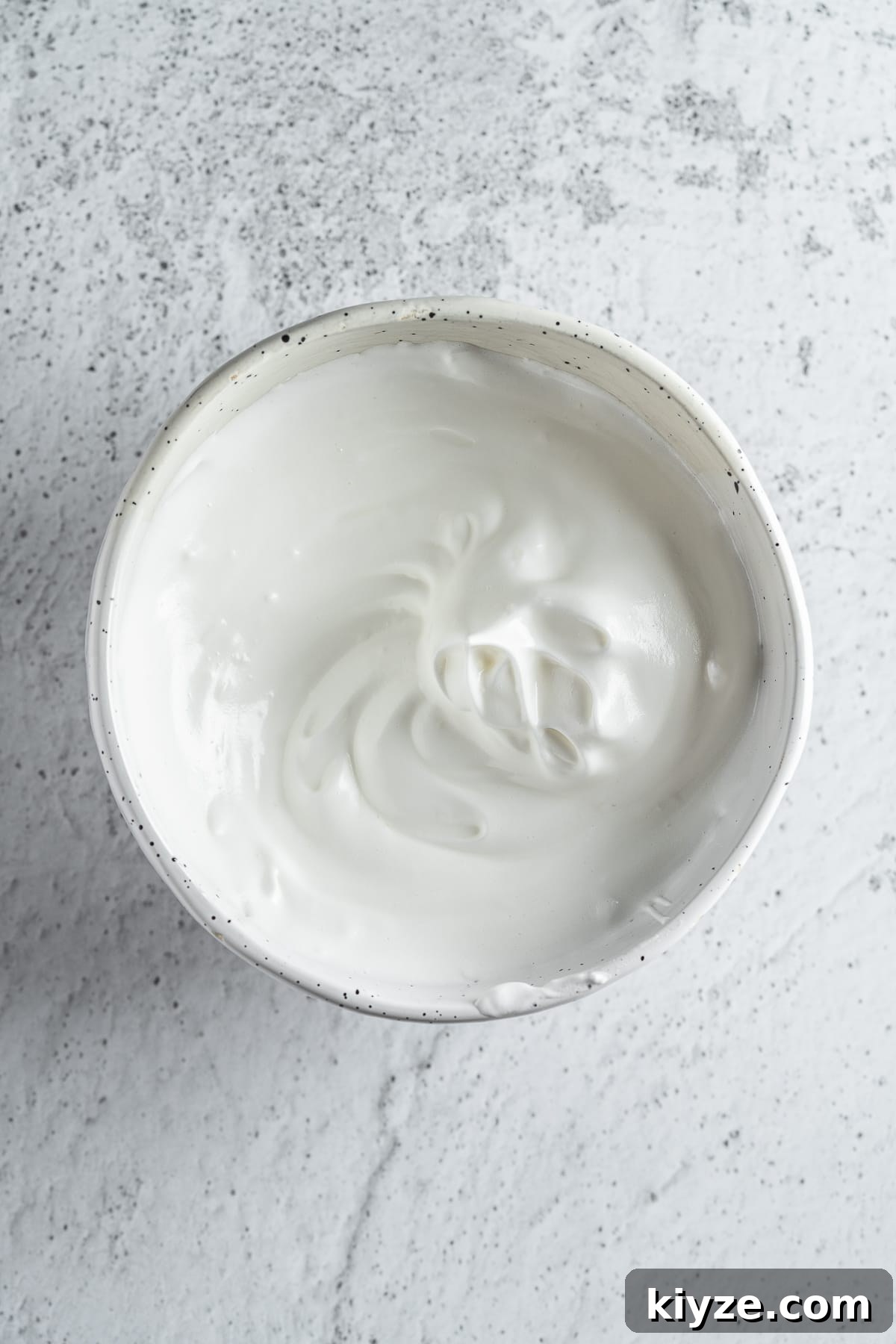
Step 2. In a clean bowl, whip the egg whites with half the sugar until they form stiff peaks. Set aside.
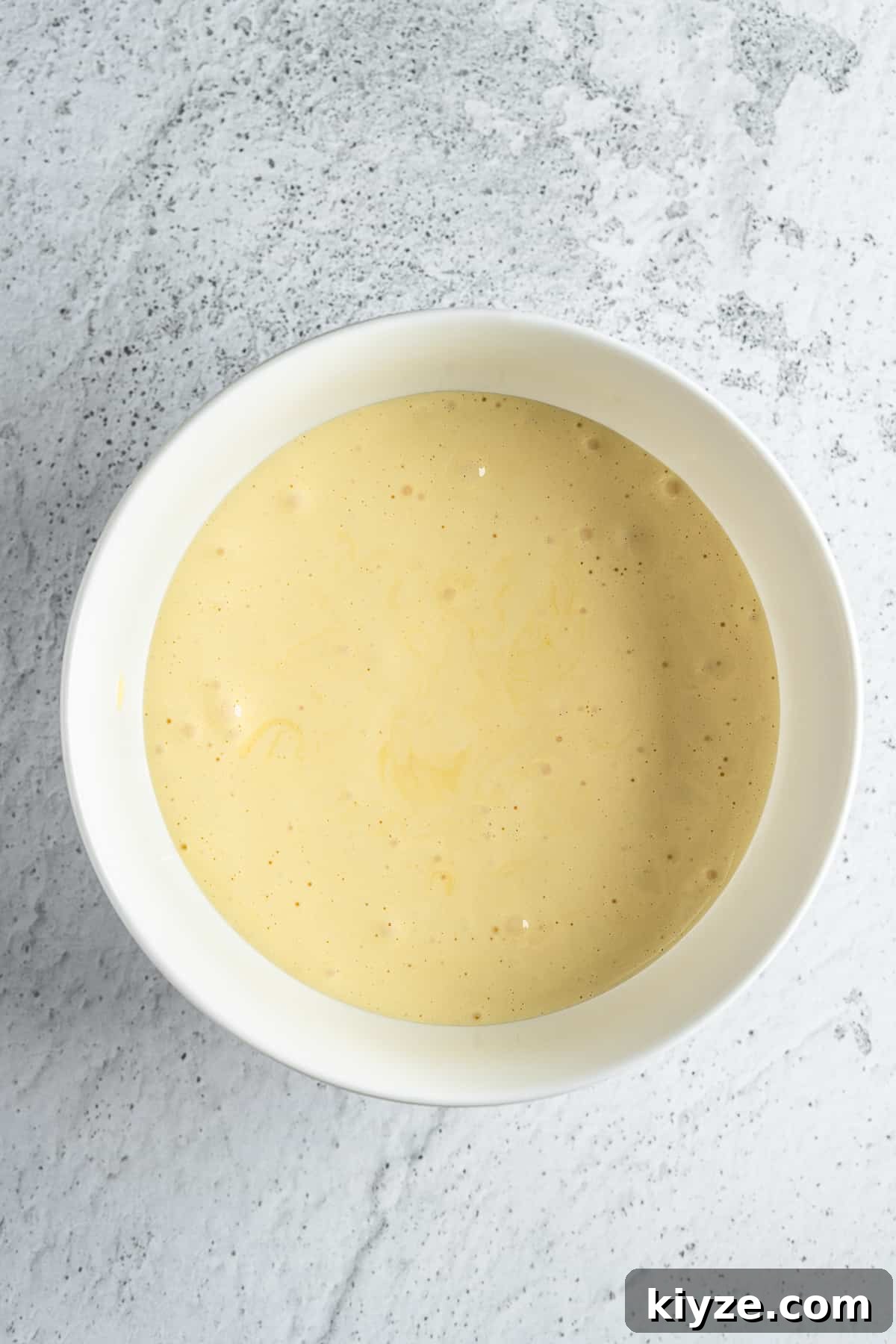
Step 3. Whisk the egg yolks with the remaining sugar at medium-high speed until pale and nearly doubled in volume, about 4–6 minutes. The sugar should dissolve and the mixture should fall slowly from a spoon.
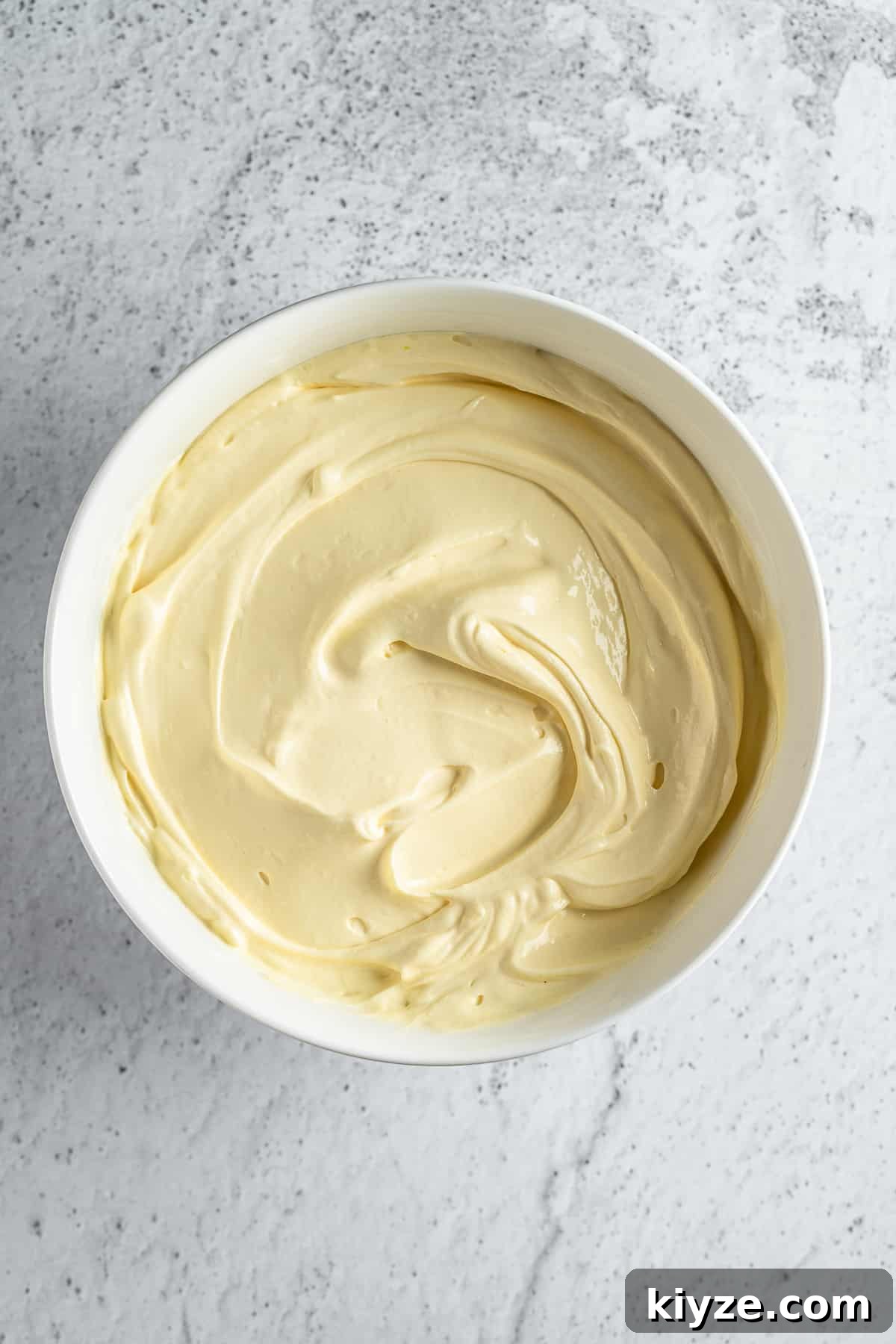
Step 4. In a large bowl, loosen the cold mascarpone with a fork, add Marsala and whisk until smooth. Fold the whipped egg yolks into the mascarpone gently with a rubber spatula until homogeneous.
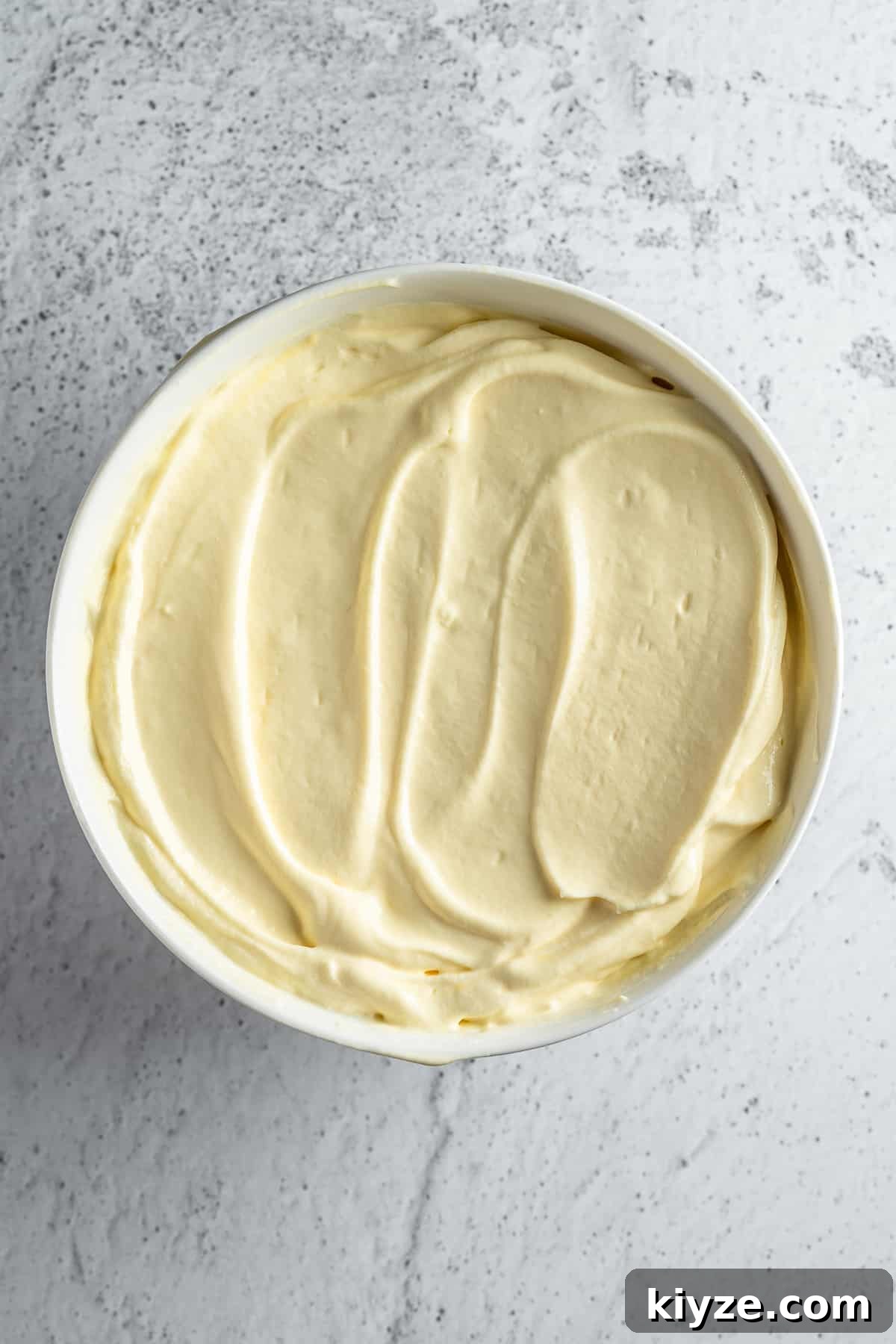
Step 5. Gently fold the whipped egg whites into the mascarpone mixture in three additions, mixing from the bottom up to preserve air and lightness.
Step 6. To assemble: Pour the chilled espresso into a shallow dish.
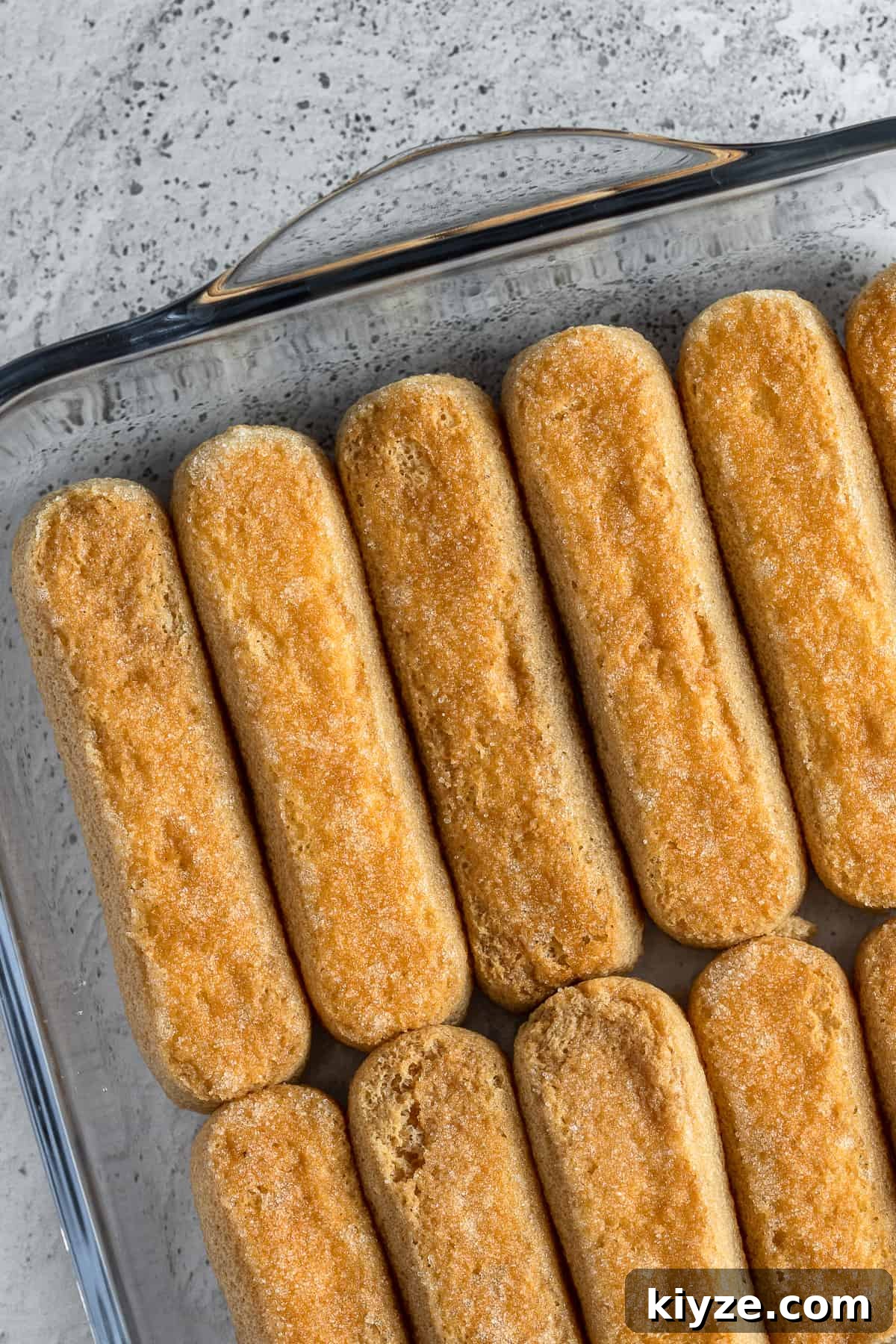
Step 7. Quickly dip each ladyfinger 1–2 seconds in the coffee and arrange them in an 8-inch (20 cm) square dish to form the first layer. If needed, trim cookies with a serrated knife so they fit snugly. Arrange the cookies in one direction for a tidy look.
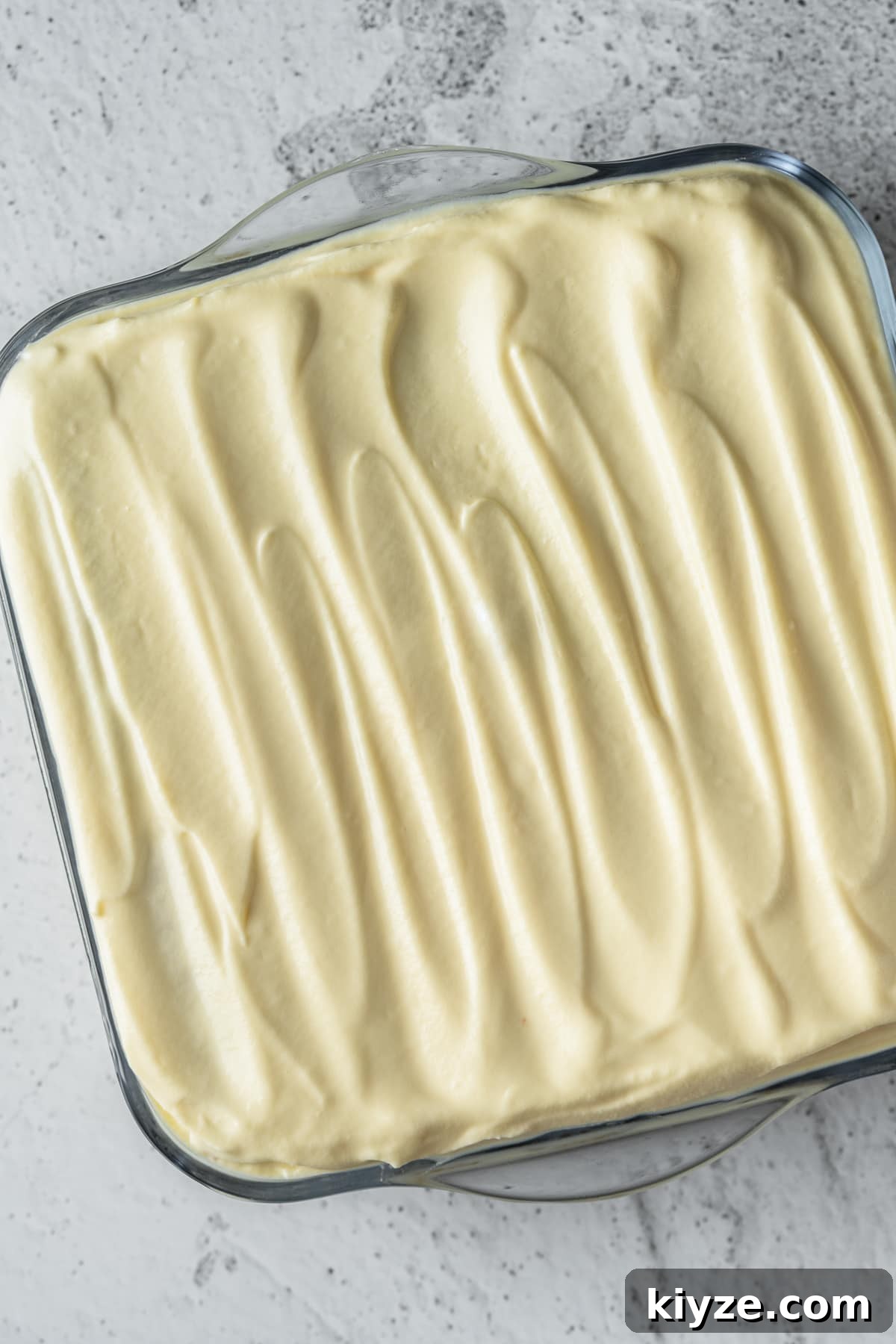
Step 8. Spoon half the mascarpone filling evenly over the first layer, add another layer of soaked ladyfingers, then spread the remaining cream. Smooth the top or create a decorative pattern.
Pro tip: For tighter control of coffee absorption, place cookies in the dish and brush them lightly with coffee instead of dipping.
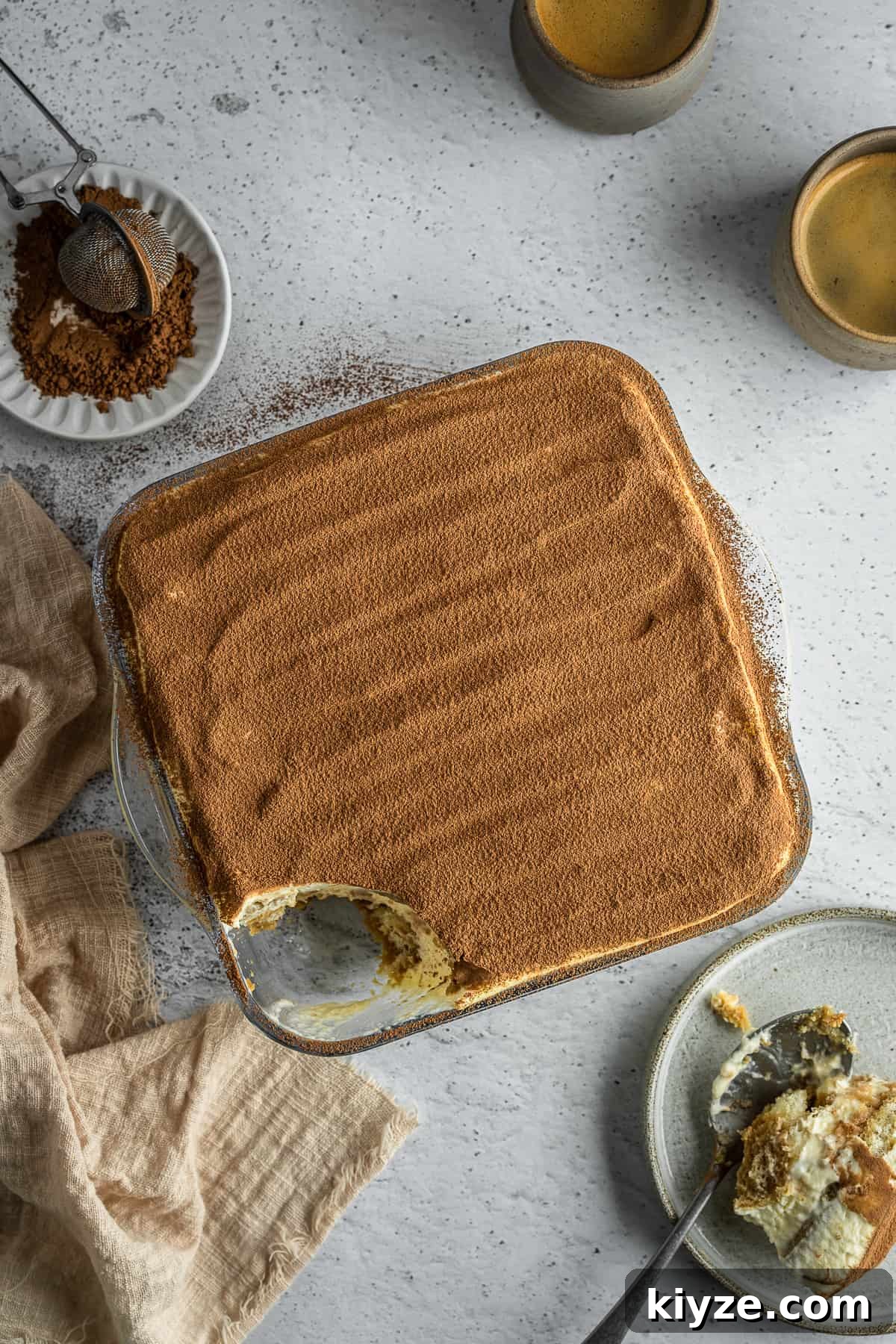
Step 9. Cover and refrigerate for at least 4 hours, ideally overnight, to allow the flavors to meld and the texture to set. Before serving, dust the top with unsweetened cocoa through a fine-mesh sieve and serve well chilled. Use a sharp knife or a serving spatula to portion cleanly.
Expert tips
- Chill the coffee before dipping so the ladyfingers absorb less liquid and stay slightly firm.
- Dip cookies one at a time and no longer than 2 seconds to avoid a soggy base; the center should remain slightly dry when bent.
- For a decorative cross pattern, layer ladyfingers in alternating directions before adding the cream.
- Place ladyfingers flat-side down on the dish bottom for a traditional finish.
- Chill at least a few hours; 3–4 hours or overnight is best for texture and flavor.
- Don’t dust cocoa before chilling — it will darken as it merges with the cream. Add the cocoa just before serving for the freshest appearance.
- Store leftovers tightly covered in the refrigerator.
- If concerned about raw eggs (for children, pregnant women or immunocompromised guests), use pasteurized eggs or follow an eggless tiramisu variation.
Marsala substitute for tiramisu
If you prefer to swap Marsala, suitable alternatives include cognac, dark rum, brandy, whiskey, Amaretto, Irish cream, Grand Marnier, coffee liqueurs such as Kahlúa or Tia Maria, Disaronno, or a splash of vanilla extract for a non-alcoholic flavor boost.
Recipe variations
- Ladyfinger substitutes: Use pavesini, shortbread, sponge cake, slices of pandoro, or other light cookies to change texture and flavor.
- Coffee replacements: For different flavor profiles, dip cookies in milk, fruit juice, or a syrup-water mix.
- Extra layers: Add Nutella, lemon curd, fruit compote, caramelized bananas or grated chocolate between layers for a creative twist.
Storing and freezing
Store: Keep tiramisu covered in the refrigerator for up to 24 hours when made with raw eggs. If you use cooked (pasteurized) eggs, it will keep about 48 hours.
Freeze: Wrap the tiramisu (without cocoa powder) tightly in plastic wrap twice, then in aluminum foil. Freeze up to two weeks.
Thaw: Thaw in the refrigerator for a couple of hours, dust with cocoa and serve.
Recipe FAQ
Tiramisu is pronounced tee·ruh·mee·soo. The Italianised spelling is tiramisù.
Yes. Tiramisu is an Italian spoon dessert that emerged between the late 18th and early 19th centuries, with several regions in Italy claiming its origins.
Tiramisù means “pick me up” or “cheer me up,” derived from regional Italian dialect words.
Yes. There are many eggless tiramisu recipes that omit raw eggs in the cream; note that commercial ladyfingers may still contain eggs unless you choose an eggless biscuit.
Love tiramisu desserts? Try these next!
- Fig tiramisu
- Lemon tiramisu
- Tiramisu torte (made with cooked eggs)
- Speculoos tiramisu
Want more recipes? Subscribe to newsletters or follow your favorite cooking pages for updates. If you make this tiramisu, leave feedback on how it turned out and any personal touches you added.
Recipe card
Classic Tiramisu With Marsala and Mascarpone

This authentic tiramisu recipe uses eggs, mascarpone, Marsala, coffee-soaked ladyfingers and a dusting of cocoa for a classic Italian finish.
- Total Time: 20 minutes (plus chilling)
- Yield: 6 servings
- Method: No-Bake
- Cuisine: Italian
Ingredients
- 24 ladyfingers (about 250 g)
- 3–4 espresso cups of cold espresso
- 500 g (17.6 oz) cold mascarpone
- 4 large egg yolks, room temperature
- 2 large egg whites, room temperature
- ½ cup (100 g) granulated sugar
- 1 tablespoon Marsala
- 2 tablespoons unsweetened cocoa powder
Instructions
- Prepare espresso and chill. Separate whites from yolks.
- Whip egg whites with half the sugar to stiff peaks. Whisk yolks with remaining sugar until pale and doubled.
- Loosen cold mascarpone with a fork, add Marsala and blend. Fold in the yolk mixture, then gently fold in whipped whites in three parts.
- Pour cold espresso into a shallow dish. Quickly dip ladyfingers (1–2 seconds) and arrange a single layer in an 8-inch/20 cm dish. Spoon half the mascarpone cream over them.
- Add a second layer of soaked ladyfingers and the remaining cream. Cover and refrigerate 4–12 hours.
- Before serving, dust with cocoa powder through a fine-mesh sieve and serve well chilled.
Notes
- Adjust coffee sweetness if desired.
- Do not over-soak ladyfingers; 1–2 seconds is enough.
- Chill for at least a few hours; overnight is ideal.
- For safety concerns, use pasteurized eggs or choose an eggless version for children and pregnant guests.
- Store leftovers covered in the refrigerator.
Nutrition
- Serving Size: 1 slice
- Calories: 617
- Sugar: 16.9 g
- Fat: 42.3 g
- Protein: 7.9 g
Nutritional information is an estimate for guidance only and may vary based on specific ingredients and serving sizes.