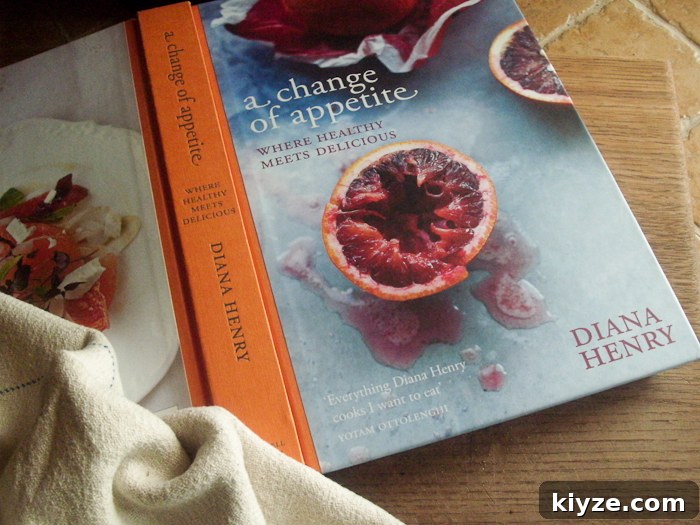
A Change of Appetite: where healthy meets delicious by Diana Henry – Review
This book arrived at exactly the right time for me. I didn’t know I needed it until I read it, but once I did I found it indispensable. I bought it as a treat and it has become a regular companion in my kitchen.
Like many people, I’ve followed debates about what counts as healthy eating and found it hard to separate evidence from fad. Diana Henry’s A Change of Appetite: where healthy meets delicious cuts through that confusion. Her approach combines clear, evidence-based guidance with practical, flavorful recipes that make healthy eating appealing rather than prescriptive.
Accidentally healthy
Henry’s main aim is enjoyment and vibrant colour on the plate. She describes her recipes as “accidentally healthy”: dishes designed to be so delicious that you don’t feel you are missing out, even though they are good for you.
…dishes that were so good (and good for you, too, but first of all delicious) that you wouldn’t feel you were missing out.
I’ve had this book since March and it sits on my worktop rather than on a shelf. The recipes are inventive and reliably tasty, and the book’s design and photography are attractive. Instructions read like someone standing beside you in the kitchen: clear, practical and written by a cook who has actually tested the dishes. Henry peppers her recipes with useful tips and asides that reflect real-world cooking for family life.
The book opens with an Introduction where Henry explains the science behind her decisions and lays out her rationale. She doesn’t insist everyone follow her path; she acknowledges that readers might use the information and choose a different approach. Nonetheless, the scientific context is presented clearly and the culinary guidance follows logically from it, informed by Henry’s practical experience.
Seasonal cooking
Recipes are organised by season, and each chapter begins with a short essay on the produce you can expect at that time of year. Henry writes evocatively about seasonal eating:
…you want the juice of a peach to run down your arm – or the smokiness of griddled chicken.
These introductions help you think about texture, flavour and how to let seasonal ingredients shine. The seasonal structure encourages cooking with what’s at its best and planning meals around freshness and variety.
Mini-essays
Interspersed between the recipes are short essays on food culture, nutrition and everyday eating. Topics include the differences between types of calories, the many diets people try over a lifetime, the pleasures of breakfast, and the importance of colourful vegetables. These pieces explain the science in plain language, share personal anecdotes and discuss food with warmth, humour and common sense.
Recipes
Many recipes are inspired by Middle and Far Eastern flavours. I’ve made a great number of dishes from the book and adapted others using Henry’s ideas. Some favourites so far are Japanese ginger and garlic chicken with smashed cucumber; white fish with saffron and dill couscous pilaf; chicken with pumpkin, soy and star anise; and lamb with Kurdish rhubarb and split peas. The book has also refreshed my breakfast and lunch repertoire with many salads and small dishes that work well as quick, nutritious meals.
Henry frequently offers variations and swap suggestions, encouraging a flexible, resourceful way of cooking: start with what you have and make a good meal. That approach sits well with anyone who likes to improvise and adjust recipes to availability and taste.
To follow every recipe exactly you will benefit from a well-stocked pantry and access to some international ingredients. Living in a rural area, I’ve made substitutions and ordered specialty items online when needed. In a large city you might find more of the ingredients easily available. Still, that is a minor issue: the greater value of the book is the inspiration and practical guidance Henry provides to help you develop your own style. She also includes a helpful supplier list for ingredients and seeds, and a bibliography for further reading.
And so…
For me, the book has changed how I plan and cook. I now use fewer refined carbohydrates and prefer whole grains when I do. I also incorporate more vegetables into breakfasts and regularly plan dinners with leftovers intended to become quick, no-fuss breakfasts or lunches the next day.
If you want to rethink what and how you eat, enjoy a readable and witty guide, and cook delicious meals that also support health, this book is an excellent choice.
Disclosure: Diana kindly provided a testimonial for my own book, which was published around the same time. I purchased my copy of Diana’s book and would not have written this review if I did not think it was worthwhile.