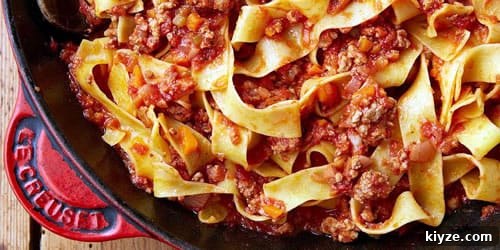
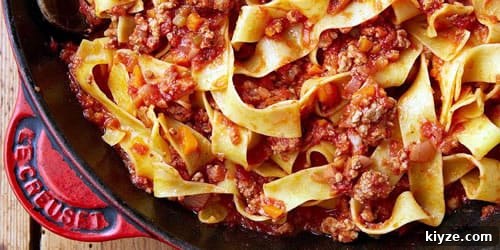
This is a classic recipe for traditional Bolognese ragù from Emilia-Romagna, prepared slowly to develop deep, layered flavours. Ground beef and sliced pork belly are cooked with finely chopped carrots, celery, and onion to form a soft soffritto that becomes the fragrant base. A splash of wine, concentrated tomato, and long, gentle simmering produce a rich, creamy sauce that clings best to fresh tagliatelle—this pairing captures the authentic taste and texture of the dish.
25 mins
2–3 hrs
Serves 6
By Traditional Emilia-Romagna Recipe
 This classic ragù scores well nutritionally, achieving a Nutri-Score of B thanks to its balance of lean meats, plenty of vegetables, and moderate fat. The slow-cooking process concentrates flavour while keeping the dish wholesome and satisfying.
Equipment
- Heavy saucepan or Dutch oven (24–26 cm)
- Wooden spoon
- Chopping board
- Sharp knife
- Measuring jug
Ingredients
- Beef, coarsely minced 400 g
- Fresh pork belly, thinly sliced 150 g
- Onion ½ (about 60 g), finely chopped
- Carrot 1 (about 60 g), finely chopped
- Celery stick 1 (about 60 g), finely chopped
- Red or white wine 1 glass
- Tomato purée 200 g
- Double concentrated tomato paste 1 tbsp
- Whole milk 1 glass (optional)
- Light meat or vegetable broth as needed (or a stock cube dissolved in water)
- Extra virgin olive oil 3 tbsp
- Salt and pepper to taste
- Prepare the vegetables and pork
Finely dice the pork belly, onion, carrot, and celery so they cook evenly and meld into the sauce. - Begin the soffritto
Heat a heavy saucepan over medium-low heat. Add the pork belly and olive oil, and allow the pork to render gently, stirring occasionally until it softens and releases its flavour. - Cook the vegetables slowly
Add the finely chopped onion, carrot, and celery to the pan. Cook gently, stirring frequently, until the vegetables are soft and aromatic. Avoid browning the onion; the goal is a sweet, tender base. - Add the minced beef
Raise the heat slightly and add the coarsely minced beef. Stir well and cook for about 8–10 minutes until the meat has lost its raw colour and begins to brown lightly. - Deglaze with wine
Pour in the glass of wine and let it bubble off while you scrape any browned bits from the pan. Cook until the wine has mostly evaporated and the alcohol scent has dissipated. - Tomato and slow simmer
Stir in the tomato purée and tomato paste until fully incorporated. Add a cup of hot broth (or water) and bring the mixture to a gentle simmer. Cover slightly and cook on low heat for 2–3 hours, checking every 20–30 minutes and adding more hot broth as needed to keep the ragù moist. The long, slow simmer develops the sauce’s characteristic depth and creaminess. - Optional milk and finishing
About halfway through the simmering time, add the glass of milk if using. Allow it to reduce into the sauce; this step softens acidity and enriches the texture. Continue to simmer until the ragù becomes thick, glossy, and a warm, deep orange colour. - Season and serve
Taste and adjust seasoning with salt and pepper. Serve tossed with fresh tagliatelle for an authentic presentation, or use as a flavourful layer in lasagne. Garnish with grated Parmigiano Reggiano if desired.
Additional Notes
For greater complexity, consider adding a pinch of freshly grated nutmeg or, if you prefer richer flavours, a small amount of chopped chicken livers or mild sausage. Blanched peas can be stirred in near the end for a traditional variation. For the best texture, chop the soffritto vegetables by hand rather than relying on a food processor.
Suggested Wine Pairing
Valpolicella Ripasso
A Valpolicella Ripasso offers bright cherry and plum notes with gentle spice and soft tannins. Its lively acidity balances the ragù’s richness and highlights the sauce’s savoury depth.
Chianti Classico
Chianti Classico brings red fruit and herbal notes with refreshing acidity. Its structure complements the slow-cooked meat and echoes the dish’s traditional Italian profile.
Barbera d’Asti
Barbera d’Asti delivers juicy berry flavours and brisk acidity that lift the ragù’s hearty character. Its smooth texture and subtle spice make it a classic match for pasta with ragù.
What to serve with this
- Fresh tagliatelle – Wide ribbons that carry the ragù and show off the sauce’s creamy texture.
- Crusty Italian bread – Perfect for wiping the plate and enjoying every last bit of sauce.
- Grated Parmigiano Reggiano – Adds a salty, nutty finish and enhances the ragù’s richness.
Nutri-Score Health Check
This traditional Bolognese ragù earns a Nutri-Score of B, reflecting a balance of lean protein, vegetables, and moderate fat content. The long simmer concentrates flavour while remaining a satisfying, nutrient-rich meal when paired with wholegrain pasta or a light salad.
Positive Factors
- Lean meats provide high-quality protein and essential minerals.
- Carrot, celery, and onion contribute fibre, vitamins, and antioxidants.
- Olive oil offers heart-healthy unsaturated fats.
- Milk (optional) adds calcium and a creamy mouthfeel.
Considerations
- Pork belly increases saturated fat, so use moderate amounts or choose leaner cuts if preferred.
- Salt and stock can raise sodium; adjust to taste and use low-sodium broth when possible.
- Long simmering concentrates flavours and fats—skim excess fat during cooking for a lighter finish.
Overall, this ragù is a nourishing, balanced dish best enjoyed in moderation and paired with wholegrain pasta or a side of vegetables for added fibre and vitamins.