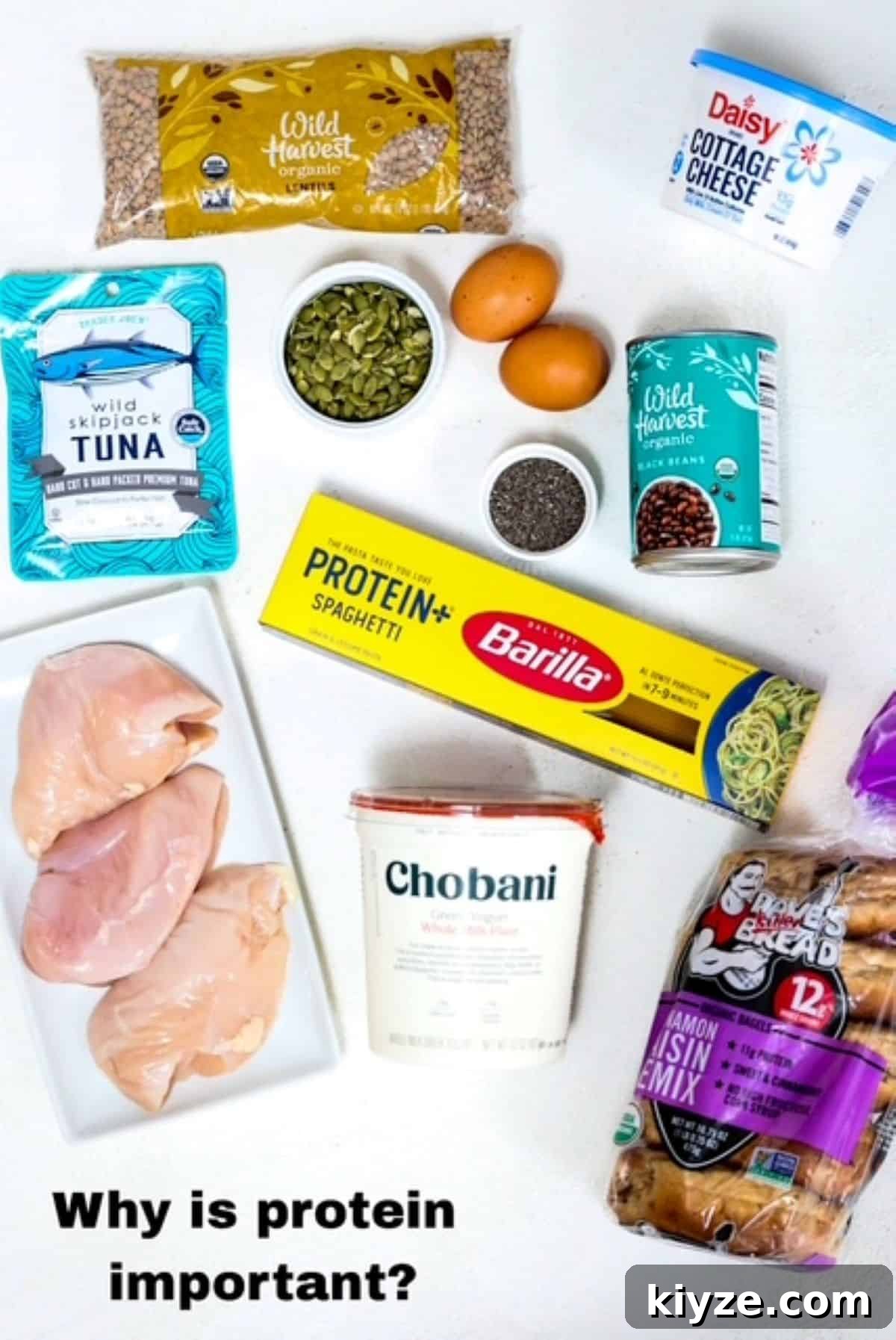
What is protein? Why is protein important? What foods are high in protein? If you have questions about protein, you’re in the right place — I’m a Registered Dietitian and I’ll share clear, evidence-based answers.
With so much attention on protein lately, it’s helpful to get straightforward information from a trusted source. Below you’ll find practical explanations, food lists, and simple tips to help you include more protein in your daily meals.
[feast_advanced_jump_to]
What is Protein?
Proteins are large, complex molecules built from amino acids that the body needs to function. Along with carbohydrates and fats, protein supplies energy—about 4 Calories per gram—and it also supports countless biological processes.
Why is Protein Important?
Protein is essential for much more than muscle growth. It provides structural support for tissues like ligaments, bone, and muscle, and it plays roles in hormone production, cellular transport, and immune function.
Including protein at meals also helps increase satiety, meaning you often feel full longer when protein is part of your plate.
Dietitian Tip
Simple swaps can boost the protein content of recipes. For example, use bone broth instead of regular chicken broth to add about 6 grams of protein per cup, or choose protein-enriched pasta to add a few grams per serving.
Protein-Rich Foods
Below is a list of commonly eaten foods that are good sources of protein, with approximate amounts. (I use g for grams and oz for ounce to keep it easy to read.)
|
Cooked Chicken |
6–9 g per oz |
Edamame |
18 g per cup |
|
Turkey |
8 g per oz |
Tofu |
4–15 g per 100 g (varies by type) |
|
Seafood (salmon, shrimp, cod, tuna) |
6–8 g per oz |
Tempeh |
18 g per 3 oz |
|
Cooked Beef |
5–8 g per oz |
Chia Seeds |
6 g per 2 tbsp |
|
Cooked Pork |
6–8 g per oz |
Hemp Hearts |
10 g per 3 tbsp |
|
Milk (Cow) |
8 g per 8 oz (one cup) |
Oats |
5 g per half cup |
|
Soy Milk |
7 g per 8 oz (one cup) |
Flax Meal |
3 g per 2 tbsp |
|
Yogurt |
6 g per three-quarter cup |
Bone Broth |
8–10 g per cup |
|
Plain Greek Yogurt |
15 g per three-quarter cup |
Whole Grain Bread & Bagels |
3–11 g per serving |
|
Kefir |
7–10 g per cup |
Peanut Butter |
7–8 g per 2 tbsp |
|
Skyr (Icelandic yogurt) |
12–15 g per half cup |
Almond Butter |
7 g per 2 tbsp |
|
Cottage Cheese |
13 g per half cup |
Eggs |
5–7 g per egg |
|
Beans |
7–8 g per half cup |
Cooked Peas |
8 g per cup |
Plant vs Animal Protein
Plant protein comes from sources like soy products, beans, whole grains, lentils, nuts, and seeds. Protein quality can vary among plant sources, so combining different plant foods helps ensure a broad range of amino acids.
Animal protein includes eggs, beef, chicken, pork, dairy, and fish. Animal proteins often provide all essential amino acids and can be especially effective for building lean mass in some adults.
Ultimately, meeting protein needs from a mix of plant and animal sources helps you get a wider array of nutrients.
Easy Ways to Increase Protein Intake
- Smoothies: Add tofu, milk, yogurt, chia seeds, hemp hearts, or nut butter to boost protein without needing powder.
- Milk choice: Cow’s milk and soy milk contain more protein than most almond or oat milks.
- Whole grains: Whole grain breads and pastas offer more protein (and fiber) than refined versions.
- Greek yogurt: Higher in protein than regular yogurt; use it in parfaits or as a mayo/sour cream substitute in recipes.
- Protein powder: Convenient for boosting protein in smoothies, oatmeal, or baking when needed.
- Protein bars: A convenient on-the-go option; choose quality options or make your own.
- Seafood: Quick-cooking and versatile — canned tuna, frozen salmon, and shrimp are easy ways to add protein.
Helpful Tips
- Nutrition labels: Check serving size first, then grams of protein per serving to know exactly what you’re eating.
- Non-perishables: Keep lentils, canned tuna, oats, chia seeds, hemp hearts, and other shelf-stable protein sources on hand.
- Frozen foods: Stock your freezer with chicken, fish, and other high-protein items to make meal prep easier.
- Protein powders: Useful and convenient, but you can meet most needs with whole foods if you prefer.
Questions You May Have
Protein needs depend on age, weight, health status, goals, and activity level. A common guideline for adults ranges from about 1–2 grams of protein per kilogram of body weight per day, but individual needs vary. Children have different requirements based on age and growth stage.
With intentional meal planning, reaching 100 grams is achievable from food. For example:
Breakfast: egg casserole portion (≈14 g) and a slice of whole wheat banana bread (≈4 g).
Snack: apple and celery with 2 tbsp almond butter (≈7 g).
Lunch: chicken salad (≈23 g) on a protein-rich bagel (≈11 g).
Snack: Greek yogurt parfait or Skyr (15–28 g).
Dinner: salmon (≈25 g) with a grain and vegetable side (6–13 g) and a cup of milk (≈8 g).
Optional dessert: chia pudding (≈9 g).
Many people in the U.S. meet or exceed protein requirements, but long-term insufficient intake can contribute to poor growth in children, muscle weakness, anemia, edema, and weakened immunity.
Yes. Consuming excessive protein, especially at the expense of variety, is not recommended. Aim for a balance of foods to ensure you get a range of nutrients.
Related
- Why is Fiber Important?
- How to Pick a Good Pineapple
- Meals for After Wisdom Teeth Removal
- Best Protein Bars for Kids & Adults
Related Recipes
- Protein Pancakes without Protein Powder
- Acai Bowl with Protein
- Peanut Butter Protein Bars
High Protein Recipes
- Air Fryer Frozen Salmon (Easy 15-Minute Recipe)
- 20-Minute Chicken in White Sauce
- Chili with Turkey and Black Beans
- Easy Lasagna Recipe with Cottage Cheese
Did you find this post about protein helpful? Please let me know by leaving a comment below — your feedback is appreciated.
Follow me on Instagram and Pinterest for easy recipes and nutrition tips from a Registered Dietitian.